Technology
·
Performance And Abstraction
·
the recommendation that knew you'd like…
Hard
5 min
How Does the Algorithm Know You So Well?
Why recommendations feel personal when they never actually knew you
Share
You open a streaming app and the first thing it shows you — you've never searched for it, never mentioned it, never even thought about it consciously — is exactly the thing you want to watch tonight. How?
Modern software hides enormous complexity behind smooth surfaces. You tap a button and something happens — but underneath, the machine is doing things that would take a person days to do by hand. One of the most impressive tricks in that arsenal isn't about speed or memory. It's about prediction. Specifically: how software figures out what you want before you ask for it. That's collaborative filtering, and once you understand how it works, you'll never look at a recommendation the same way.
The naive approach to recommendations would be: learn what YOU like, then find more of it. You watched three crime documentaries, so here's another crime documentary. That's content-based filtering — matching items to your stated preferences. It works okay. But it has a ceiling. It can only recommend things that look like things you've already seen. It will never surprise you.
Make your call
So how does a recommendation engine surface something you'd love but never would have searched for yourself? What's its actual source of information?
A
It analyzes the content of what you watched and finds similar themes
B
It finds people whose past behavior matches yours and borrows their future choices
C
It tracks your browsing history across the whole internet
Collaborative filtering ignores the content entirely. It doesn't care what a show is about. It only cares about behavior. The question it's asking is: who else watches the same things you watch? Find those people. Then look at what they watched next. Recommend that.
Here's why this is powerful. Somewhere out there is a person who loved every obscure thing you loved, in the same order you loved them. They just finished something you haven't seen yet. Collaborative filtering finds that person — or more precisely, finds the statistical ghost of thousands of people like them — and points you where they went.
You didn't tell the algorithm you like melancholy Nordic crime dramas with unreliable narrators. You just watched a few. The algorithm found ten thousand other people who watched those same few things and noticed they all eventually watched the same Finnish series you've never heard of. So now it's on your homepage.
Key Insight
The algorithm doesn't know you. It knows your behavioral twin — and borrows their taste on your behalf. The recommendation felt personal. It was actually statistical.
Collaborative filtering works best on people who think they're unique. If your taste is perfectly mainstream, you and a million other people have the same behavioral profile — the recommendations are accurate but obvious. The more specific your taste, the smaller the pool of people who share it, but the more precisely the algorithm can predict what that small group wants next. Niche audiences get eerily good recommendations. Mass audiences get competent ones.
There's a real cost buried in this, though. The system only recommends things that already exist in its dataset. If nobody else has watched something yet, collaborative filtering can't surface it. New releases, independent work, genuinely novel things — they're invisible until enough people have watched them to generate a signal. The algorithm is always looking backward, even when it feels like it's reading your mind.
So the next time a recommendation lands with uncanny accuracy — that feeling that the app somehow knew — remember what actually happened. The machine found your behavioral twin somewhere in a dataset of millions, checked what they did next, and handed you the result. No mind-reading. Just math running very fast on a very large table of who watched what.
Related threads
Technology
·
Your Apps Are All Living a Lie
·
every app thinks it has the whole…
Your Apps Are All Living a Lie
Technology
·
How Ctrl+Z Remembers Everything You Did
·
how undo remembers everything (command…
How Ctrl+Z Remembers Everything You Did
Technology
·
Why Does This Page Take Forever to Load?
·
why some pages load instantly and…
Why Does This Page Take Forever to Load?
Sources
Images from Wikimedia Commons. Attribution required by license.
data points cluster visualization
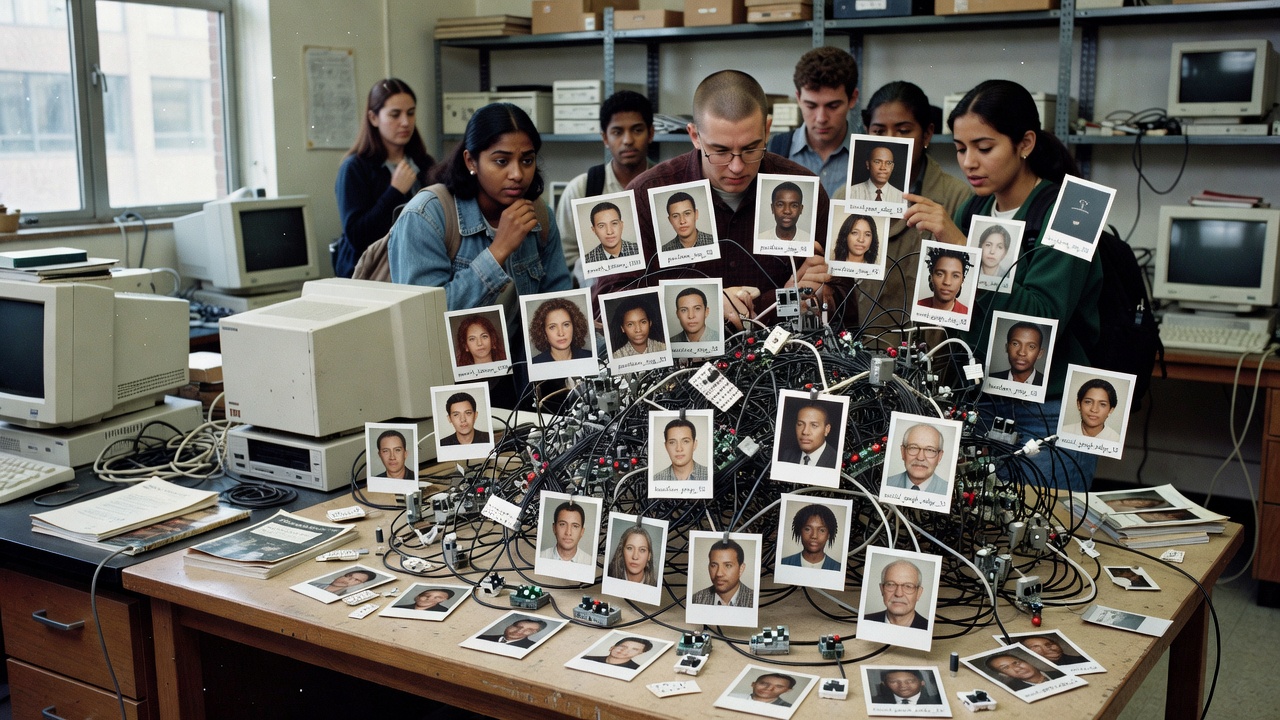
Generated by Grok Imagine (xAI), prompt: Generate a single 16:9 horizontal image for an educational lesson.
Lesson title: "How Does the Algorithm Know You So Well?" · Why recommendations feel personal when they never actually knew you
Domain…
Quiz yourself