Technology
·
Devices And Physics
·
the ear that's always listening, barely…
Medium
5 min
Your Phone Listens All Night Without Dying
How a chip the size of a grain of rice stays awake so your processor doesn't have to
Share
Your phone sits on the nightstand all night. You say "Hey, Siri" and it wakes up instantly. But if it were truly listening — running its full brain the whole time — the battery would be dead by 3am. So what's actually happening?
Modern devices are full of physics tricks — batteries converting chemistry into electrons, screens firing colored light from millions of tiny dots, chips running billions of calculations per second. But one of the cleverest tricks is almost invisible: the ability to listen for a specific word, continuously, for hours, while barely touching the battery. Understanding how that works means understanding one of the most elegant power-engineering decisions in consumer hardware.
Your phone's main processor — the chip that runs your apps, renders video, handles your texts — is a power hog. When it's fully awake, it can burn through 3 to 5 watts. Run that all night and you've consumed most of a phone battery just in standby. So engineers faced a real constraint: you want always-on voice detection, but you cannot afford to keep the main chip awake to do it.
Make your call
So how does a device stay ready to hear your wake word all night without draining the battery? What's actually doing the listening?
A
The main processor runs at very low speed to save power
B
A tiny dedicated chip handles listening while the main processor sleeps
C
The microphone records audio and checks it in short bursts every few seconds
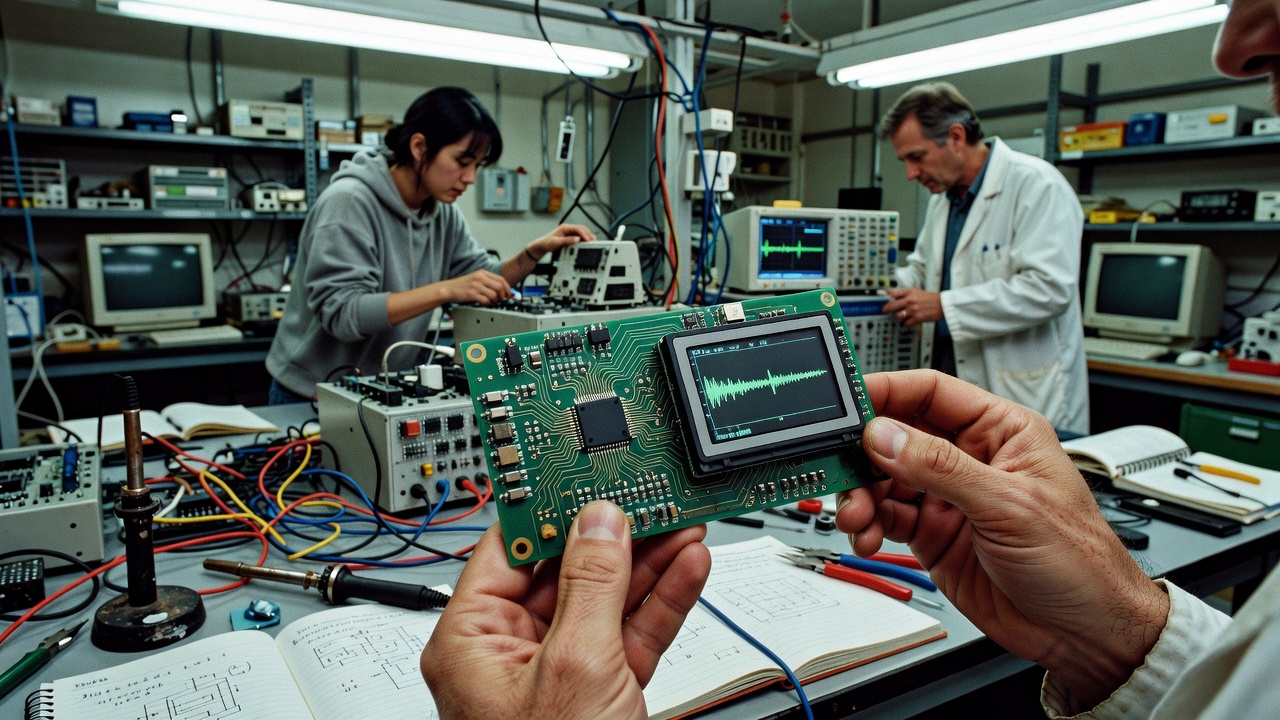
The solution is a dedicated low-power co-processor — sometimes called a DSP (digital signal processor) or, in Apple's case, the "always-on" processor baked into their chip designs. It's architecturally simple: it can do one thing well, which is compare incoming audio against a stored pattern. It cannot run apps. It cannot connect to the internet. It cannot render a single pixel. That simplicity is the point. A chip that does less can be built to use far less power — often under 1 milliwatt, compared to thousands of milliwatts for the main processor. The main chip stays completely off. The tiny listener waits.
The co-processor isn't trying to understand language. It's doing something much simpler: it converts the microphone's audio into a rough fingerprint — a pattern of frequencies over time — and checks whether that fingerprint roughly matches the stored fingerprint for "Hey Siri" or "OK Google." No transcription, no AI inference, no cloud call. Just: does this sound pattern look like the wake word? If yes, wake up the main chip. If no, discard the audio and keep waiting. The whole check takes milliseconds and burns almost nothing. The sophistication comes later, after the main processor wakes up and the real voice recognition begins.
Key Insight
The engineering insight here isn't about making the listener smarter — it's about making it dumber on purpose. A chip that can only do one thing, badly enough to catch the right word most of the time, uses 1000x less power than a chip that understands everything. You trade accuracy for energy, then fix the accuracy problem by waking up the heavy hardware only when needed.
This is why false triggers happen. "Hey Siri" activates when someone on TV says something that sounds close enough to fool the simple pattern-matcher. The co-processor isn't smart enough to know the difference — and that's exactly why it's cheap to run. The main processor, once awake, would catch the mistake instantly. But by then it's already listening. The tradeoff is baked into the design: a few false wakes per week, in exchange for a device that's genuinely ready for you every time you need it, all night, without sacrificing your morning charge.
Related threads
Technology
·
Your Screen Is Lying to You Beautifully
·
a real-looking photo out of tiny…
Your Screen Is Lying to You Beautifully
Technology
·
How Do You Draw a Wire Thinner Than a Virus?
·
etching wires smaller than a virus…
How Do You Draw a Wire Thinner Than a Virus?
Technology
·
How One Cable Carries a Thousand Conversations
·
one cable, two conversations…
How One Cable Carries a Thousand Conversations
Sources
Images from Wikimedia Commons. Attribution required by license.
microphone chip circuit
Generated by Grok Imagine (xAI), prompt: Generate a single 16:9 horizontal image for an educational lesson.
Lesson title: "Your Phone Listens All Night Without Dying" · How a chip the size of a grain of rice stays awake so your processor doe…
digital signal processor chip
Generated by Grok Imagine (xAI), prompt: Generate a single 4:3 horizontal image for an educational lesson.
Lesson title: "Your Phone Listens All Night Without Dying" · How a chip the size of a grain of rice stays awake so your processor does…
Quiz yourself