Technology
·
Software And Ai
·
the test that knows you're human…
Medium
5 min
Why Websites Make You Click on Crosswalks
How a simple puzzle keeps the internet from collapsing under bots
Share
You've been asked to prove you're human hundreds of times. Fire hydrants. Bicycles. Blurry letters. But why does clicking a crosswalk convince a computer you're not one?
Software runs on rules. Give it an input, it follows instructions, it produces an output. That's fine when the inputs are people — but the internet is also full of bots: automated programs that fill out forms, buy concert tickets, scrape data, and vote in polls thousands of times per second. Without some way to tell humans from bots, every login page, comment section, and ticket queue gets overwhelmed. The fix had to be a test that humans pass easily and bots fail. That fix is called a CAPTCHA — Completely Automated Public Turing test to tell Computers and Humans Apart. The name is a mouthful. The idea is elegant.
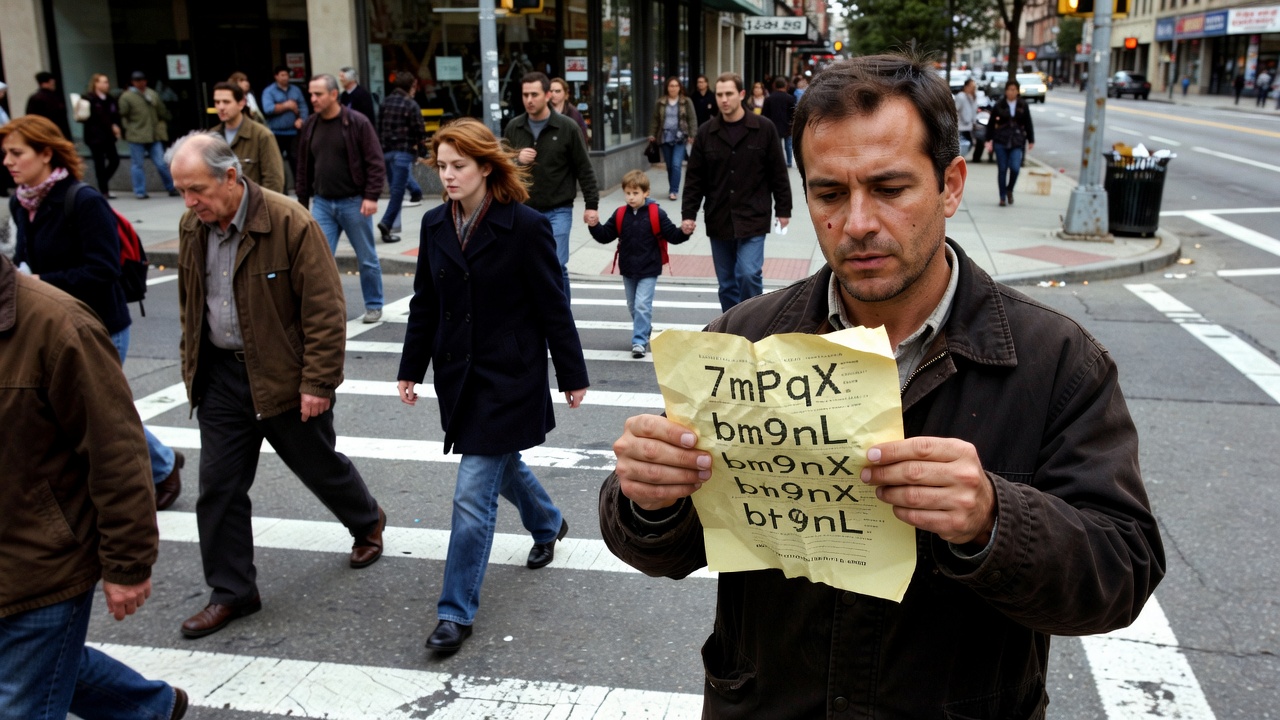
The original CAPTCHAs, developed in the late 1990s at Carnegie Mellon, showed you distorted text and asked you to type it. The logic was simple: reading warped, overlapping letters in weird fonts is trivially easy for a human brain that grew up interpreting handwriting, signs, and smudged receipts. For a computer in 2000, it was nearly impossible. Optical character recognition software couldn't handle the noise. Humans could. That gap — what humans find easy and machines find hard — is the entire foundation of every CAPTCHA ever designed.
Make your call
AI has gotten dramatically better at reading distorted text. So what do you think happened to image-based CAPTCHAs — the 'click all the crosswalks' ones — as machine vision improved?
A
They became useless — bots now solve them as well as humans do
B
Engineers made the images harder and harder until humans started failing too
C
Modern CAPTCHAs mostly stopped relying on what you see and started watching how you behave
By the 2010s, neural networks had learned to solve image puzzles faster than most humans. Google's reCAPTCHA — the system behind most of those crosswalk grids — responded by quietly shifting what it actually measured. The image grid is still there, but it's often a distraction. The real test is happening before you click anything. The system is watching your mouse path as you moved toward the checkbox. It's measuring how long you hovered. It's checking whether your cursor traveled in a slightly imperfect, organic arc — the way a hand does — or in a suspiciously straight, mechanical line. Bots move in straight lines. Humans wobble. That wobble is the signal.
Key Insight
The checkbox that says 'I'm not a robot' is almost never the actual test. By the time you click it, the system has already analyzed dozens of behavioral signals — cursor movement, scroll patterns, typing rhythm, time on page — and made a confidence estimate. If you score high enough, you never see a puzzle at all. If you score low, out come the fire hydrants. The checkbox is theater. The test is everything that happened before it.
Modern CAPTCHA systems also factor in your browser's history, your IP address, whether you've solved CAPTCHAs before, and whether your device fingerprint matches known bot farms. A person who just watched a video, scrolled a news article, and searched for a recipe looks very different to a server than a fresh bot that appeared out of nowhere with no browsing history and an IP address shared by a thousand other requests. The crosswalk grid is the last resort — the fallback for when every other signal is inconclusive. Which means the arms race isn't really about puzzles anymore. It's about identity. And that's where it gets genuinely hard to resolve, because the signals that distinguish humans from bots are the same signals that track you across the web. The test that knows you're human works partly because it already knows a lot about you.
Related threads
Technology
·
Your AI Has No Idea What It's Saying
·
how an LLM actually produces a sentence…
Your AI Has No Idea What It's Saying
Technology
·
Why the First Search Result Isn't Random
·
what decides the first search result…
Why the First Search Result Isn't Random
Technology
·
Why Every App You Use Is Broken
·
why software always has bugs (the gap…
Why Every App You Use Is Broken
Sources
Images from Wikimedia Commons. Attribution required by license.
CAPTCHA distorted text
Generated by Grok Imagine (xAI), prompt: Generate a single 16:9 horizontal image for an educational lesson.
Lesson title: "Why Websites Make You Click on Crosswalks" · How a simple puzzle keeps the internet from collapsing under bots
Domain:…
distorted CAPTCHA letters 2000s
Generated by Grok Imagine (xAI), prompt: Generate a single 4:3 horizontal image for an educational lesson.
Lesson title: "Why Websites Make You Click on Crosswalks" · How a simple puzzle keeps the internet from collapsing under bots
Domain: …
Quiz yourself