Technology
·
Journey Of A Message
·
part 3
Medium
5 min
Part 3 of 3
The Video That Didn't Come From the Source
Why the internet feels faster than it should be
Share
When you press play on a video, it rarely comes from the company that made it. It comes from a server a few miles away — one that's been quietly holding a copy, waiting for you to ask.
Over the last two days of this series, we watched a message get sliced into packets and routed across the globe, then saw how encryption seals those packets so no one on the path can read them. But there's a third trick the internet plays — one that makes the whole system feel almost impossibly fast. And it has nothing to do with moving data quickly. It's about not moving it at all.
The naive picture of the internet looks like this: you request a video, that request travels to a server in California (or Ireland, or Singapore), the server sends the file back, and it arrives at your screen. Thousands of miles, round-trip, every time anyone presses play. If that were actually how it worked, streaming would be unbearable. A signal traveling at the speed of light still takes about 150 milliseconds to cross the Atlantic — and that's before any server does any work. Multiply that by millions of simultaneous requests and the whole system collapses.
Make your call
So how does a video from a company headquartered in California load instantly for someone in Warsaw? What's the actual trick?
A
The internet routes your request faster than physics should allow
B
A copy of the video already exists on a server near Warsaw
C
Your device pre-downloads content it thinks you'll watch
The system that makes this work is called a Content Delivery Network, or CDN. The idea is almost embarrassingly simple: instead of one server holding the original file, you distribute copies of that file to hundreds of servers scattered across the planet — in cities, in data centers, tucked into the infrastructure of internet service providers. When you request a video, the CDN figures out which of those servers is closest to you and sends the file from there. Not from California. From the building a few kilometers away.
Companies like Cloudflare, Akamai, and Fastly run these networks. Between them, they have servers in most major cities on Earth. When a popular video goes up, copies propagate outward to those edge servers automatically. By the time you press play, the file has been waiting for you for hours.
Key Insight
The internet doesn't move data fast. It moves data early. Speed is an illusion built on anticipation.
Caching is what makes this sustainable. Not every file gets copied everywhere — that would be impossibly expensive. Instead, edge servers cache files based on demand. A video that 10 million people are watching gets pushed to every edge server on the network. A video that 200 people have watched stays on the origin server and gets fetched the slow way when someone requests it. The CDN is constantly making bets about what you're about to want, based on what everyone else is already watching.
There's a TTL — a time-to-live — attached to every cached file. It tells the edge server how long to hold the copy before checking whether the original has changed. A news article might have a TTL of five minutes. A movie that hasn't changed in three years might have a TTL of a week. When the TTL expires, the edge server quietly checks in with the origin, confirms the file is still the same, and resets the clock. You never see any of this. The video just plays.
This is also why, when a website pushes a broken update and then fixes it, some users see the broken version for longer than others. They're hitting an edge server whose cache hasn't expired yet. The fix exists at the origin — it just hasn't reached every copy yet.
Related threads
Technology
·
Your Message Doesn't Travel in One Piece
·
part 1
Your Message Doesn't Travel in One Piece
Technology
·
Your Message Is Sealed Before It Leaves Your Phone
·
part 2
Your Message Is Sealed Before It Leaves Your Phone
Sources
Images from Wikimedia Commons. Attribution required by license.
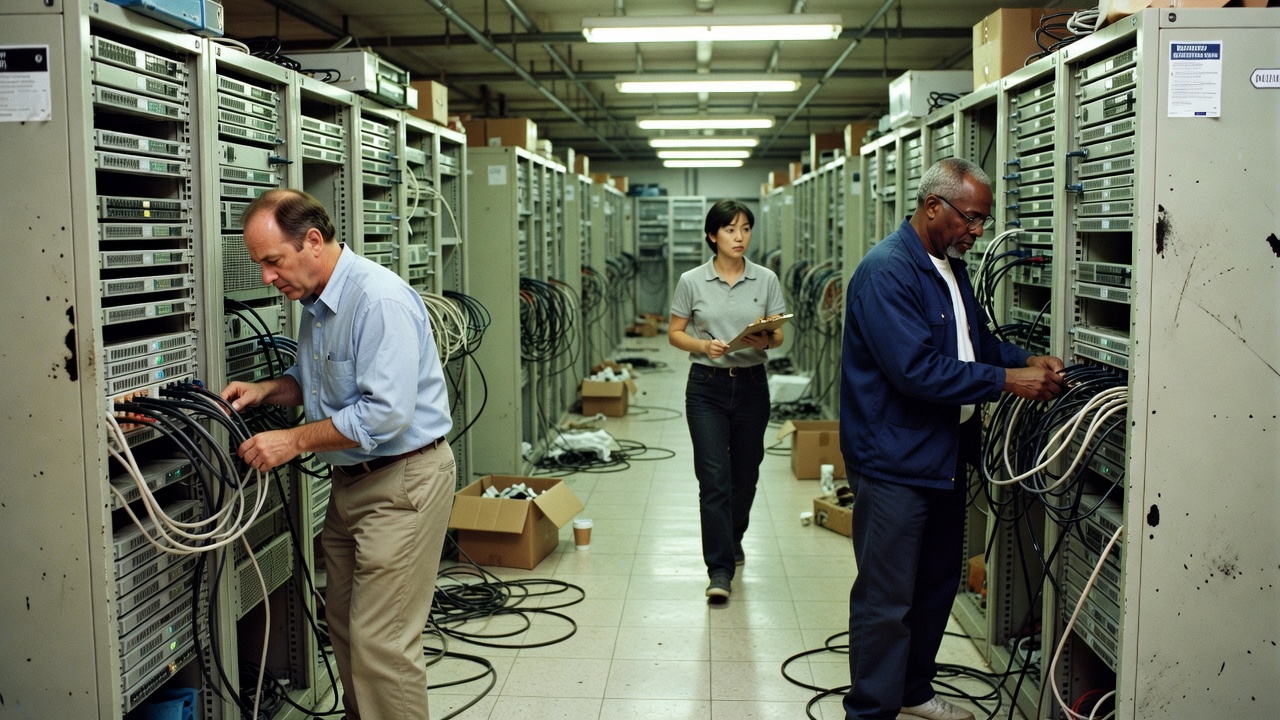
server rack data center
Generated by Grok Imagine (xAI), prompt: Generate a single 16:9 horizontal image for an educational lesson.
Lesson title: "The Video That Didn't Come From the Source" · Why the internet feels faster than it should be
Domain: technology
Subje…
CDN network map diagram
Generated by Grok Imagine (xAI), prompt: Generate a single 4:3 horizontal image for an educational lesson.
Lesson title: "The Video That Didn't Come From the Source" · Why the internet feels faster than it should be
Domain: technology
Subjec…
Quiz yourself