Science
·
You Are a Walking Instruction Manual
Medium
7 min
You Are a Walking Instruction Manual
Every cell in your body is running the same ancient software, and it's weirder than you think.
Share
You have about 37 trillion cells in your body. Every single one — your skin, your liver, your neurons — contains the exact same set of instructions. And those instructions, if you uncoiled them from just one cell, would stretch about 6 feet long. Folded up inside something you can't see without a microscope.
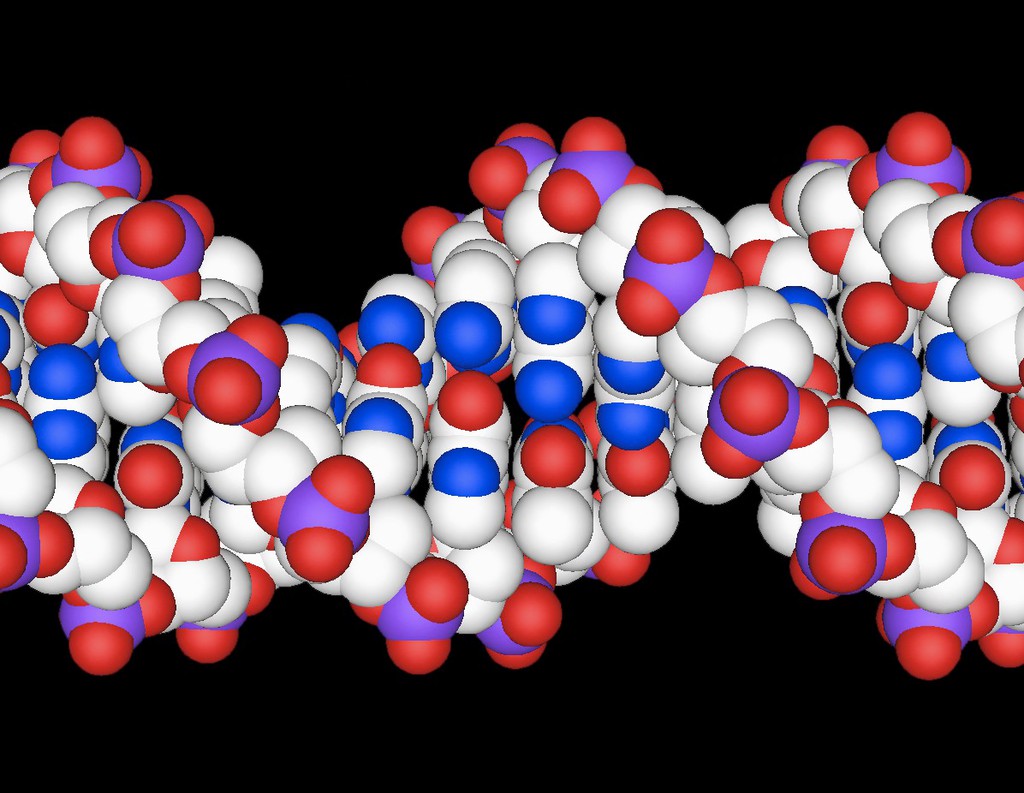
That instruction set is your DNA. And the first thing to understand: DNA isn't some mystical life force. It's a molecule — a very long, very specific molecule — that stores information the same way a hard drive does. Except instead of 1s and 0s, it uses four chemical letters: A, T, C, and G. That's it. Four letters. And the order they appear in spells out everything about how to build and run a human being.
Analogy
Think of your DNA like the source code for an app. The full codebase is enormous — about 3 billion 'letters' long. But most of that code is infrastructure, spacing, regulatory stuff that controls when other code runs. The actual functional parts — the bits that say 'build this protein' or 'make this enzyme' — are called genes. You have roughly 20,000 of them. That's 20,000 specific instructions buried inside 3 billion characters of code. Finding a single gene in your genome is like ctrl+F-ing for one specific line in a document the size of 1,000 novels.
Make your call
Before we get into what genes actually do: what is a gene, at its most basic level? What is it that a single gene actually produces?
A
A physical trait, like eye color or height
B
A protein — a molecular machine that does specific work in the body
C
A copy of itself, passed to the next generation
So what does a gene actually do? It's a recipe. Specifically, it's a recipe for a protein. Proteins are the workhorses of your body — they build structures, carry signals, fight infections, digest food, regulate your mood. Every protein your body makes starts with a gene that says 'here's how to build this.' The process goes: DNA gets read, copied into a messenger molecule called RNA, and that RNA gets used as a blueprint to assemble the protein. DNA → RNA → Protein. Biologists call this the Central Dogma. You can call it the assembly line.
Key Insight
Your DNA doesn't directly build anything. It's more like a locked library. The cell makes copies of specific pages (genes), sends those copies out to the factory floor, and builds from there. The original stays protected in the nucleus.
Now here's where heredity enters. You got your DNA from two people — your biological parents. Half from one, half from the other. That's why you might have your dad's nose and your mom's eyes. Each parent contributed one copy of each chromosome (the physical structures that package DNA), and you got a shuffled remix of both. But the shuffling isn't random chaos — it follows rules. And those rules are what Gregor Mendel figured out in the 1800s by obsessively breeding pea plants. He didn't know what DNA was. He just noticed that traits followed predictable patterns across generations. He was right. He just didn't know why yet.
Example
Eye color isn't controlled by one gene — it's more complex — but pretend for a second it was, and that brown (B) was dominant over blue (b). If you inherit one B and one b, you have brown eyes. Brown 'wins.' You'd need two copies of b — one from each parent — to have blue eyes. This is why two brown-eyed parents can have a blue-eyed kid: both parents could be carrying a hidden b, and if both pass it on, surprise. The trait was there the whole time, invisible, waiting. That hidden copy is called a recessive allele. And it explains why traits seem to skip generations — they don't skip. They just hide.
Key Insight
Your genome is not a blueprint that determines everything about you. It's more like a set of tendencies and possibilities. Genes load the gun. Environment pulls the trigger. Most of who you are is the interaction between the two, not one or the other.
Mutations — changes in the DNA sequence — sound scary, but they're happening constantly. Every time a cell divides, it has to copy 3 billion letters. It makes mistakes. Most are caught and fixed. Some slip through. Most of those are harmless — they happen in non-coding regions or don't change the protein. But occasionally, a mutation changes something meaningful. Over millions of years, the mutations that helped organisms survive got passed on. The ones that didn't, didn't. That's evolution, running on the same four-letter alphabet, one generation at a time. And all of it — every protein, every inherited trait, every mutation — is packed into that 6-foot strand coiled inside a cell you can't see without a microscope.
Sources
Images from Wikimedia Commons. Attribution required by license.
DNA double helix
Wellcome Collection (CC BY 4.0)
Holliday junction and proteins
Wellcome Collection (CC BY 4.0)
Quiz yourself