Science
·
The Force That Runs the Universe
Medium
6 min
The Force That Runs the Universe
Gravity is the force that shapes everything you can see in the night sky.
Share
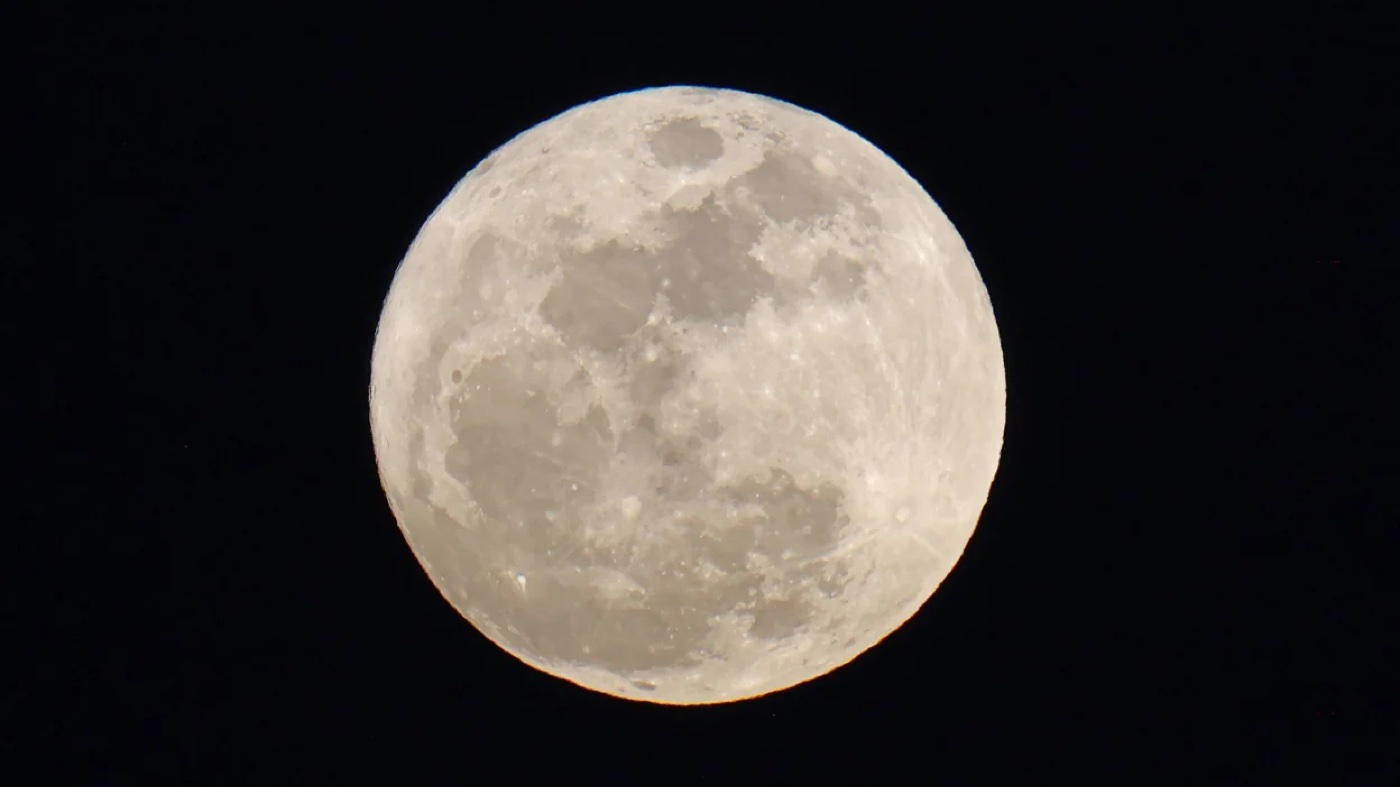
The Moon is falling right now. Constantly, every second, it's falling toward Earth. So why hasn't it crashed into us yet?
Gravity is not a push. It's not a wall. It's a pull that reaches across any distance with no contact required, and it never, ever switches off. Right now, you're being pulled toward the center of the Earth, toward the Moon, toward the Sun, toward the Andromeda Galaxy two million light-years away. The forces from far away are tiny, sure. But they're real, and they're constant. Gravity is the universe's most patient force.
Isaac Newton cracked the core of it in the late 1600s. Two objects with mass pull on each other. The bigger the masses, the stronger the pull. The farther apart they are, the weaker it gets — and it weakens fast. Double the distance and the force drops to a quarter. This is the inverse square law, and it's why the Sun can hold planets in orbit from 93 million miles away, but you can jump off the ground without needing a rocket.
Make your call
The Moon is falling toward Earth right now — so why hasn't it crashed into us? What's actually keeping it up there?
A
The Moon is moving fast enough sideways that it keeps missing Earth as it falls
B
The Moon is far enough away that Earth's gravity can't pull it all the way in
C
The Moon and Earth's gravity cancel each other out at that distance
Key Insight
So why hasn't the falling Moon crashed into us? Orbiting isn't escaping gravity — it's falling perfectly sideways. The Moon is being pulled toward Earth constantly, but it's moving fast enough sideways that by the time it falls a little, Earth has curved away beneath it. It keeps missing. That's an orbit.
An orbit isn't a stable position. It's a controlled fall. When you watch footage of astronauts floating in the ISS, they're not outside gravity's reach. They're in freefall, constantly falling toward Earth, but moving sideways so fast they keep overshooting it. They feel weightless because everything around them is falling at the same rate.
Example
Here's how powerful gravity's reach is: the tides on Earth's oceans aren't caused by the Moon touching the water. They're caused by the Moon's gravity pulling on one side of Earth slightly more than the other side, because one side is closer. That tiny difference in pull — across a planet — is enough to bulge the oceans by meters. Every time you see high tide, you're watching a gravitational tug-of-war play out in real time across 240,000 miles of empty space.
Einstein pushed this even further. He said gravity isn't really a force at all — it's a curve in the fabric of space and time. Massive objects bend spacetime around them, and other objects follow that curve. It sounds like science fiction, but it has real consequences. GPS satellites have to correct for the fact that time runs slightly faster in orbit than on the ground — because they're farther from Earth's mass, spacetime is less curved up there. Without that correction, your GPS would drift by miles every day. Einstein's weird idea about curved spacetime is literally inside your phone.
Sources
Images from Wikimedia Commons. Attribution required by license.
newton apple gravity illustration
Generated by Grok Imagine (xAI), prompt: Generate a single 4:3 horizontal image for an educational lesson.
Lesson title: "The Force That Runs the Universe" · Gravity is the force that shapes everything you can see in the night sky.
Domain: s…
NASA/JPL/University of Arizona — Europa's Frozen Surface — 2001-06-22
NASA/JPL/University of Arizona via Internet Archive (Internet Archive)
Quiz yourself