Psychology
·
Habits Emotion Body
·
preparedness theory
Medium
5 min
Your Brain Fears the Wrong Things
Why snakes terrify millions of people who have never seen one in the wild
Share
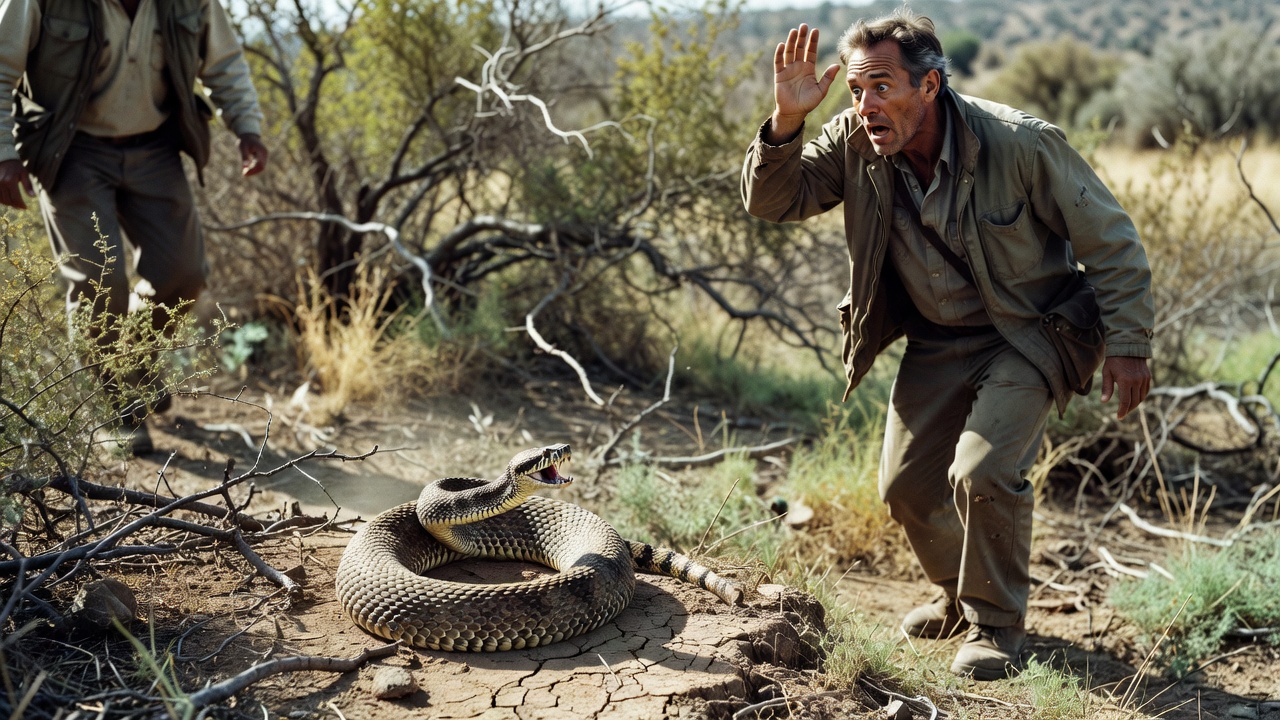
You've probably never been bitten by a snake. You've almost certainly touched an electrical outlet. So why does a photo of a coiled snake make your stomach drop — and a photo of an outlet does absolutely nothing?
Your mind doesn't run on pure logic. It runs on hardware that was built millions of years before you were born — a body wired for survival in an environment that no longer exists. Psychologists who study habits, emotions, and the body keep running into the same puzzle: our feelings don't always track actual danger. We flinch at things that can't hurt us and stay calm around things that can. One of the clearest windows into why is a concept called preparedness theory.
Martin Seligman (b. 1942, United States) — the psychologist who later founded the positive psychology movement — noticed something strange in the 1970s while reviewing fear research. Phobias are not evenly distributed across possible threats. People develop intense, lasting fears of snakes, spiders, heights, and open water at rates far higher than their actual danger would predict. Almost nobody develops a phobia of cars, despite cars killing tens of thousands of people a year. Almost nobody is pathologically terrified of electrical outlets, kitchen knives, or staircases. The distribution looked less like a record of personal bad experiences and more like a list someone had prepared in advance.
Make your call
So what determines which fears stick? Why do some threats become deep, almost-automatic phobias while others — far more statistically dangerous — barely register?
A
We fear things we've personally experienced as dangerous
B
We fear things our ancestors encountered long enough to shape our genes
C
We fear things the media covers most often
Seligman's answer was preparedness: evolution doesn't just shape bodies, it shapes the brain's learning shortcuts. Some associations — snake, spider, dark enclosed space — are biologically prepared, meaning the brain is primed to learn them as threats after minimal exposure. One scary encounter with a snake, or even just watching someone else recoil from one, and the fear locks in fast and holds on hard. Other associations are contraprepared: the brain resists learning them as threats no matter how much evidence you pile on. Outlets have been killing people for over a century. The fear just doesn't stick the same way, because outlets didn't exist when the relevant wiring was being laid down.
Key Insight
Your fear system is not a threat detector. It's a threat detector calibrated for a world that ended roughly 10,000 years ago. Snakes were genuinely lethal to your ancestors. Outlets are genuinely lethal to you. Your brain knows about the snakes.
The clearest evidence comes from conditioning experiments. Arne Öhman (b. 1943, Sweden) — a neuroscientist who spent decades studying fear learning — showed people images paired with mild electric shocks. When the image was a snake or a spider, the fear response formed quickly and was remarkably hard to extinguish even after the shocks stopped. When the image was a flower or a mushroom, the conditioned fear faded fast once the shocks ended. Same shock, same person, different image — wildly different results. The brain isn't treating all threats equally. It's running a pre-sorted priority list, and snakes are near the top whether you've ever seen one or not. That's the loop the hook opened: the answer isn't what you've experienced. It's what your ancestors survived long enough to pass on.
Related threads
Psychology
·
You Have No Idea How You'll Feel Tomorrow
·
affective forecasting
You Have No Idea How You'll Feel Tomorrow
Psychology
·
Your Brain Is Automating You Right Now
·
habit formation
Your Brain Is Automating You Right Now
Sources
Images from Wikimedia Commons. Attribution required by license.
snake coiled striking
Generated by Grok Imagine (xAI), prompt: Generate a single 16:9 horizontal image for an educational lesson.
Lesson title: "Your Brain Fears the Wrong Things" · Why snakes terrify millions of people who have never seen one in the wild
Domain:…
Quiz yourself