Psychology
·
Social Mind
·
the continued-influence effect
Medium
6 min
Why Corrections Don't Fully Work
The brain keeps using information it knows is false
Share
In 2003, newspapers reported Iraq had weapons of mass destruction. The claim was later proven false and publicly retracted. Years later, a significant portion of Americans still believed it. They had seen the correction. It didn't matter.
Your social brain is porous — beliefs leak in from the people around you, and once inside, they don't leave just because someone proves them wrong. This lesson focuses on one mechanism in that catalog, and it might be the most unsettling: the continued-influence effect. The short version is that false information keeps influencing your reasoning even after you've been told, understood, and accepted that it was false. Not because you're gullible. Because of how your brain is built.
Ullrich Ecker (b. 1978, Germany / Australia) — a cognitive psychologist who studies misinformation at the University of Western Australia — has run dozens of experiments on this. The setup is always some version of the same thing: give people a story with a false detail, later correct it clearly, then test their reasoning. The correction reduces reliance on the false information. It almost never eliminates it. People keep using the misinformation to fill in gaps, draw inferences, and make sense of events — even when they can correctly tell you the misinformation was wrong.
Make your call
You read a news story saying a warehouse fire was caused by negligence — flammable materials stored illegally. Then you read a follow-up: the flammable materials were actually cleared out weeks before the fire. Cause unknown. When asked to explain the fire, what do you think most people do?
A
They reason from the correction and say the cause is unknown
B
They ignore the correction entirely and still blame the materials
C
They say they don't know, but their explanations still reference the materials
That experiment is almost exactly what Ecker and his colleagues ran. Participants read a story about a warehouse fire. One version mentioned flammable materials at the scene. Then they were told: actually, there were no flammable materials. When asked open-ended questions about the fire — why it spread, how dangerous it was — people who'd read the original false detail kept referencing it, even after correction, far more than people who'd never read it at all. The correction left a gap where a story used to be. The brain, which hates gaps, filled it with what it already had.
This is the mechanism: your mind doesn't store information like a file you can delete. It stores it like a thread in a web. Pull the thread and the web doesn't disappear — it just sags in that spot, and the surrounding threads pull inward to compensate.
Key Insight
A retraction tells you a fact is wrong. It doesn't tell your brain what to put in its place. If the correction doesn't give you a replacement story — a new explanation that's just as complete — the old story keeps doing its job, quietly, in the background.
This is why the most effective corrections aren't just 'that was false.' They're 'that was false, and here's what actually happened.' Ecker's research consistently shows that corrections with an alternative explanation reduce continued influence far more than corrections that simply deny. Your brain needs something to hold onto. Give it nothing and it reaches for what it already has.
The Iraq WMD belief persisted partly because the correction — 'we were wrong, there were none' — left the entire narrative of the invasion without a coherent anchor. No replacement story. So the original one kept filling the space, even in people who intellectually knew it was false. Knowing and reasoning are not the same process. The continued-influence effect is what happens in the gap between them.
Related threads
Psychology
·
You Know the Answer. Why Don't You Say It?
·
conformity
You Know the Answer. Why Don't You Say It?
Psychology
·
You Would Have Pressed the Button
·
obedience to authority
You Would Have Pressed the Button
Psychology
·
Does Willpower Run Out?
·
where willpower goes, if it goes anywhere
Does Willpower Run Out?
Sources
Images from Wikimedia Commons. Attribution required by license.
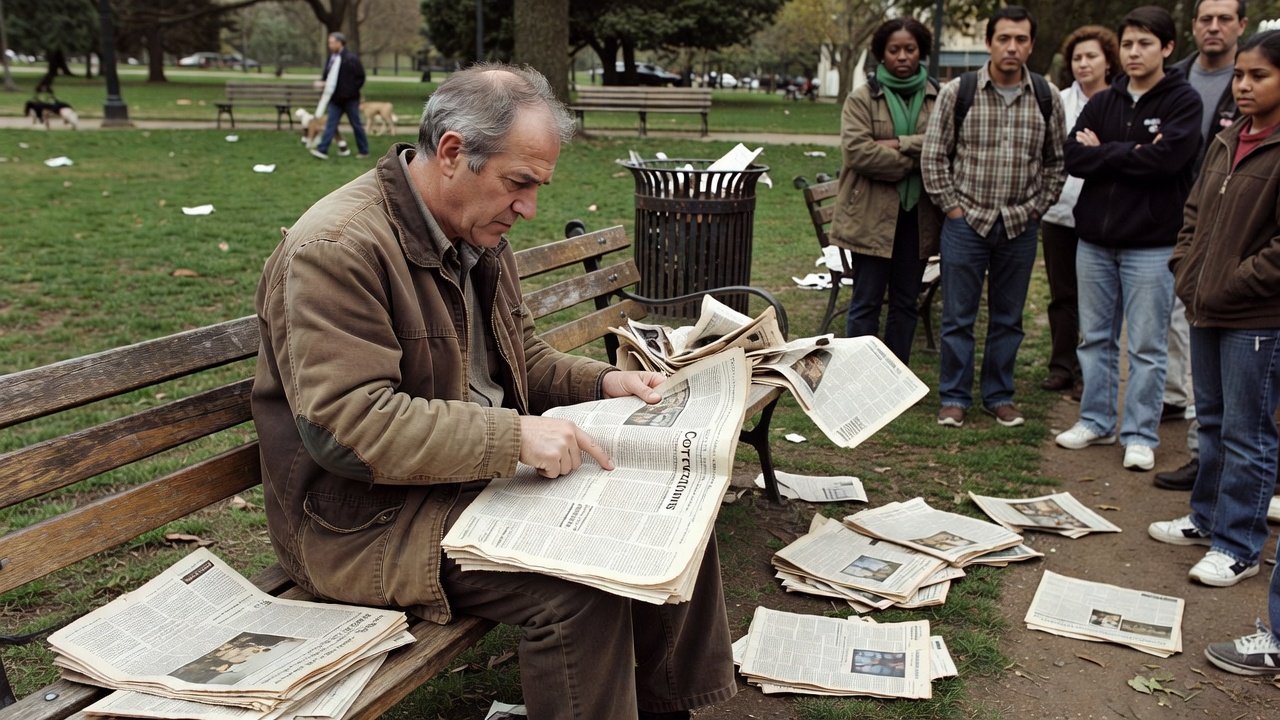
newspaper retraction correction
Generated by Grok Imagine (xAI), prompt: Generate a single 16:9 horizontal image for an educational lesson.
Lesson title: "Why Corrections Don't Fully Work" · The brain keeps using information it knows is false
Domain: psychology
Subject: ne…
misinformation correction experiment
Generated by Grok Imagine (xAI), prompt: Generate a single 4:3 horizontal image for an educational lesson.
Lesson title: "Why Corrections Don't Fully Work" · The brain keeps using information it knows is false
Domain: psychology
Subject: mis…
Quiz yourself