Psychology
·
Social Mind
·
obedience to authority
Medium
6 min
Primary Source
You Would Have Pressed the Button
What Stanley Milgram's 1963 experiment revealed about ordinary people and harm
Share
A scientist in a white coat tells you to keep going. The person in the next room is screaming. You keep going. You're not a monster — you're just a volunteer in a psychology study. Two-thirds of people in Stanley Milgram's experiment did exactly this.
Psychology has spent decades mapping the gap between who we think we are and who we actually turn out to be. The Social Mind is the study of that gap — specifically, how other people reshape your beliefs and behavior in ways you rarely notice. Conformity, social pressure, the persistence of false beliefs: each of these is its own mechanism, each with its own surprising evidence. But none of them hit harder than what Stanley Milgram (1933–1984, United States) — a social psychologist at Yale — published in 1963. He wanted to know, after the Holocaust, whether ordinary Americans would harm a stranger if an authority figure told them to. The answer was uncomfortable enough that people are still arguing about it.
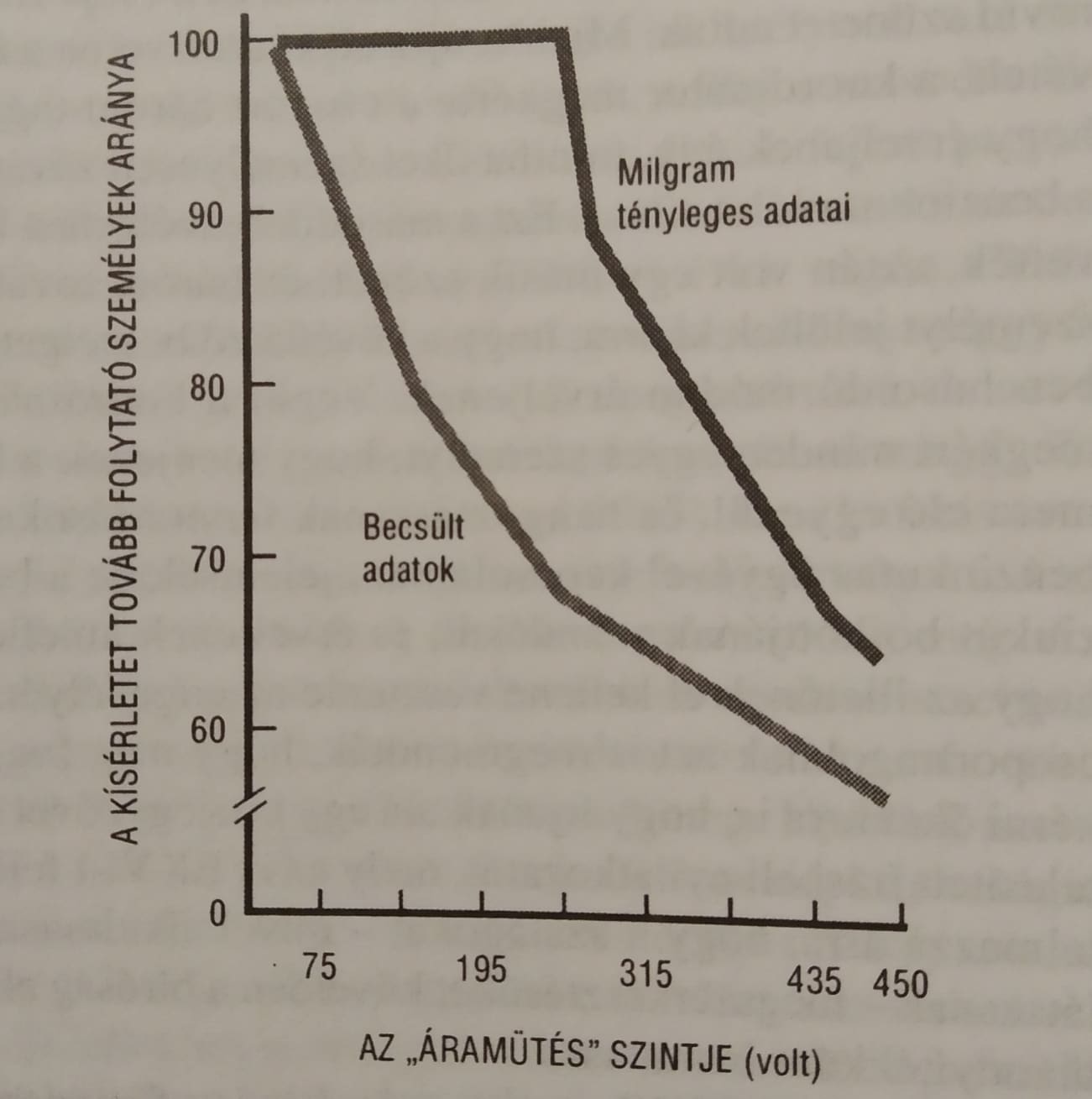
Here is the setup. You volunteer for what you're told is a memory study. You're assigned the role of 'Teacher.' Another volunteer — actually an actor — is the 'Learner,' strapped to a chair in the next room. You sit in front of a shock generator with switches labeled from 15 volts ('Slight Shock') up to 450 volts ('XXX'). Every time the Learner gets a memory question wrong, you're told to administer a shock and move one switch higher. At 150 volts, the Learner demands to be let out. At 300 volts, he stops responding entirely. A man in a grey lab coat sits beside you. If you hesitate, he says one of four scripted prompts: 'Please continue.' 'The experiment requires that you continue.' 'It is absolutely essential that you continue.' 'You have no other choice, you must go on.' That's it. No threats. No rewards. Just a calm voice in a position of authority.
Make your call
Before Milgram ran the study, he asked psychiatrists to predict the results. What percentage of ordinary American adults do you think pressed the switch all the way to 450 volts?
A
About 1–2% — only people with serious psychological problems
B
Around 30% — a troubling minority
C
65% — nearly two-thirds of participants
Key Insight
Here is Milgram's own description of what he saw, published in the Journal of Abnormal and Social Psychology in 1963:
"I observed a mature and initially poised businessman enter the laboratory smiling and confident. Within 20 minutes he was reduced to a twitching, stuttering wreck, who was rapidly approaching a point of nervous collapse. He constantly pulled on his earlobe, and twisted his hands. At one point he pushed his fist into his forehead and muttered: 'Oh God, let's stop it.' And yet he continued to respond to every word of the experimenter, and obeyed to the end."
— Stanley Milgram, 'Behavioral Study of Obedience,' Journal of Abnormal and Social Psychology, 1963
Notice what Milgram is describing: a man who knows something is wrong, says so, shows every physical sign of distress — and keeps going anyway. The obedience and the anguish coexist. That's the finding.
Look at the third sentence: 'he continued to respond to every word of the experimenter.' Milgram's point is not that this man felt nothing. He felt everything. The mechanism isn't numbness — it's the way authority creates a kind of moral displacement. The businessman handed responsibility upward. The experimenter said continue; the experimenter must know what's acceptable; therefore what happens next is the experimenter's fault, not mine. Milgram called this entering an 'agentic state' — shifting from acting as an autonomous person to acting as an instrument of someone else's will. The white coat didn't force anything. It just provided a structure that made compliance feel like the correct, reasonable, professional thing to do. That structure was enough.
Now the modern critiques, because they're real and they matter. Gina Perry (b. 1964, Australia), a science writer who dug into Milgram's original archives in the 2010s, found that the scripted prompts weren't always followed — some experimenters improvised, pressured participants more aggressively, or gave assurances that the Learner was fine. That's a methodological problem: if the authority figure went off-script, you can't cleanly isolate 'calm institutional authority' as the variable. Jerry Burger (b. 1952, United States), a psychologist at Santa Clara University, ran a partial replication in 2009 — stopping at 150 volts for ethical reasons — and found similar compliance rates, suggesting the effect is real. But he also found that participants who paused and questioned the setup were less likely to continue. Obedience isn't automatic. It's a default that can be interrupted — which is, depending on how you look at it, either reassuring or the most important thing Milgram ever taught.
Related threads
Psychology
·
You Know the Answer. Why Don't You Say It?
·
conformity
You Know the Answer. Why Don't You Say It?
Psychology
·
Why Corrections Don't Fully Work
·
the continued-influence effect
Why Corrections Don't Fully Work
Psychology
·
Does Willpower Run Out?
·
where willpower goes, if it goes anywhere
Does Willpower Run Out?
Sources
Images from Wikimedia Commons. Attribution required by license.
Becsült és tényleges behódolás ábra
Kurucz Marcsi · CC BY-SA 4.0
Stanley Milgram Yale psychologist
Generated by Grok Imagine (xAI), prompt: Generate a single 4:3 horizontal image for an educational lesson.
Lesson title: "You Would Have Pressed the Button" · What Stanley Milgram's 1963 experiment revealed about ordinary people and harm
Dom…
shock generator Milgram apparatus
Generated by Grok Imagine (xAI), prompt: Generate a single 4:3 horizontal image for an educational lesson.
Lesson title: "You Would Have Pressed the Button" · What Stanley Milgram's 1963 experiment revealed about ordinary people and harm
Dom…
Quiz yourself