Psychology
·
Social Mind
·
conformity
Medium
5 min
You Know the Answer. Why Don't You Say It?
Why smart people agree with things they know are wrong
Share
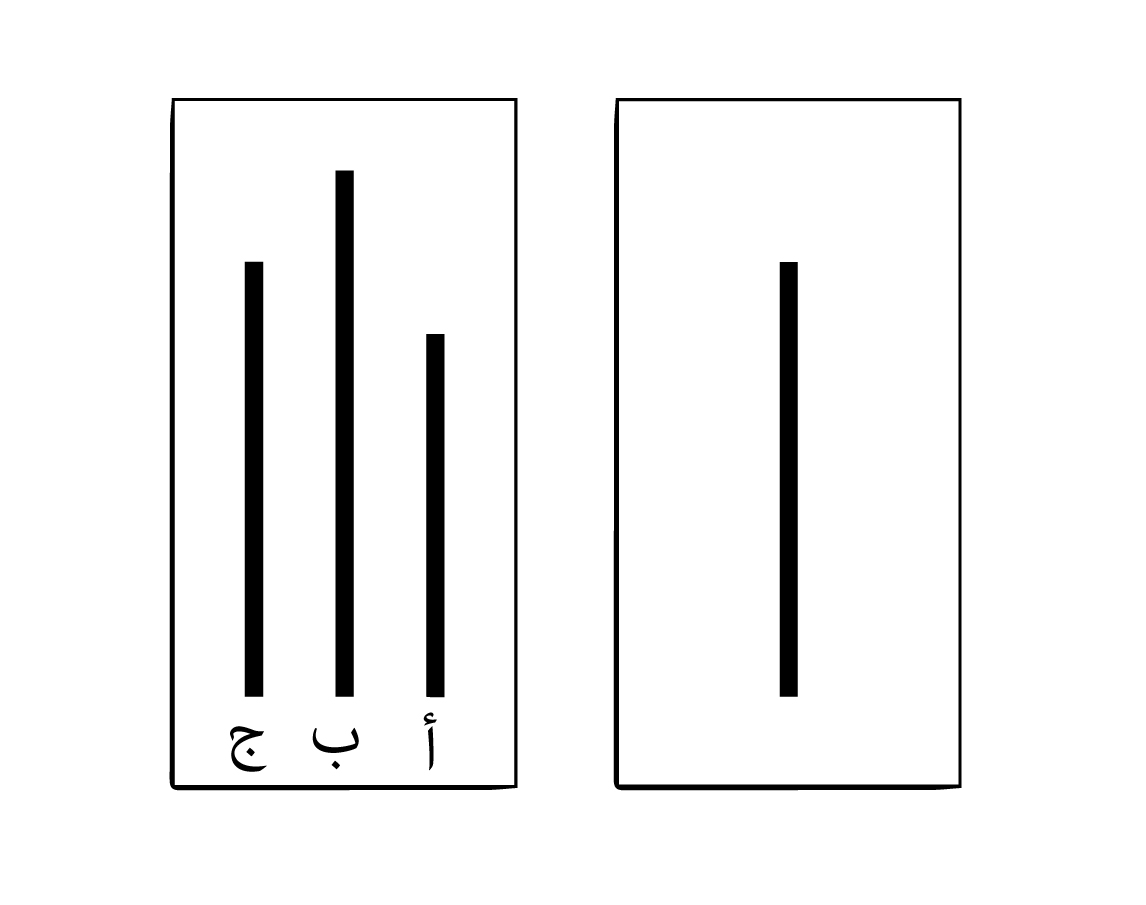
You're in a room with seven other people. Someone holds up two lines and asks which one is longer. The answer is obvious — you can see it. But one by one, everyone else picks the wrong line. Your turn. What do you say?
Psychology has a recurring obsession: how much do other people actually control you? Not through force, not through argument — just by being there, watching, existing in the same room. The Social Mind is the study of exactly this: how the presence of others reshapes what you believe, what you do, and sometimes what you think you see. There are several mechanisms at work — obedience, the stickiness of misinformation, the limits of willpower — each strange in its own way. But conformity is where it gets personal, because it happens to people who know better.
In 1951, Solomon Asch (1907–1996, Poland / United States) — a social psychologist at Swarthmore College — ran a deceptively simple study. Participants sat in a group and judged which of three lines matched a reference line. The correct answer was always obvious. But the other people in the room were actors, and they'd been told to give the wrong answer unanimously.
About 75% of real participants went along with the wrong answer at least once. Not because they couldn't see. When asked privately, they knew perfectly well which line was longer. They went along anyway.
Make your call
Think about those participants — educated adults, a completely obvious answer, no real stakes. What's your best guess for why most of them went along with the group?
A
They genuinely started to doubt their own eyesight
B
They knew they were wrong but didn't want to stand out
C
They assumed the group had information they didn't
That's the part that should unsettle you. Conformity isn't usually about being fooled. It's about the cost of dissent. Standing alone in a room full of people who disagree with you feels awful — even when those people are strangers, even when the stakes are zero, even when you're completely right. Asch found that having just one ally changed everything: if a single other person gave the correct answer, conformity rates dropped by about 75%. One person. That's all it took to make honesty feel survivable.
The pressure isn't coming from logic. It's coming from the part of your brain that's been tracking social exclusion since before you could talk.
Conformity gets sharper when the group is your group. This is in-group bias: you're more likely to defer to people you identify with — same team, same neighborhood, same political tribe — even when their judgment is worse. The mechanism runs deeper than just wanting approval. Your brain treats in-group consensus as evidence. If everyone on your side believes X, X starts to feel like reality, not just opinion. Disagreeing with your group doesn't just feel socially risky — it starts to feel factually wrong, which is a much harder thing to push back against.
That's why conformity isn't fixed by telling people to think for themselves. The pull isn't coming from laziness. It's coming from a social survival system that's been calibrated over tens of thousands of years.
Key Insight
You don't conform because you're weak. You conform because your brain treats social rejection as a threat — and it learned that lesson long before logic was in the picture. The question isn't whether you're susceptible. You are. The question is whether you know when it's happening.
Related threads
Psychology
·
You Would Have Pressed the Button
·
obedience to authority
You Would Have Pressed the Button
Psychology
·
Why Corrections Don't Fully Work
·
the continued-influence effect
Why Corrections Don't Fully Work
Psychology
·
Does Willpower Run Out?
·
where willpower goes, if it goes anywhere
Does Willpower Run Out?
Sources
Images from Wikimedia Commons. Attribution required by license.
تجربة آش 1951
Shadigaafar · CC BY-SA 4.0
Asch line experiment cards
Generated by Grok Imagine (xAI), prompt: Generate a single 4:3 horizontal image for an educational lesson.
Lesson title: "You Know the Answer. Why Don't You Say It?" · Why smart people agree with things they know are wrong
Domain: psychology…
Quiz yourself