Psychology
·
Decision And Attention
·
variable reward schedules
Easy
5 min
Why You Can't Stop Checking Your Phone
What slot machines figured out about your attention before your phone did
Share
You pick up your phone to check one thing. Eighteen minutes later you're watching a video about competitive dog grooming. Nobody made you do that. So what happened?
Your attention doesn't drift randomly. It gets pulled — by systems specifically designed to capture it. The field of decision and attention studies how your focus gets hijacked and your choices get shaped, often without you realizing either is happening. Most of the time, the mechanism isn't dramatic. It's a tiny loop, running quietly in the background, that your brain can't stop feeding.
B.F. Skinner (1904–1990, United States) — the psychologist who mapped how rewards shape behavior — ran an experiment in the 1950s where he put pigeons in boxes with levers. Some levers gave food every time. Some gave food on a fixed schedule. And some gave food randomly, unpredictably, only sometimes. The pigeons that got random rewards didn't stop pressing. They pressed obsessively, frantically, long after a reasonable pigeon would have given up. Skinner called this a variable reward schedule. The randomness wasn't a bug — it was the whole mechanism.
Make your call
So here's the question. If you want someone to keep doing something, which reward schedule makes them most persistent — giving a reward every single time, giving it on a fixed timer, or giving it randomly and unpredictably?
A
Every single time — reliable rewards build reliable habits
B
Fixed timer — people learn the rhythm and keep coming back
C
Random and unpredictable — uncertainty is the hook
Casinos figured this out before the psychologists named it. A slot machine that paid out every ten pulls would be boring — you'd play ten times, collect your money, and leave. A machine that pays out randomly keeps you pulling because every single pull might be the one. Your brain reads the uncertainty as a signal to stay alert. It releases dopamine not just when you win, but when you're about to find out. The anticipation is the reward.
Now think about what happens when you pull down to refresh your email. Or scroll your feed. Or open a messaging app. Each gesture is a lever pull. Sometimes there's something good — a message from someone you care about, a post that makes you laugh. Most of the time, nothing. But you can't know until you check. So you check. Again.
Key Insight
The slot machine in your pocket isn't a metaphor. It's the same psychological mechanism, running on the same variable schedule, engineered by people who studied exactly this research. The only difference is the lever fits in your thumb.
What makes variable schedules so hard to escape is that they're resistant to extinction — the technical term for when a behavior stops because it stops working. If you press a lever that never gives food, you stop pressing. But if you press a lever that gives food unpredictably, you keep pressing even through long dry spells, because the last reward taught you that a dry spell doesn't mean it's over. Every 'nothing' pull is just evidence that the next one might pay off. Your brain doesn't quit. It doubles down.
This is why turning off notifications doesn't fully fix it. The compulsion to check isn't about the notification — it's about the possibility of what might be there. You already know the mechanism. The question is whether knowing it changes anything.
Related threads
Psychology
·
Your Brain Decides First, Explains Later
·
post-hoc rationalization
Your Brain Decides First, Explains Later
Psychology
·
The Choice You Never Made
·
the default effect
The Choice You Never Made
Psychology
·
Why One Face Moves You More Than a Million Deaths
·
the identifiable-victim effect
Why One Face Moves You More Than a Million Deaths
Sources
Images from Wikimedia Commons. Attribution required by license.
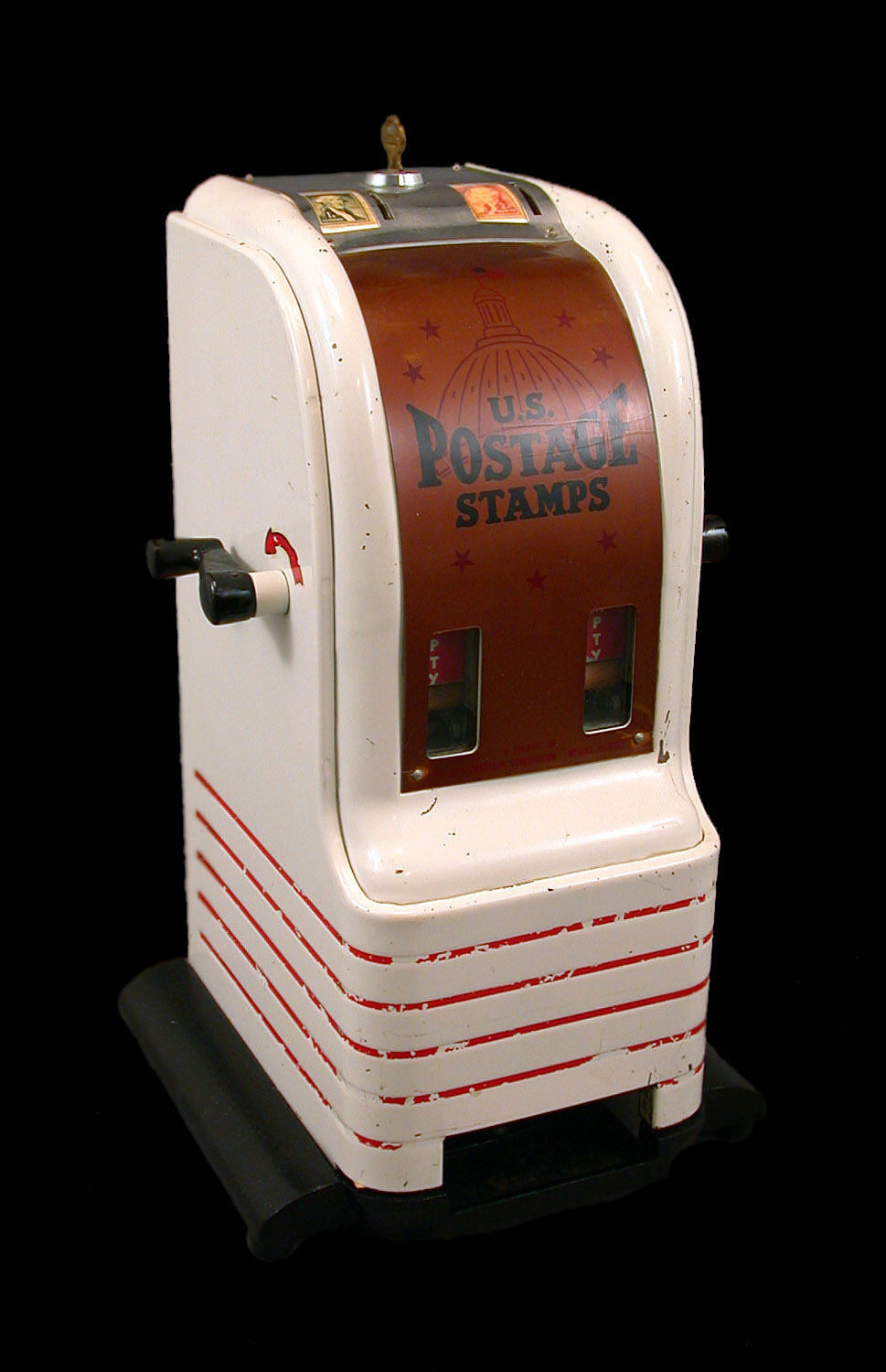
Two-slot stamp vending machine with side levers — c. 1954-1980s
NPM via Smithsonian Open Access (CC0)
Skinner box experiment
Generated by Grok Imagine (xAI), prompt: Generate a single 4:3 horizontal image for an educational lesson.
Lesson title: "Why You Can't Stop Checking Your Phone" · What slot machines figured out about your attention before your phone did
Dom…
Quiz yourself