Psychology
·
Decision And Attention
·
the identifiable-victim effect
Easy
5 min
Why One Face Moves You More Than a Million Deaths
Why one child's story raises more money than a million-person statistic
Share
In 2003, a two-year-old girl named Rokia from Mali appeared in a Save the Children ad. Donations poured in. Around the same time, a report describing food shortages affecting 3 million children across Africa raised almost nothing. Same crisis. Same urgency. One face versus a number.
Most of the time, your brain doesn't make decisions by carefully weighing evidence. It makes them by paying attention — and attention is not neutral. It gets grabbed by certain things and slides right past others. This is the territory that Decision and Attention research maps: the invisible forces that shape what you notice, what you feel, and what you ultimately choose. One of the most powerful forces in that territory has a name: the identifiable victim effect.
The basic finding is almost embarrassing in its simplicity. Tell people about a specific, named individual suffering — a face, a story, a name — and they give generously. Show them data about thousands of people suffering the same way, and they give far less. The numbers should make you care more. More people, more suffering, more urgency. Instead, they make you care less. Psychologist Paul Slovic (b. 1938, United States) — who has spent decades studying how people perceive risk and tragedy — called this collapse of compassion. The bigger the number, the more abstract it feels, and the less your emotions engage.
Make your call
Researchers gave people $5 and asked them to donate to a food charity. One group got statistics: millions of children facing starvation across several countries. Another group got a story: one seven-year-old girl named Rokia, her face in the photo. What do you think happened?
A
The statistics group gave more — bigger numbers signal bigger urgency
B
Both groups gave roughly the same amount
C
The story group gave significantly more than the statistics group
Slovic's research went one step further, and this is the part that sticks. A third group in that study got both: Rokia's story AND the statistics. You'd expect that to be the most persuasive combination. It wasn't. Adding the numbers actually reduced donations compared to the story alone. The data didn't amplify the emotion — it diluted it. Somewhere in your brain, shifting into analytical mode turns down the volume on empathy. You can feel for a person. You can't feel for a population.
Key Insight
This is scope insensitivity in action: your emotional response doesn't scale with the size of the problem. 10,000 deaths doesn't feel ten times worse than 1,000. It barely feels different at all. The number stops meaning anything. The story never stops meaning something.
This isn't a flaw in bad people — it's a feature of how human attention evolved. For most of human history, suffering meant a specific person in front of you. Your brain built its empathy circuitry for that world, not for a world of global statistics and eight-billion-person abstractions. The result: a single child in a photograph can mobilize more resources than a famine affecting a continent. Charities, journalists, and political campaigns all know this. Every 'sponsor a child' program, every missing-person poster, every documentary that follows one family through a disaster — they're all running the same playbook. Give the audience someone to see, and the money follows. The mechanism isn't manipulation exactly. It's just how attention works.
Related threads
Psychology
·
Your Brain Decides First, Explains Later
·
post-hoc rationalization
Your Brain Decides First, Explains Later
Psychology
·
The Choice You Never Made
·
the default effect
The Choice You Never Made
Psychology
·
Why You Can't Stop Checking Your Phone
·
variable reward schedules
Why You Can't Stop Checking Your Phone
Sources
Images from Wikimedia Commons. Attribution required by license.
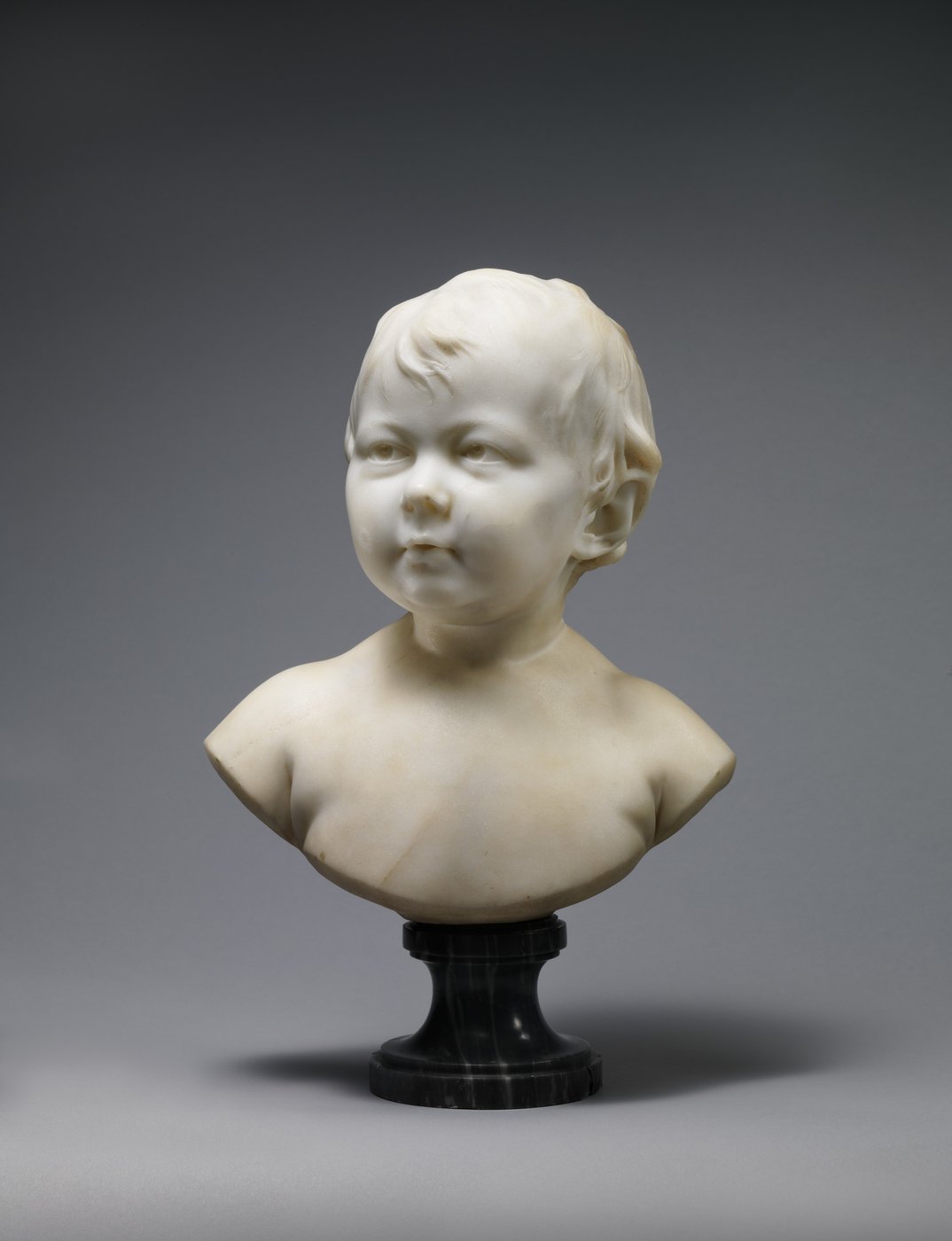
Sabine Houdon (1787–1836) — 1788
Jean Antoine Houdon via The Metropolitan Museum of Art (Public Domain)
Quiz yourself