Psychology
·
Decision And Attention
·
the default effect
Easy
5 min
The Choice You Never Made
Why the option you never picked is running your life
Share
In Austria, over 99% of people are registered organ donors. In Germany next door, under 12% are. Same continent, similar culture, similar laws. The difference? A single checkbox.
Most of the time, you think you're making choices. You pick your phone plan, your retirement contribution, whether to donate your organs. But psychologists who study attention and decision-making have found something uncomfortable: a huge portion of what looks like a choice is just you going along with whatever someone else set up in advance. Your attention lands on the path of least resistance, and your brain calls it a decision. This lesson is about the most powerful version of that — the default effect.
A default is whatever happens if you do nothing. Opt-out organ donation means you're a donor unless you fill out a form to say otherwise. Opt-in means you're not a donor unless you fill out a form to say you are. The action required is almost identical. The outcome is not. Countries with opt-out defaults have donor rates above 90%. Countries with opt-in defaults hover around 15%. The form didn't change anyone's values. It changed who had to move.
Make your call
Your employer sets up a retirement savings plan. Employees can contribute 3% of their salary automatically, or opt out. What share of employees do you think stays enrolled?
A
Around 40% — most people want control over their money
B
Around 60% — a slight majority go with the flow
C
Around 85% — almost everyone stays with the default
Richard Thaler (b. 1945, United States) — economist who won the 2017 Nobel Prize for showing how small design choices shape large-scale behavior — called this 'choice architecture.' The person who sets the default is making a decision on your behalf whether they mean to or not. A 401(k) plan that defaults to 0% contribution isn't neutral. It's a policy that produces undersaving. A phone that defaults to location tracking on isn't neutral. It's a policy that produces surveillance. Neutrality is a myth. Someone always picks the default.
Key Insight
The default wins not because people prefer it — but because changing it costs effort, and effort is the one thing our brains are always trying to conserve. Inertia isn't laziness. It's the operating system.
Remember that Austrian checkbox from the hook? Austria uses opt-out. Germany uses opt-in. Neither country passed a law forcing anyone to donate. Neither ran a major awareness campaign. The gap in donation rates — 99% versus 12% — comes entirely from which direction you have to move to express your preference. When staying put means donating, almost everyone donates. When staying put means not donating, almost no one donates. The default isn't a suggestion. It's a gravitational field. Knowing this won't make you immune to it, but it will make you ask one more question the next time something is 'automatically included': who set this up, and what did they want to happen?
Related threads
Psychology
·
Your Brain Decides First, Explains Later
·
post-hoc rationalization
Your Brain Decides First, Explains Later
Psychology
·
Why One Face Moves You More Than a Million Deaths
·
the identifiable-victim effect
Why One Face Moves You More Than a Million Deaths
Psychology
·
Why You Can't Stop Checking Your Phone
·
variable reward schedules
Why You Can't Stop Checking Your Phone
Sources
Images from Wikimedia Commons. Attribution required by license.
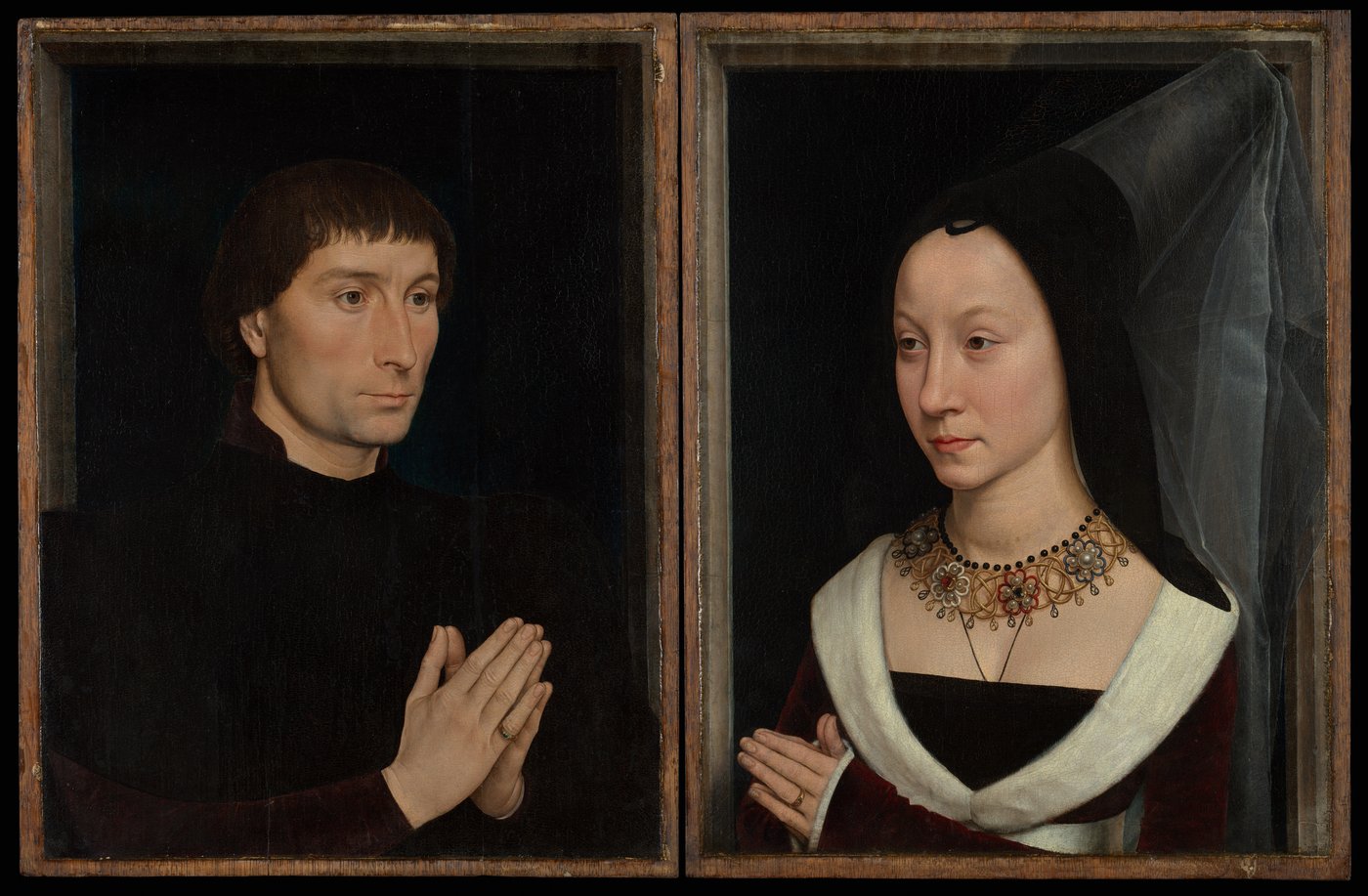
Tommaso di Folco Portinari (1428–1501); Maria Portinari (Maria Maddalena Baroncelli, born 1456) — ca. 1470
Hans Memling via The Metropolitan Museum of Art (Public Domain)
organ donation statistics comparison
Generated by Grok Imagine (xAI), prompt: Generate a single 4:3 horizontal image for an educational lesson.
Lesson title: "The Choice You Never Made" · Why the option you never picked is running your life
Domain: psychology
Subject: organ don…
Quiz yourself