Psychology
·
Cognitive Biases
·
present bias
Easy
5 min
Why You Keep Promising Tomorrow-You Will Deal With It
The mental glitch that makes future consequences feel fake
Share
You set your alarm for 6am to work out. Night-you feels great about this. Morning-you hits snooze four times. Same person. Completely different priorities. So what happened between 11pm and 6am?
Your brain is not a neutral calculator. It's a machine built for survival, which means it's riddled with shortcuts — predictable patterns of thought that work well in some situations and fail spectacularly in others. Psychologists call these cognitive biases. They're not signs of stupidity. They're systematic, meaning everyone has them, and they fire the same way under the same conditions. One of the most consequential is present bias — the tendency to overvalue what's happening right now and heavily discount what happens later. Even when 'later' is tomorrow morning.
The core of present bias is simple: your brain treats future rewards and future costs as if they're smaller than they actually are. The further away something is in time, the less real it feels. A $100 reward today feels worth more than a $100 reward next week, even though the math is identical. A consequence you'll face in three months barely registers compared to a consequence you'll face in three minutes. Economists have a technical term for this — hyperbolic discounting — but the lived experience is just: you make a deal with tomorrow-you, and tomorrow-you didn't agree to it.
Make your call
You're offered a choice: $50 right now, or $100 in two weeks. Most people, when asked, say they'd take the $100. But what do you think people actually do when the moment arrives?
A
They wait for the $100 — the math is obvious
B
They take the $50 — the present feels more real than the future
C
It depends on how much money they already have
Remember the alarm clock? Night-you and morning-you are running on different reward systems. At 11pm, the future workout feels vivid and motivating — you can picture yourself feeling great afterward. But at 6am, the cost is immediate (cold, tired, warm bed) and the reward is still abstract (fit, healthy, accomplished). Present bias means the immediate cost wins almost every time. Night-you made a promise that morning-you had no intention of keeping — not out of laziness, but because morning-you is playing a fundamentally different game.
Example
This isn't just about sleep. Present bias shows up in credit card debt — the purchase feels real now, the bill feels distant. It shows up in procrastination — the discomfort of starting a project is immediate, the relief of finishing it is far away. It shows up in health decisions, retirement savings, and every time you've said 'I'll start Monday.' The structure is always the same: today-you gets the benefit, tomorrow-you gets the cost. And tomorrow-you never gets a vote.
Key Insight
The fix isn't willpower. Willpower is just future-you fighting present-you in real time, and present-you has home-field advantage. The actual fix is removing the choice — automatic savings transfers, pre-committing to plans, making the future cost feel immediate. When researchers gave people smaller spoons at an ice cream station, they ate less without deciding to. The environment made the future consequence feel present. That's the lever.
Related threads
Psychology
·
The First Number You Hear Is Running Your Life
·
anchoring
The First Number You Hear Is Running Your Life
Psychology
·
Losing Hurts Twice As Much As Winning Feels Good
·
loss aversion
Losing Hurts Twice As Much As Winning Feels Good
Psychology
·
Why Smart People Believe Wrong Things
·
motivated reasoning
Why Smart People Believe Wrong Things
Sources
Images from Wikimedia Commons. Attribution required by license.
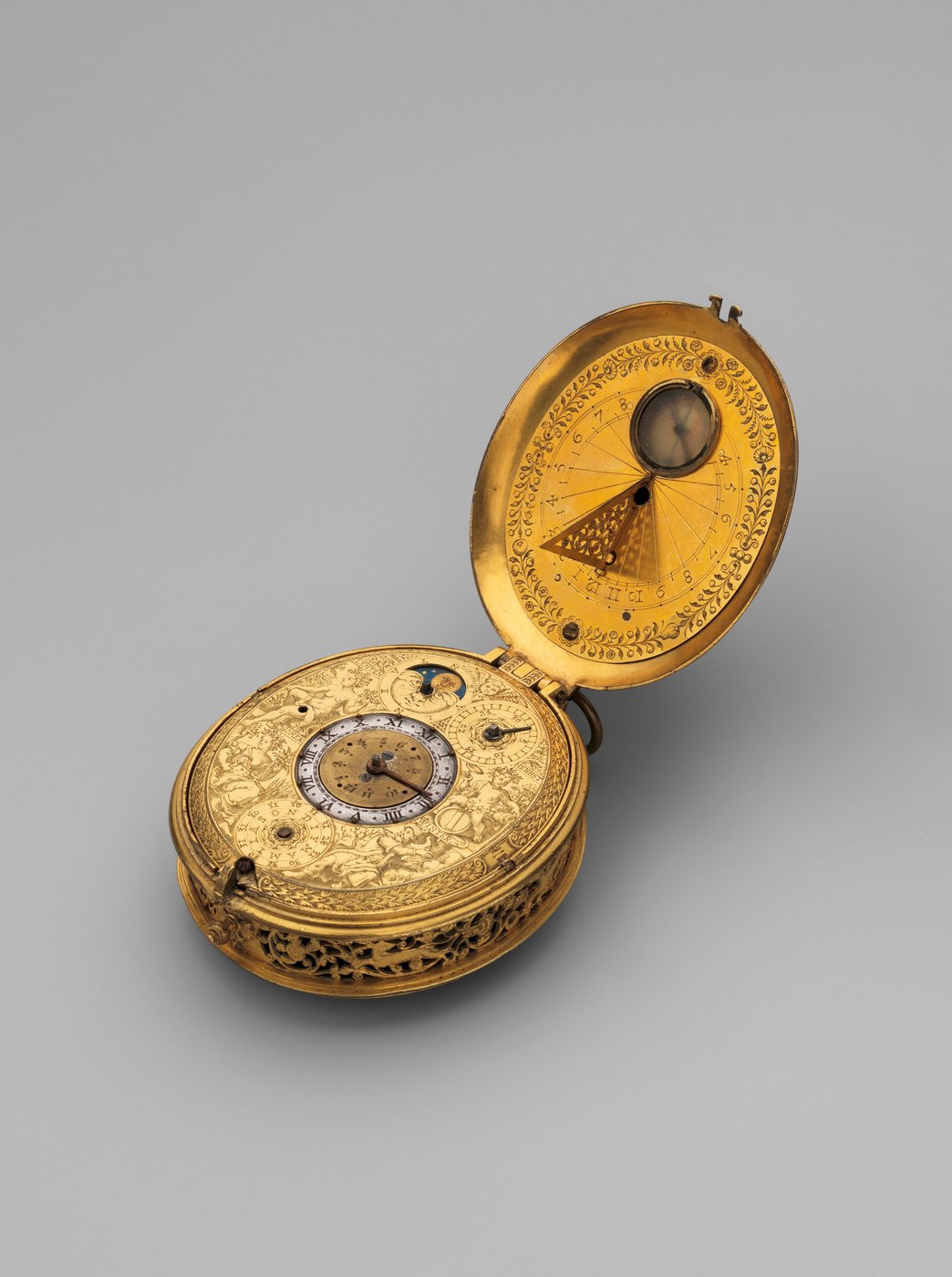
Clock watch with astronomical dial and sundial — ca. 1605–10
Jan Jansen Bockeltz via The Metropolitan Museum of Art (Public Domain)
Joan of Arc — 1879
Jules Bastien-Lepage via The Metropolitan Museum of Art (Public Domain)
Quiz yourself