Personal-finance
·
Risk And Pricing
·
what a credit score actually measures…
Medium
5 min
The Stranger Who Decides If You Get the Loan
Your credit score is not a grade on your financial habits
Share
You've never missed a rent payment. You pay your phone bill on time every month. You have $4,000 in savings. A bank looks at you and sees a risky stranger. How is that possible?
Every time you borrow money — a mortgage, a car loan, a credit card — someone has to decide whether to trust you with it. That decision is a risk calculation. The lender is betting that you'll pay them back. If you don't, they lose. So before they hand over a dollar, they want to know: what are the odds this person defaults?
The problem is they've never met you. They don't know you're responsible. They can't feel it. They need a number. That number is your credit score.
A credit score doesn't measure whether you're a good person with money. It measures one specific thing: how reliably you've repaid borrowed money in the past, and whether your current borrowing looks sustainable.
That's it. Your savings account? Mostly invisible to the score. Your income? Not directly in it. The fact that you've never bounced a rent check? Doesn't count unless your landlord reports to a credit bureau, which most don't.
This is why the person with $4,000 in savings but no credit history looks, to a lender's model, almost identical to someone with $0 in savings and no credit history. Both are unknowns. And lenders charge more — or say no — for unknowns.
Make your call
You've had the same job for three years, earn a solid income, and always pay your bills on time. But you've never had a credit card or taken out a loan. What does a lender see when they pull your file?
A
A reliable borrower — steady income signals low risk
B
No file at all — you're an unknown, which is risky by default
C
A high score, because zero debt means zero defaults
So what actually moves the number? Five things, in rough order of weight:
Payment history is the biggest one — about 35% of your FICO score. Did you pay on time? Every late payment is a data point that says you might do it again.
Credit utilization is second — roughly 30%. This is the ratio of what you owe to what you could borrow. Owe $3,000 on a card with a $4,000 limit? That 75% utilization looks stressed. Owe $500 on the same card? That's a different signal entirely.
Length of credit history, mix of credit types, and recent new applications make up the rest. Opening five new cards in six months looks like someone scrambling for cash. Closing your oldest card shortens your history and can drop your score even if you've done nothing wrong.
None of these measure your character. They measure your pattern.
Key Insight
The lender isn't seeing you. They're seeing a statistical portrait of someone who looks like you on paper — and pricing the loan based on what people with that portrait have done historically. Your actual intentions are irrelevant. Your documented behavior is everything.
Now for the counterintuitive part. Paying off and closing a credit card you no longer use can hurt your score. Not because you did anything irresponsible — but because it reduces your available credit (raising utilization on remaining cards) and may shorten your average account age. The model doesn't know you're being tidy. It just sees the numbers shift.
Similarly, carrying a small balance from month to month used to be folk wisdom for building credit. It's mostly wrong — you pay interest for no benefit. What actually builds score is using credit regularly and paying it off in full, so the bureau sees active, clean payment history.
The score is a machine. Feed it the inputs it's designed to read, not the inputs that feel virtuous.
Related threads
Personal-finance
·
Your Emergency Fund Is Doing Something
·
emergency funds
Your Emergency Fund Is Doing Something
Personal-finance
·
You're Paying to Lose a Bet Every Month
·
insurance is a bet you hope to lose —…
You're Paying to Lose a Bet Every Month
Personal-finance
·
Should You Buy a Home or Keep Renting?
·
rent or buy
Should You Buy a Home or Keep Renting?
Sources
Images from Wikimedia Commons. Attribution required by license.
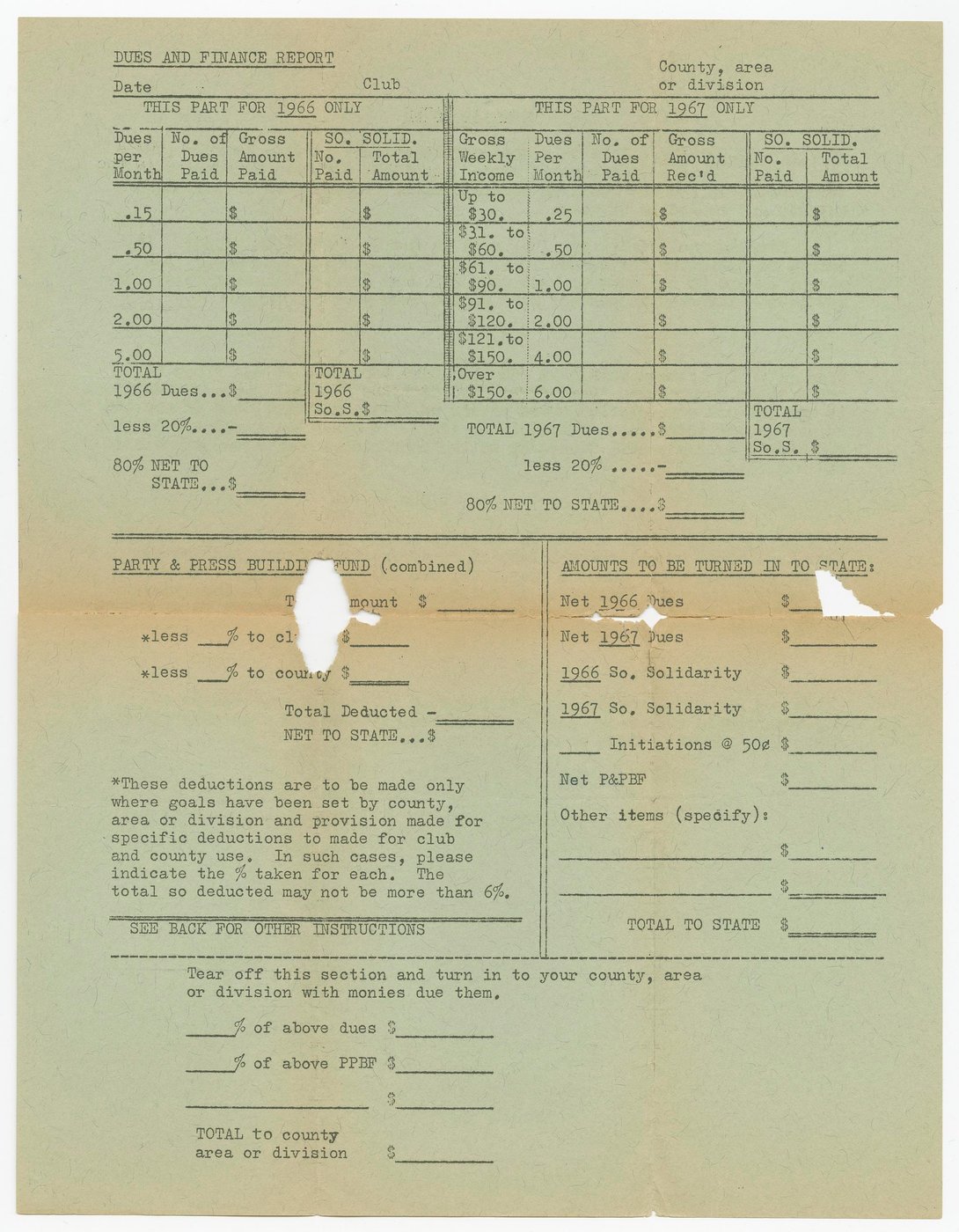
Dues and finance report — ca. 1966
Collection of the Smithsonian National Museum of African American History and Culture, Gift of the family of Dr. Maurice Jackson and Laura Ginsburg via Smithsonian Open Access (CC0)
Quiz yourself