Personal-finance
·
Risk And Pricing
·
emergency funds
Medium
5 min
Your Emergency Fund Is Doing Something
Why holding cash that earns almost nothing is one of the smartest financial moves you can make
Share
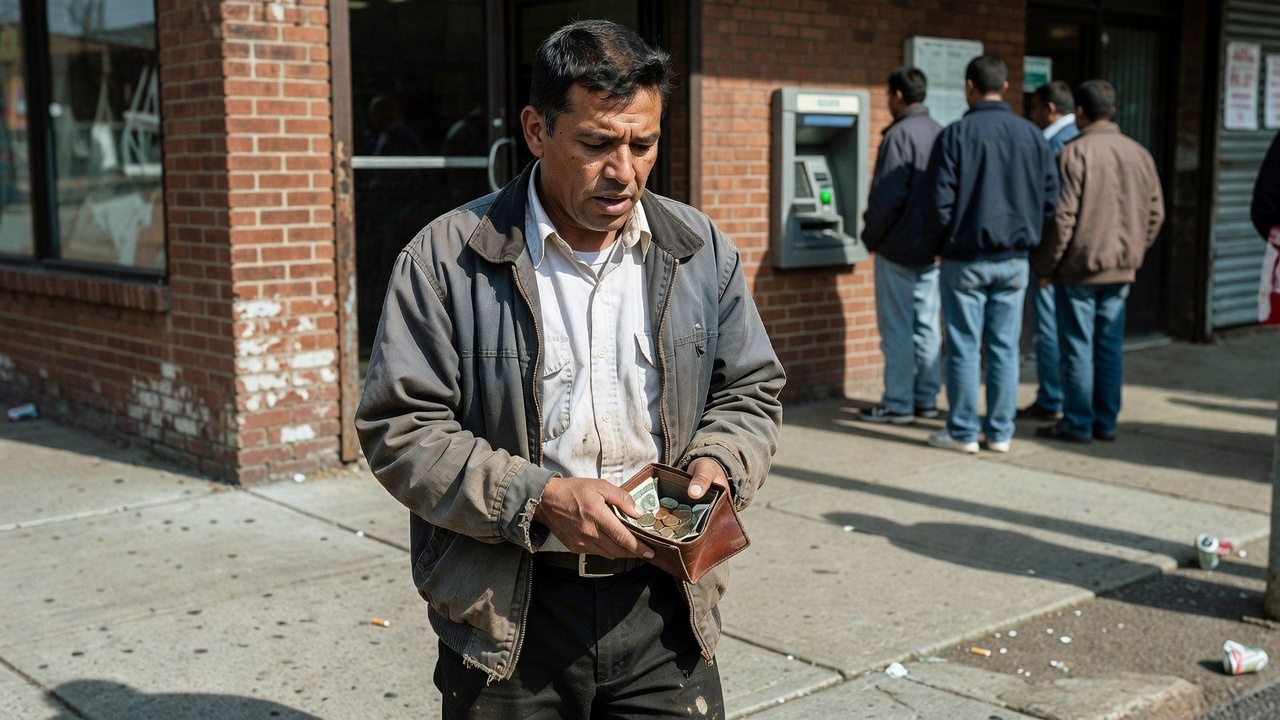
Your car dies in February. Repair bill: $1,400. You have $23 in your checking account. What happens next — and what does that moment actually cost you?
Money is full of hidden machines. Insurance, credit, and investment portfolios are all ways of moving risk around — deciding who bears it, how much it costs, and who profits from taking it on. This lesson is about the simplest machine of all: a pile of cash you hope you never need.
An emergency fund doesn't feel like a financial instrument. It sits in a savings account earning maybe 4% interest if you're lucky, doing nothing visible. Meanwhile your friends are investing, their portfolios compounding, and your cash is just... there. That feeling — that you're leaving money on the table — is real. And it's also the wrong way to think about what the money is actually doing.
What you're actually buying with an emergency fund is liquidity. Liquidity means the ability to convert something into cash immediately, at full value, without penalty. A stock is liquid. A house is not. A savings account is perfectly liquid.
Liquidity has a price. When you hold cash instead of investing it, you pay that price every single month in the form of foregone returns. If your emergency fund sits at $10,000 and the market returns 8% annually, you're giving up roughly $800 a year to keep that money accessible. That's the cost of liquidity — and it's a real cost, not an imaginary one.
Make your call
So what does that $800 actually buy you? If the cost is real, the thing it purchases should be real too. What do you think an emergency fund is really protecting against?
A
It protects against losing money in the stock market
B
It protects against being forced to make bad financial decisions under pressure
C
It protects against overspending on everyday purchases
Back to that $1,400 car repair. If you don't have the cash, your options are: put it on a credit card at 22% APR, pull from a retirement account (paying income tax plus a 10% early withdrawal penalty), ask someone for money, or don't fix the car and lose your job. Every single option costs more than $1,400. The credit card alone could turn that repair into $2,000 by the time you pay it off. The retirement withdrawal could cost you $500 in penalties plus the compounding returns you'll never get back.
This is what the emergency fund is actually purchasing: the ability to say yes to the $1,400 option instead of the $2,000 one. The $800 a year you're giving up in foregone returns is buying you protection from decisions made under duress — when you're scared, when you're rushed, when your options have collapsed to whatever you can do right now.
Key Insight
An emergency fund doesn't prevent emergencies. It prevents emergencies from becoming financial disasters. The cash isn't sitting idle — it's standing guard.
The standard advice is three to six months of living expenses. That range isn't arbitrary. It maps to how long the average job search takes, how long a medical recovery might sideline you, how long a major repair cycle runs. The fund is sized to the duration of the most common crises, not the worst imaginable ones.
One thing people get wrong: they think of the emergency fund as money they're not investing. Flip it around. The emergency fund IS an investment — in the stability of every other financial decision you make. Without it, one bad month can force you to sell investments at the wrong time, take on high-interest debt, or drain the accounts that were supposed to compound for thirty years. The cost of liquidity is real. But the cost of illiquidity, when a crisis hits, is reliably higher.
Related threads
Personal-finance
·
You're Paying to Lose a Bet Every Month
·
insurance is a bet you hope to lose —…
You're Paying to Lose a Bet Every Month
Personal-finance
·
Should You Buy a Home or Keep Renting?
·
rent or buy
Should You Buy a Home or Keep Renting?
Personal-finance
·
The Stranger Who Decides If You Get the Loan
·
what a credit score actually measures…
The Stranger Who Decides If You Get the Loan
Sources
Images from Wikimedia Commons. Attribution required by license.
empty wallet emergency
Generated by Grok Imagine (xAI), prompt: Generate a single 16:9 horizontal image for an educational lesson.
Lesson title: "Your Emergency Fund Is Doing Something" · Why holding cash that earns almost nothing is one of the smartest financial …
Quiz yourself