Governance
·
Cross Cutting
·
fast decisions, broad acceptance
Hard
6 min
Every Government Has to Choose: Fast or Fair
Why the systems that decide quickly are never the ones everyone trusts
Share
A city is flooding. The mayor can evacuate the low-lying district right now — or wait three days for a council vote. By the time the vote passes, the basements are underwater. By the time the executive acts alone, people are asking: who gave her the right?
Every governance system — a democracy, a city council, a corporate board, a military command — faces the same structural tension baked into its design. The more people who have to agree before a decision is final, the slower the decision gets. The faster you want to move, the fewer people you can afford to consult. This isn't a flaw in any particular system. It's a tradeoff built into the physics of collective decision-making. Political scientists sometimes call one side of this 'decisiveness' and the other 'legitimacy.' Most governance lessons focus on who holds power. This one is about what holding power actually costs.
Speed and legitimacy pull in opposite directions for a simple reason: legitimacy comes from inclusion. When more people participate in a decision — debate it, amend it, vote on it — the outcome carries more weight. The losing side still accepts it because they had a real shot at winning. But every additional voice in the room adds time, adds the possibility of deadlock, adds the chance that the moment for action passes before the decision arrives. Rome knew this. The Roman Republic had a Senate, two consuls who could veto each other, and ten tribunes who could veto everyone. It also had a single office reserved for genuine emergencies: the dictator. Appointed for six months, answerable to no one, empowered to act immediately. The Republic was, in effect, admitting that its normal system was too slow to survive a real crisis.
Make your call
A country faces an unexpected economic collapse. The president can issue emergency decrees immediately, or wait for parliament to debate and vote — a process that takes six weeks. What happens if the president acts alone?
A
The crisis gets solved faster and everyone moves on
B
The decision is faster, but its legitimacy takes damage — people question whether it was legal or fair
C
Parliament will simply ratify whatever the president did, so it doesn't matter
The flooding mayor who evacuates without a vote saves the basements. She also hands her opponents a permanent argument: that she doesn't respect the process. That argument doesn't disappear when the water recedes. This is the legitimacy debt — fast decisions borrow authority from future goodwill. Sometimes that's the right call. Sometimes the debt comes due at the worst possible moment. The countries that have navigated this best tend to do one of two things. They pre-authorize speed in specific, narrow circumstances (emergency powers with hard expiration dates, executive orders limited to defined domains). Or they invest so heavily in building consensus during normal times that when a fast decision is needed, the trust reservoir is full enough to cover it. Neither approach eliminates the tradeoff. They just manage it.
Key Insight
The tradeoff is structural, not moral. A leader who moves fast isn't necessarily a tyrant. A system that moves slowly isn't necessarily fair. The question every governance design has to answer is: under what conditions do we let speed override inclusion — and who decides when those conditions are met?
The flooding mayor from the hook is still standing in the rain. If she waits, the damage is physical. If she acts, the damage is political. There's no version of this where she escapes the tradeoff — only versions where she makes a defensible choice about which cost she's willing to pay. That's not a failure of leadership. That's the actual job. Every governance system that has ever existed has had to answer the same question, and none of them has found a way out. They've only found different places to draw the line.
Related threads
Governance
·
The Man Who Predicted Political Chaos in 1787
·
the paper that predicted faction
The Man Who Predicted Political Chaos in 1787
Governance
·
Why Democracies Keep Collapsing to Two Parties
·
Duverger's law
Why Democracies Keep Collapsing to Two Parties
Governance
·
Why Every Organization Eventually Fights Itself
·
principal-agent problems
Why Every Organization Eventually Fights Itself
Sources
Images from Wikimedia Commons. Attribution required by license.
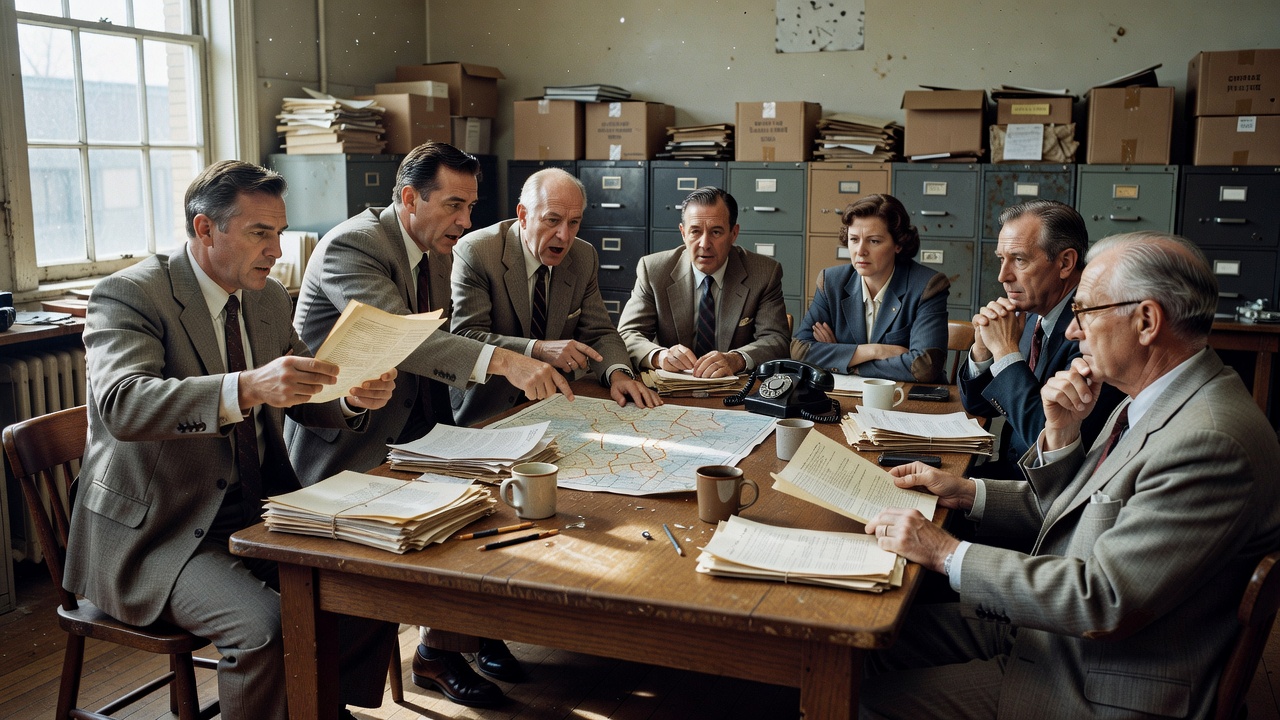
emergency government decision
Generated by Grok Imagine (xAI), prompt: Generate a single 16:9 horizontal image for an educational lesson.
Lesson title: "Every Government Has to Choose: Fast or Fair" · Why the systems that decide quickly are never the ones everyone trusts…
Quiz yourself