Governance
·
Non State Organizations
·
the UN, WTO, and EU decide without the…
Medium
6 min
The World's Most Powerful Institutions Have No Army
How global bodies make rules that nations actually follow without any way to force them
Share
The World Trade Organization ruled against the United States in 2002. The US had slapped tariffs on imported steel, and the WTO said: illegal. The US had to back down. The WTO has no army, no police, no jails. So how did it win?
Most of the power you encounter every day comes attached to enforcement. A speed limit has a cop behind it. A contract has a court. A law has a prison. But some of the most consequential decisions in the world — decisions that move trillions of dollars, open borders, and end wars — come from organizations that can't arrest anyone, seize anything, or fire a single shot. These are non-state organizations: bodies that sit outside any single government and hold real authority without the usual machinery of force. The UN, the WTO, and the EU are the three biggest examples. Understanding how they work means understanding a completely different kind of power.
Start with the basic problem. If you want countries to cooperate — on trade, on war, on climate — you need somewhere they can make collective decisions. But every country is sovereign. No country has to do what another country says. So you build an institution where they all agree, in advance, to certain rules and a process for applying them. The institution doesn't have power over countries. It has power because countries gave it power, voluntarily, and keep choosing to honor that arrangement.
Make your call
The WTO ruled against the US steel tariffs in 2002. The US had no legal obligation to comply — no global sheriff could make them. What actually happened?
A
The US ignored the ruling and kept the tariffs
B
The WTO imposed financial penalties until the US complied
C
The US lifted the tariffs to avoid retaliatory tariffs from trading partners
That's the mechanism. The WTO doesn't enforce its rulings — it authorizes retaliation. When it rules against you, every other member is now legally permitted to hit your exports with equivalent tariffs. The institution converts a bilateral dispute into a multilateral permission slip. Suddenly it's not the WTO versus the US. It's the US versus everyone who trades with it. That's a very different fight. The same logic runs through the UN Security Council: resolutions don't compel action, but they authorize member states to act collectively — sanctions, arms embargoes, peacekeeping forces — in ways that would otherwise violate sovereignty norms. The institution doesn't enforce. It coordinates enforcement by others.
Key Insight
These organizations don't have power instead of states. They have power because states find it useful to pool their leverage through a shared institution. The moment states stop finding it useful, the institution hollows out. That's not a flaw in the design — it's the whole design.
The EU is the most interesting case because it went further than anyone expected — and hit the same ceiling anyway. EU law is genuinely binding on member states in a way that WTO rulings aren't. The European Court of Justice can rule against a country, and that country's own courts are obligated to apply EU law. But 'obligated' still depends on political will. When Hungary or Poland defied EU court rulings on judicial independence, the enforcement mechanism was fines and suspended funding — not tanks. The EU's ultimate leverage is the same as the WTO's: make non-compliance expensive enough that compliance becomes the rational choice. Brexit showed the other side of that coin. When a country decides the costs of membership outweigh the benefits, the institution can't hold them. There's no door that locks from the outside.
Related threads
Governance
·
Who Actually Decides How the Internet Works?
·
rough consensus and running code
Who Actually Decides How the Internet Works?
Governance
·
When the Donor Becomes the Boss
·
the NGO that forgot its mission…
When the Donor Becomes the Boss
Governance
·
Why Some Unions Last 200 Years and Others Die in a Decade
·
why some trade unions last centuries…
Why Some Unions Last 200 Years and Others Die in a Decade
Sources
Images from Wikimedia Commons. Attribution required by license.
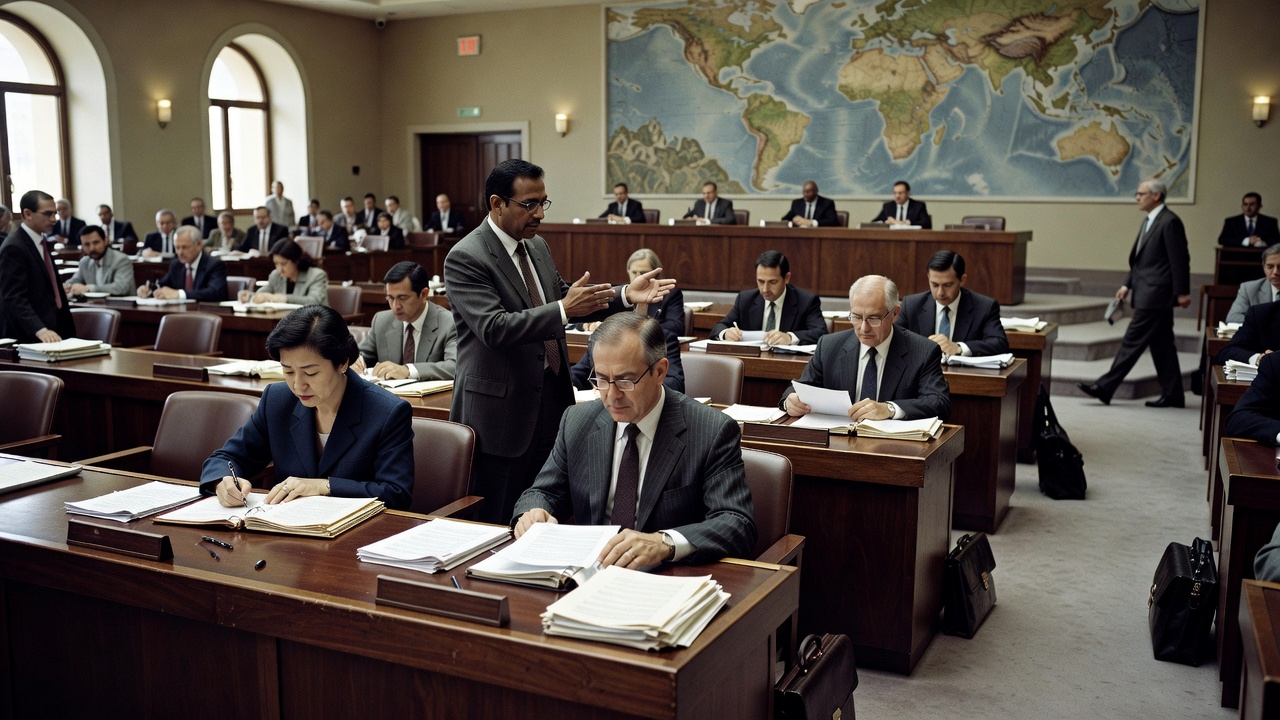
UN Security Council chamber
Generated by Grok Imagine (xAI), prompt: Generate a single 16:9 horizontal image for an educational lesson.
Lesson title: "The World's Most Powerful Institutions Have No Army" · How global bodies make rules that nations actually follow witho…
UN General Assembly hall
Generated by Grok Imagine (xAI), prompt: Generate a single 4:3 horizontal image for an educational lesson.
Lesson title: "The World's Most Powerful Institutions Have No Army" · How global bodies make rules that nations actually follow withou…
Quiz yourself