Governance
·
Non State Organizations
·
the NGO that forgot its mission…
Medium
6 min
Autopsy
When the Donor Becomes the Boss
How an NGO built to serve the poor ended up serving its funders instead
Share
In 2010, CARE International turned down $45 million in U.S. food aid. Not because it didn't need the money. Because accepting it would have required CARE to do things that actively hurt the people it existed to help.
Non-state organizations are power structures that sit outside governments and private companies — NGOs, international charities, advocacy groups, standards bodies, unions. They exist, in theory, because there are things markets won't fund and governments won't do. An NGO working on food insecurity in sub-Saharan Africa doesn't answer to shareholders or voters. It answers to its mission.
Except when it doesn't. Because NGOs have to get money from somewhere. And whoever controls the money has a quiet vote on what the organization actually does — whether they cast it consciously or not. This is donor-influence drift: the slow migration of an organization away from its stated mission toward whatever its funders reward. It rarely looks like corruption. It looks like adaptation.
CARE was founded in 1945 to send food packages to post-war Europe. By the 1980s it had evolved into one of the world's largest development NGOs, running programs across dozens of countries. It also became heavily dependent on a specific funding mechanism: U.S. food aid monetization.
Here's how that worked. The U.S. government donated surplus American grain to CARE. CARE sold that grain on local markets in developing countries. The cash from those sales funded CARE's programs. Simple, right?
Except economists had been pointing out for years that dumping subsidized American grain onto local markets undercut local farmers — the exact people CARE's development programs were trying to lift out of poverty. The organization was, in a measurable sense, working against itself.
Make your call
CARE's own researchers documented the harm. Internal reports confirmed that monetization was destabilizing local food markets. So what did CARE do with that evidence?
A
Immediately stopped accepting food aid monetization funds
B
Kept accepting the funds while quietly lobbying for reform
C
Published the research and let donors decide
CARE's researchers weren't hiding the problem. By the mid-2000s, the organization had internally concluded that food aid monetization was causing net harm in many of the markets where it operated. The findings circulated. The debate was real.
But the money was also real. Monetization funded somewhere between 30 and 50 percent of CARE's program budgets in some years. Walking away meant cutting programs, laying off staff, and telling beneficiaries that services were ending — all to make a point about agricultural economics that most donors weren't asking about.
This is the enabling condition for drift: structural financial dependency on a funding source that comes with behavioral strings attached. The strings don't have to be explicit. The U.S. government didn't tell CARE to ignore the harm. It didn't have to. The money itself did the work.
Key Insight
In 2007, CARE announced it would phase out U.S. food aid monetization entirely by 2009 — forgoing roughly $45 million annually. It was the first major NGO to do so. The decision cost them. Programs shrank. Fundraising had to replace what federal dollars had covered. But CARE's leadership argued the organization had drifted so far from its mission that the financial pain was the point: you can't credibly run poverty-reduction programs while simultaneously suppressing local food markets.
What CARE's case teaches isn't that NGOs are corrupt or that donors are villains. The U.S. food aid program was designed by people who genuinely wanted to reduce hunger. CARE was staffed by people who genuinely wanted to reduce poverty. The failure was structural, not moral.
When an organization's survival depends on a funding source, it will — slowly, reasonably, step by step — start making decisions that protect that source. Mission statements don't pay salaries. Grants do. The mechanism is simple: organizations optimize for what they're measured on, and funders measure what they fund. If the funder cares about food distributed, you distribute food. If the funder cares about local market stability, you care about local market stability. Most NGOs serve multiple funders with different priorities, and over time the organization's actual behavior becomes a weighted average of those priorities — not a reflection of the mission on its founding documents.
The CARE decision in 2007 was unusual precisely because it ran the mechanism in reverse: the organization chose mission over money, accepted the financial hit, and used the public announcement to pressure other NGOs and the U.S. government to reform the system. That's rare. Most of the time, drift is invisible — not because anyone is hiding it, but because it happens one reasonable compromise at a time.
Related threads
Governance
·
Who Actually Decides How the Internet Works?
·
rough consensus and running code
Who Actually Decides How the Internet Works?
Governance
·
The World's Most Powerful Institutions Have No Army
·
the UN, WTO, and EU decide without the…
The World's Most Powerful Institutions Have No Army
Governance
·
Why Some Unions Last 200 Years and Others Die in a Decade
·
why some trade unions last centuries…
Why Some Unions Last 200 Years and Others Die in a Decade
Sources
Images from Wikimedia Commons. Attribution required by license.
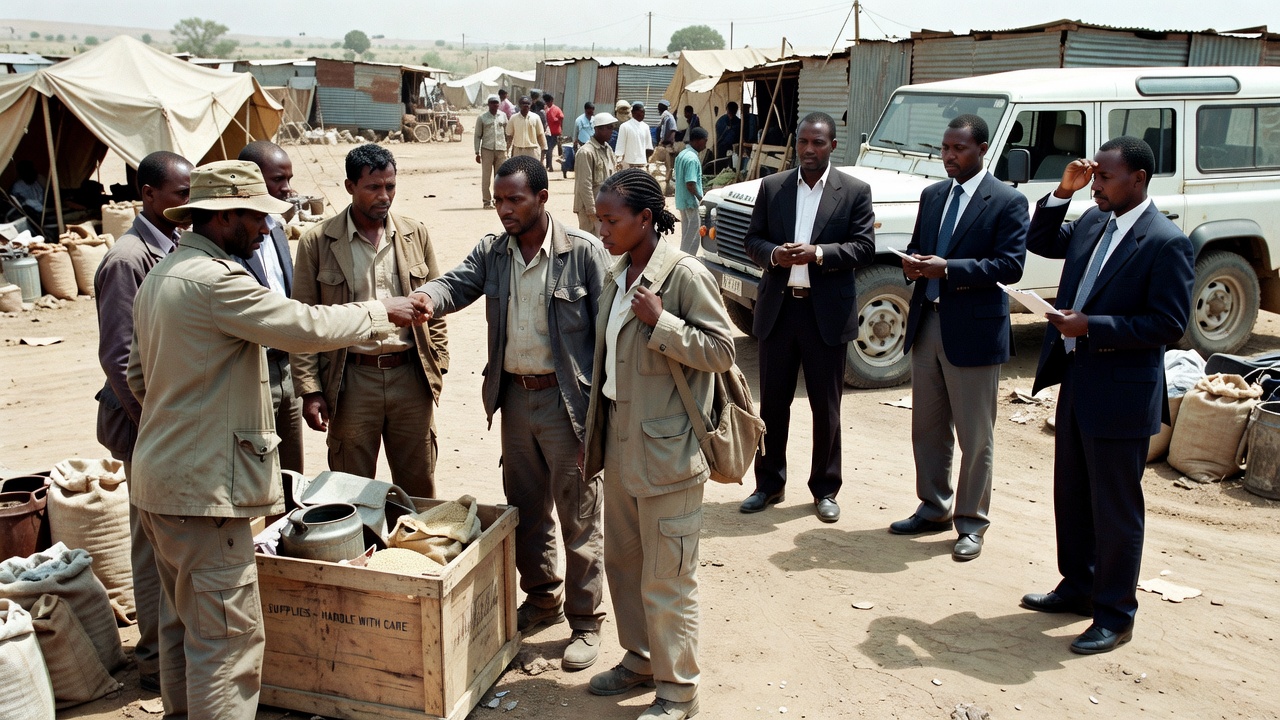
NGO aid workers field
Generated by Grok Imagine (xAI), prompt: Generate a single 16:9 horizontal image for an educational lesson.
Lesson title: "When the Donor Becomes the Boss" · How an NGO built to serve the poor ended up serving its funders instead
Domain: gov…
grain surplus food aid storage
Generated by Grok Imagine (xAI), prompt: Generate a single 4:3 horizontal image for an educational lesson.
Lesson title: "When the Donor Becomes the Boss" · How an NGO built to serve the poor ended up serving its funders instead
Domain: gove…
Quiz yourself