Governance
·
Religious Organization Governance
·
Quaker consensus
Medium
5 min
The Room That Decides Without Voting
How Quakers make collective decisions without a single vote cast
Share
Thirty people need to agree on something. No one is in charge. There's no vote. No one loses. And somehow — sometimes after hours of silence — they reach a decision everyone can live with. This is not a thought experiment. It's how Quakers have governed themselves for 350 years.
Religious institutions are fascinating governance experiments — they've had to solve the same problems as governments and corporations (who decides? who succeeds? who owns the property?) but without armies, stock options, or elections. Most lessons in this concept look at hierarchies: the Catholic Church's layered command structure, the LDS succession system, the three Protestant models of church authority. This lesson covers something different. The Quakers — formally the Religious Society of Friends, founded in 17th-century England — built a system with no hierarchy at all. And it still works.
The basic unit of Quaker governance is the Meeting for Worship with Attention to Business — which is exactly what it sounds like. The community gathers. They sit in silence. Anyone can speak. No one votes. The goal isn't to find out what the majority wants. It's to find what the community, taken together, actually believes is right. Quakers call this 'the sense of the meeting.' When a clerk (the closest thing to a chairperson) believes that sense has emerged, they state it aloud. If no one objects, it becomes the decision.
Make your call
A Quaker meeting is deciding whether to renovate their building. One member strongly disagrees with the plan. What happens?
A
The majority overrules them and the renovation proceeds
B
The whole decision gets blocked until that person agrees
C
The clerk names their concern, the group sits with it, and may revise or postpone the decision
This is the part that surprises people: dissent isn't a veto, but it isn't ignored either. If someone 'stands aside' — meaning they disagree but won't block the group — the decision can proceed and their objection is recorded in the minutes. If someone 'stands in the way' — a stronger form of dissent — the meeting pauses. Not because one person wins, but because the system treats a strong objection as a signal that the sense of the meeting hasn't actually emerged yet. The group hasn't found the right answer; they've found a draft. The decision gets tabled, sometimes for months, until more clarity arrives. This is not gridlock — it's the system working as designed. Speed was never the point.
Key Insight
Voting produces winners and losers. Quaker consensus produces a decision the whole community owns — or it produces nothing, which the system treats as equally valid. A 'no decision' isn't failure. It means the community isn't ready, and readiness matters more than efficiency.
The engineering underneath this is subtle. First, the clerk holds real power — they're the one who reads the room and states the emerging consensus. A skilled clerk shapes what gets decided and when. Second, the system only works at a certain scale. Individual Quaker meetings rarely exceed a few hundred members; larger decisions get escalated to Monthly Meetings, then Yearly Meetings, each using the same consensus process. It's a federated structure, not a flat one. Third — and this is the part that doesn't translate easily — the whole mechanism rests on a shared belief that truth is accessible to everyone in the room equally. Pull that assumption out, and you don't have a governance system anymore. You have a very slow committee. That's why Quaker consensus has survived 350 years inside Quaker communities and mostly failed when corporations tried to copy it in the 1970s. The mechanism and the culture aren't separable.
Related threads
Governance
·
The Oldest Org Chart Still Running
·
an organization built in the 4th…
The Oldest Org Chart Still Running
Governance
·
The 2,500-Year-Old Rulebook That Still Works
·
how a Buddhist sangha actually runs…
The 2,500-Year-Old Rulebook That Still Works
Governance
·
The Church That Never Has a Leadership Crisis
·
the LDS Church
The Church That Never Has a Leadership Crisis
Sources
Images from Wikimedia Commons. Attribution required by license.
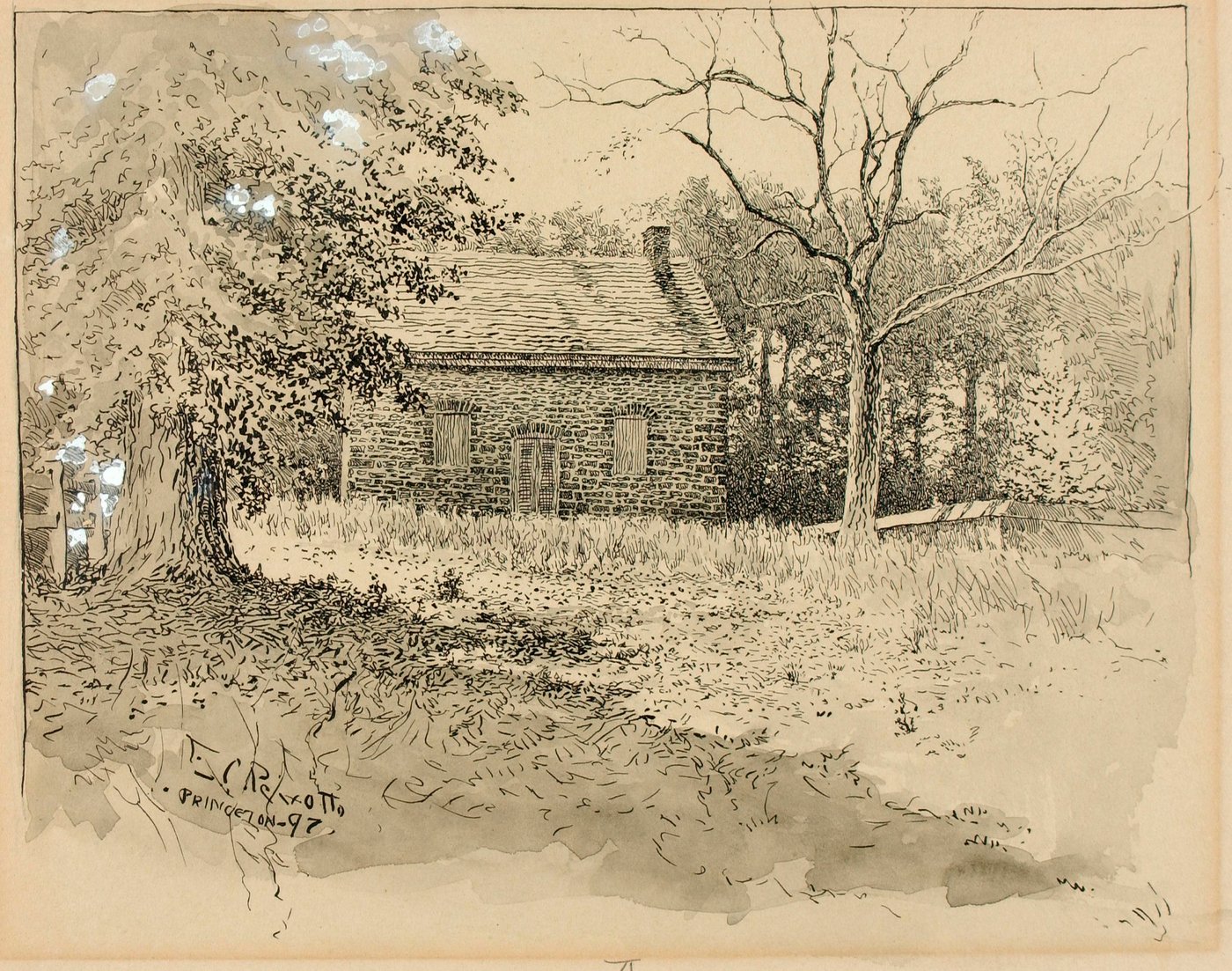
Princeton Quaker Meeting House — 1897
Smithsonian American Art Museum, Gift of Dr. Fortunato Porotto via Smithsonian Open Access (CC0)
[Merchants' Carnival Portrait: Quaker Meeting House (?)] — 1880s–1890s
Unknown via The Metropolitan Museum of Art (Public Domain)
Quiz yourself