Governance
·
Religious Organization Governance
·
how a Buddhist sangha actually runs…
Medium
6 min
The 2,500-Year-Old Rulebook That Still Works
How Buddhist monks govern themselves without a pope, a president, or a vote
Share
There's a monastic community in Sri Lanka following the same governance rules as monks in the time of the Buddha — rules written down around 250 BCE. No CEO. No elected board. No hierarchy of bishops. Just a text called the Vinaya, and a set of procedures so precise they specify what to do when two monks disagree about whether a robe is the right shade of yellow.
Most people think of governance as something governments and corporations do — constitutions, bylaws, org charts. But religious institutions have been solving the same problems for millennia: How do you coordinate large groups of people? How do you resolve disputes? How do you make binding decisions without a single person who can override everyone else? The Catholic Church answers with a hierarchy. Quakers answer with consensus. Buddhist monasteries answer with something older than either: a legal code called the Vinaya, embedded in community practice so deeply that the community IS the governance.
The sangha — the Buddhist monastic community — is one of the Three Jewels of Buddhism alongside the Buddha and the Dharma. It's not just a spiritual concept; it's a functioning institution. And the Vinaya is its operating manual. The Pali Vinaya Pitaka, the oldest surviving version, contains over 200 rules for monks (and a separate set for nuns). But rules alone don't make governance. What makes the Vinaya remarkable is that it comes bundled with procedures — specific, step-by-step processes for how the community acts together.
Make your call
Here's the central puzzle: a Buddhist monastery has no abbot with veto power, no democratic vote that overrides the minority, and no external authority to appeal to. When monks need to make a binding collective decision — accepting a new member, resolving a dispute, performing a ceremony — how does it actually get done?
A
The senior monk decides, and everyone defers by tradition
B
The community votes and majority rules
C
A formal motion is proposed, read aloud three times, and silence counts as consent
The kammavācā procedure is the engine of sangha governance. Picture it: the community assembles. A monk proposes a motion — say, to ordain a new member. The motion is read once. Silence. Read again. Silence. Read a third time. If no one objects, the motion passes — not by counting hands, but by the absence of voiced dissent. This isn't passive. Any monk present can stop the motion by speaking. The procedure only works if every member genuinely accepts the outcome or believes their objection would be heard. It's a consent mechanism, not a consensus one — closer to how a judge asks 'does anyone object to this marriage' than how a parliament takes a vote. The burden is on the dissenter to act, not on the majority to convince.
Key Insight
The Vinaya doesn't just tell monks what to do. It tells them what to do when the rules break down. Each rule comes with its origin story — the specific incident that caused the Buddha (or, after his death, the community) to create it. This means the code carries its own precedent. When a new situation arises that the rules don't cover, monks reason from those origin stories, the same way common-law judges reason from prior cases. The governance system is self-interpreting.
What keeps this system from collapsing into chaos or domination by the loudest voice? Two things. First, the Vinaya specifies exactly who counts as a valid member of the assembly for any given act — ordinations require a minimum quorum, and only fully ordained monks can participate in certain decisions. The community can't be stacked or rushed. Second, the most serious offenses in the Vinaya — called pārājika — result in automatic expulsion. No trial, no appeal, no community vote. Commit one of the four root violations (which include theft and sexual conduct) and you are no longer a monk. The community doesn't decide; the act decides. That's not cruelty — it's a boundary condition that protects the integrity of every other procedure. The governance works precisely because some things are non-negotiable.
Related threads
Governance
·
The Oldest Org Chart Still Running
·
an organization built in the 4th…
The Oldest Org Chart Still Running
Governance
·
The Room That Decides Without Voting
·
Quaker consensus
The Room That Decides Without Voting
Governance
·
The Church That Never Has a Leadership Crisis
·
the LDS Church
The Church That Never Has a Leadership Crisis
Sources
Images from Wikimedia Commons. Attribution required by license.
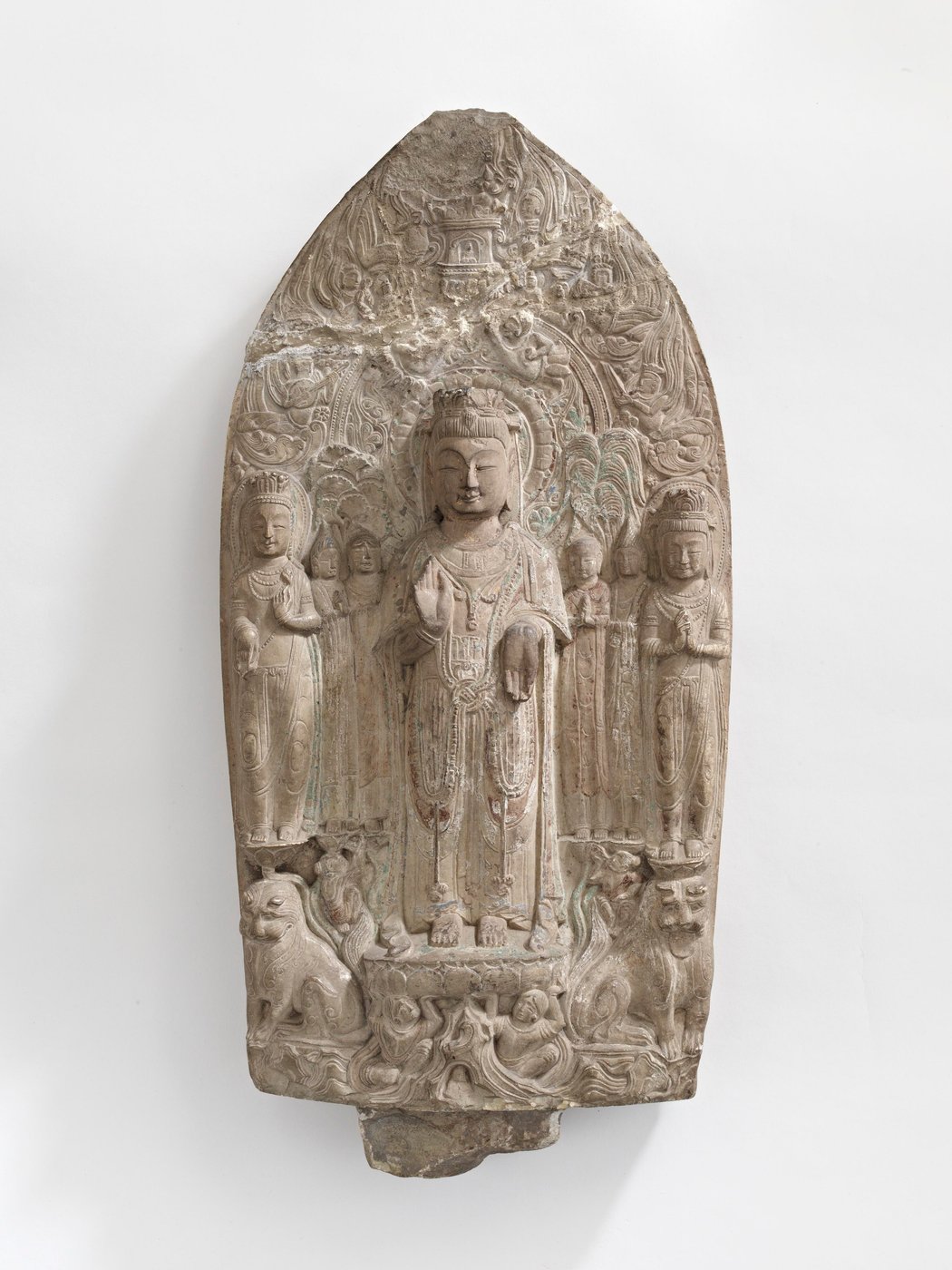
Standing bodhisattvas with monks, Pratyekabuddhas, lions, and apasaras — 557-581
Gift of Charles Lang Freer via Smithsonian Open Access (CC0)
Manuscript of Vinaya Pitaka. Lacquered and gilded wood, gilded palm leaves. Myanmar, 1856. Palazzo Madama, Torino
Unknown · Public domain
Quiz yourself