Governance
·
Corporate Governance
·
what a board of directors actually…
Medium
5 min
Who Actually Controls a Company?
Why the check on executive power so rarely checks anything
Share
A CEO is making decisions that are burning through cash, ignoring warnings from finance, and alienating major customers. Everyone inside the company can see it. But who has the actual power to stop them?
When a company is owned by thousands of shareholders — a pension fund here, a retail investor there — none of them can show up Monday morning and tell the CEO what to do. So shareholders elect a board of directors to do it for them. That's the basic architecture of corporate governance: shareholders own the company, the board oversees it, and executives run it day to day. The board sits in the middle, theoretically holding the executives accountable to the people who own the place. That's the theory. The practice is messier.
A board's formal powers are real and significant. Directors can fire the CEO — they've done it to everyone from Steve Jobs (ousted from Apple in 1985) to Bob Iger's predecessor at Disney. They approve major acquisitions, set executive pay, and sign off on the company's audited financials. They're also legally liable if they rubber-stamp something reckless, which is supposed to focus the mind. Four times a year, roughly, they sit in a room — or a video call — and hear from management about how the business is going. Then they vote.
Make your call
A company's CEO has been on the board for six years. She helped recruit four of the seven other directors, and two of them are former colleagues she's known for decades. The board is about to review her performance after a difficult year. What happens?
A
The board holds a tough review and demands a turnaround plan
B
The board approves a generous bonus and reaffirms her contract
C
The board fires her and begins an external search
This is the central problem. A board's effectiveness depends almost entirely on its independence from the people it's supposed to oversee. And independence erodes quietly. CEOs don't usually get to hand-pick their board outright — but they influence who gets nominated, who gets invited to the right dinners, who feels comfortable in the room. Over time, a board can drift from a room full of skeptics into a room full of allies. Nobody intended it. The incentives just ran that way. Directors are paid well, often in stock. They're prominent people who like being on prominent boards. Rocking the boat has costs; staying quiet has none.
Key Insight
A board that never votes against management isn't governing — it's ratifying. The difference matters enormously to shareholders, and is almost invisible from the outside until something breaks.
The clearest sign a board has stopped mattering is what researchers call 'CEO duality' — when the same person holds both the CEO and board chair roles. That's one person setting the agenda for the meetings where their own performance gets reviewed. It's common in American companies and nearly unheard of in Europe, where regulators pushed the roles apart decades ago. Even without duality, boards go soft when they lack real information. Management controls what the board sees. A board that only hears what the CEO wants it to hear is making decisions with a curated dataset — and usually doesn't know it. When boards do wake up — when a hedge fund takes a stake and starts asking uncomfortable questions, or when a crisis makes the papers — the intervention is often too late and too dramatic. The board that should have asked hard questions in 2019 is firing people in 2022. That gap between when the problem started and when the board acted is the measure of how much governance was actually happening.
Related threads
Governance
·
How Founders Stay in Charge After Selling the Company
·
dual-class shares
How Founders Stay in Charge After Selling the Company
Governance
·
What Happens When the Workers Own the Company?
·
Mondragon
What Happens When the Workers Own the Company?
Governance
·
Who's Actually Running the Company?
·
public companies and founder-led…
Who's Actually Running the Company?
Sources
Images from Wikimedia Commons. Attribution required by license.
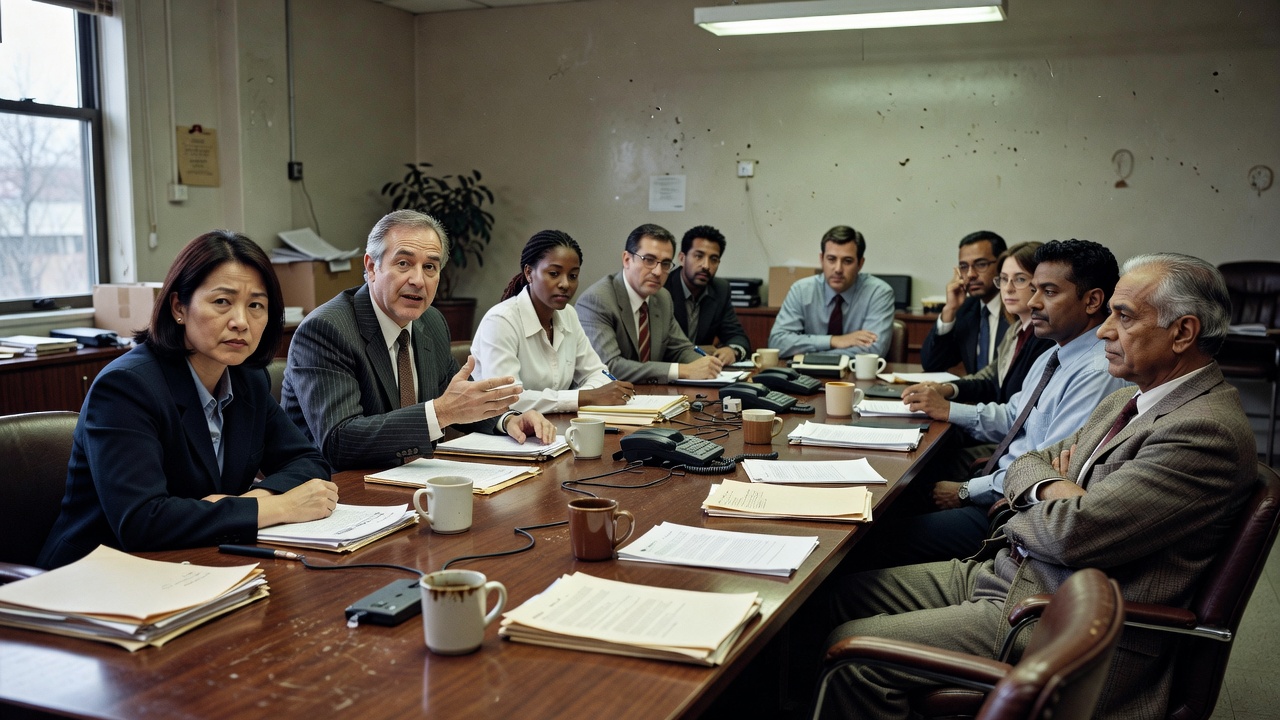
corporate boardroom meeting
Generated by Grok Imagine (xAI), prompt: Generate a single 16:9 horizontal image for an educational lesson.
Lesson title: "Who Actually Controls a Company?" · Why the check on executive power so rarely checks anything
Domain: governance
Subj…
shareholder meeting vote
Generated by Grok Imagine (xAI), prompt: Generate a single 4:3 horizontal image for an educational lesson.
Lesson title: "Who Actually Controls a Company?" · Why the check on executive power so rarely checks anything
Domain: governance
Subje…
Quiz yourself