Governance
·
Power Transfers
·
what makes a peaceful transition of…
Medium
5 min
Why Some Leaders Actually Leave
The conditions that make handing over power possible
Share
In all of human history, the most common way to change who's in charge has been violence. So when a sitting leader loses an election and just... leaves — shakes hands with their successor, boards a plane, goes home — what on earth made that possible?
Power transfers are the moments when control over a government, an army, or a state shifts from one person or group to another. Sometimes that shift is violent — a coup, a revolution, a conquest. Sometimes it's negotiated. And sometimes, in a narrow set of conditions, it happens peacefully and on schedule, almost like clockwork. That last category is the rare one. This lesson is about what actually produces it — not the ceremonies and speeches, but the underlying conditions that make a sitting leader willing to walk away.
The first thing to understand is that no leader gives up power just because a law says they should. Laws are words. What makes those words stick is the belief — shared widely enough — that breaking them would cost more than obeying them. That shared belief is what political scientists call legitimacy. When enough people in enough critical positions accept that the rules of transfer are valid, the rules become self-enforcing. Soldiers don't move against the incoming government. Courts certify the result. The outgoing leader's allies don't rally to keep them in place. The whole system holds because everyone bets that everyone else will hold too.
Make your call
So what's the single most important condition for a peaceful transfer? What actually determines whether the outgoing leader walks away or digs in?
A
The outgoing leader personally believing in democracy
B
The military staying neutral and not backing the loser
C
International pressure from other countries
The military question is the load-bearing wall. Every peaceful transfer in history rests on one fact: the security forces accepted the outcome. That's not a given. In countries where the military is deeply loyal to a person rather than to an institution, a losing leader can call on that loyalty to stay in power. In countries where the military sees itself as the guardian of the constitutional order — not any particular leader — it becomes the enforcer of the transfer, not the obstacle to it. This is why new democracies spend so much energy on military professionalization. It's not about fighting capacity. It's about whether the generals will pick up the phone when the loser calls.
But the military alone doesn't explain everything. Three other conditions tend to show up together in countries where transfers happen reliably. First: the outgoing leader has somewhere to go. When losing power means prosecution, exile, or death, leaders fight to the end — they have nothing to lose. When it means a pension, a library, a speaking circuit, and legal protection, the calculus shifts. Second: the incoming government has to credibly commit to not destroying its predecessor. If the winner always imprisons the loser, no one loses gracefully. Third: there has to be a next election. A leader who believes they can compete again will accept defeat today in a way they never would if losing meant permanent exclusion. These three conditions — safe exit, credible restraint, future access — are what make the handshake possible.
Key Insight
Peaceful transfers aren't about good values. They're about aligned incentives. The outgoing leader needs to believe that leaving is safer than staying. The incoming leader needs to believe that restraint is cheaper than revenge. The military needs to believe that its institutional future is better served by neutrality than by loyalty to a person. When all three calculations point the same direction, power transfers peacefully — almost automatically. When any one of them breaks down, the handshake doesn't happen.
Related threads
Governance
·
The Coup That Forgot to Cut the Phone Lines
·
anatomy of a coup that failed (which…
The Coup That Forgot to Cut the Phone Lines
Governance
·
Who Actually Keeps a Dictator in Power
·
how one-party states maintain internal…
Who Actually Keeps a Dictator in Power
Governance
·
The Rule That Forces Leaders to Leave
·
what term limits prevent and what they…
The Rule That Forces Leaders to Leave
Sources
Images from Wikimedia Commons. Attribution required by license.
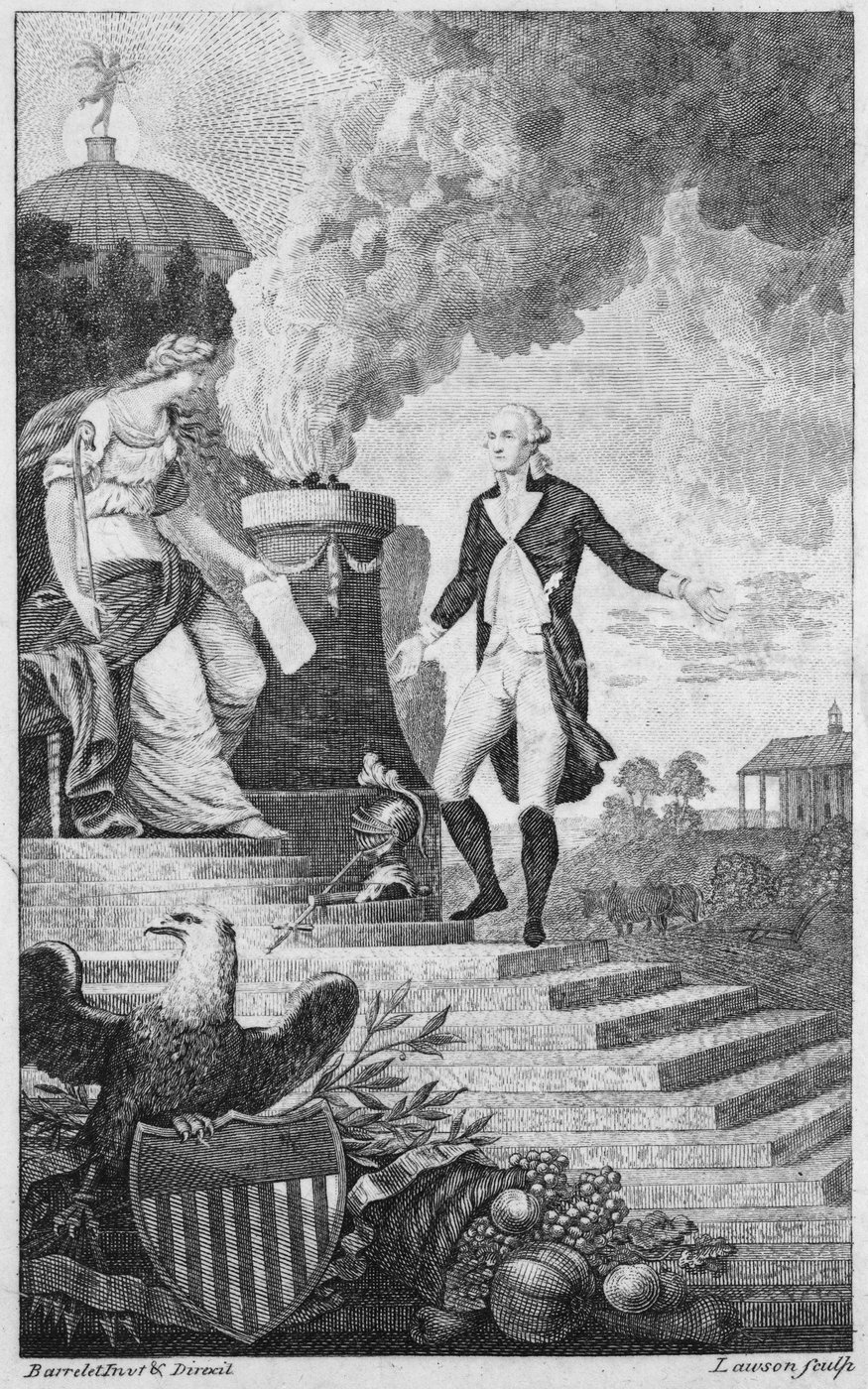
General Washington's Resignation — 1799
Alexander Lawson via The Metropolitan Museum of Art (Public Domain)
election results certification ceremony
Generated by Grok Imagine (xAI), prompt: Generate a single 4:3 horizontal image for an educational lesson.
Lesson title: "Why Some Leaders Actually Leave" · The conditions that make handing over power possible
Domain: governance
Subject: ele…
military honor guard inauguration
Generated by Grok Imagine (xAI), prompt: Generate a single 4:3 horizontal image for an educational lesson.
Lesson title: "Why Some Leaders Actually Leave" · The conditions that make handing over power possible
Domain: governance
Subject: mil…
Quiz yourself