Governance
·
System Comparisons
·
why coalition governments fall (the…
Medium
5 min
The Tiny Party That Brings Down the Government
How a party with 8% of the vote ends up running the country
Share
A party wins 38% of the vote. It's the biggest party in parliament by far. But it can't govern — because a party with 8% of the vote just said no.
In many democracies, no single party wins an outright majority. So parties have to team up — forming what's called a coalition government. This happens constantly in Germany, Israel, Italy, the Netherlands, and dozens of other countries. The largest party leads, but it needs partners to hit 50% of parliamentary seats. That dependency is where the math gets strange.
Think about what 'needing a partner' actually means. If Party A has 38 seats and needs 51 to govern, it must find parties willing to join. Maybe Party B has 9 seats and Party C has 6. Together: 53. Majority. Done. Except Party B now knows something important — Party A cannot govern without them. That 9-seat party has veto power over a 38-seat party. Not because they're popular. Because the arithmetic says so.
Make your call
A coalition government has been running for two years. The smallest partner — with just 9 seats — threatens to quit unless the prime minister changes a major policy. What happens?
A
The prime minister ignores them — 9 seats isn't enough leverage
B
The government collapses or the policy changes — the small party holds real power
C
Parliament votes to remove the small party from the coalition
This is the kingmaker problem. A small party positioned between a large party and its majority becomes disproportionately powerful — not despite its size, but because of it. In Israel's Knesset, ultra-Orthodox parties with 5–10% of seats have repeatedly extracted enormous policy concessions — military draft exemptions, religious funding — from governments that needed their votes to survive. The large parties had more voters. The small parties had the math.
The same dynamic collapsed four Italian governments between 2008 and 2022. A coalition partner withdraws support, the government loses its majority, a confidence vote fails, and parliament dissolves. Elections again. New coalition negotiations. Repeat.
Key Insight
A coalition government doesn't fall because it becomes unpopular. It falls because the arithmetic breaks. When one partner leaves, the majority disappears — and without a majority, the government can't pass budgets, survive no-confidence votes, or function at all. The smallest partner often has the most power to trigger this, because their exit is the one the big party can't absorb.
There's a compounding problem: the longer a coalition runs, the more each partner needs to show its own voters something. A junior coalition partner that looks like it's just rubber-stamping the senior partner's agenda loses support. So they pick fights — demand concessions, stage public disagreements, occasionally threaten to walk. This is rational behavior for each party individually. For the government as a whole, it's a slow structural stress fracture.
Germany's 'traffic light' coalition — Social Democrats, Greens, and Free Democrats — collapsed in November 2024 after the Free Democrats withdrew over budget disputes. The FDP held 92 of 736 seats. Thirteen percent of the coalition. Enough to end it. New elections followed within months. That's not a malfunction. That's the system working exactly as the math predicts.
Related threads
Governance
·
One State, One Vote — Fair Deal or Broken Math?
·
equal state suffrage
One State, One Vote — Fair Deal or Broken Math?
Governance
·
The Vote That Can End a Government by Lunch
·
how a no-confidence vote removes a…
The Vote That Can End a Government by Lunch
Governance
·
Seven Men in a Room: How China Actually Decides
·
how China's standing committee actually…
Seven Men in a Room: How China Actually Decides
Sources
Images from Wikimedia Commons. Attribution required by license.
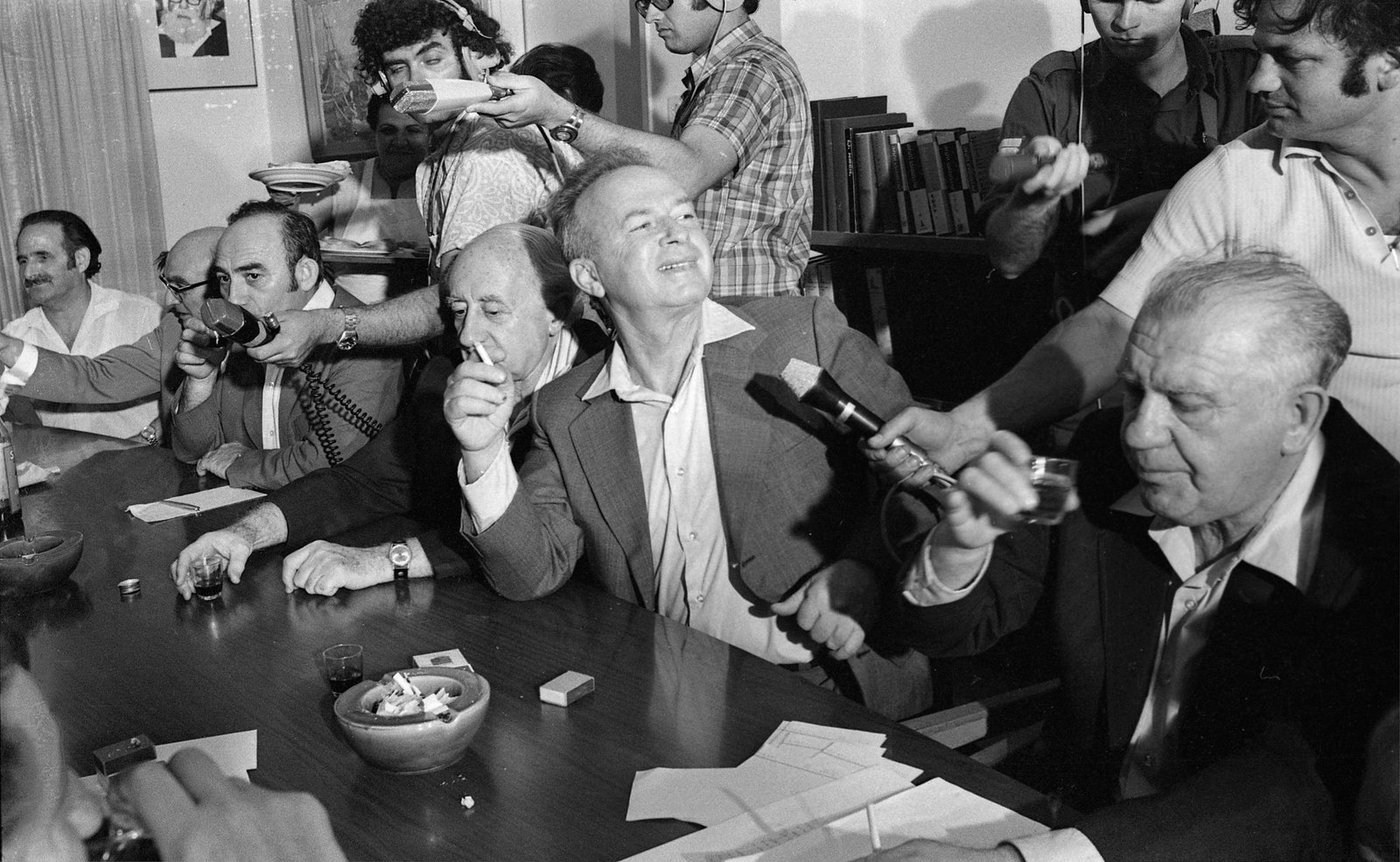
Signing the agreement with the Labour party. Yitzhak Rabin elected as the next prime minister.Itzhak Rabin chosen as the next Prime Minister.
IPPA photographer · CC BY 4.0
Quiz yourself