Governance
·
System Comparisons
·
when states keep power and when they…
Medium
6 min
Who Actually Runs Your State?
Why some governments hand power down and others claw it back up
Share
In 2020, two neighboring states — one banned indoor dining, one kept restaurants open. Same virus, same country, same federal government. How is that even legal?
Every government in the world has to answer one question before it can answer any other: who decides? Not who votes, not who speaks — who actually holds the power to make binding rules. The world's major arrangements answer this differently. Some concentrate power in a single national center. Others split it deliberately between levels. That split — or the absence of it — is the mechanism this lesson is about. It's called federalism, and it's one of the most consequential design choices a country makes.
Federalism, at its core, is a written guarantee that some powers belong to regional governments and cannot be taken by the national one. The United States has it. Germany has it. India has it. France doesn't — Paris runs almost everything. China doesn't — provincial governors implement central party directives, they don't make independent law.
The difference isn't just administrative. It determines whether your state can set its own minimum wage, run its own courts, tax its own citizens, and — yes — close its own restaurants during a pandemic.
Make your call
Here's the real puzzle: if federalism gives states real power, what stops the national government from just... taking it back? What do you think actually protects state authority?
A
States are militarily strong enough to resist
B
A written constitution that courts enforce
C
Popular elections give state leaders their own mandate
The mechanism that keeps federalism real is judicial enforcement of a written division of powers. In the US, the Tenth Amendment says powers not granted to the federal government are reserved to the states. That sentence has been litigated thousands of times. Courts — ultimately the Supreme Court — decide where the line sits.
And the line moves. During the New Deal in the 1930s, the federal government expanded dramatically into areas previously left to states: labor standards, agricultural pricing, banking rules. The Supreme Court initially blocked several of these laws, then reversed course. The constitutional text didn't change. The interpretation did. That's the pattern: federalism's boundaries shift through legal interpretation, not just legislation.
Other countries built different mechanisms into the same basic idea. Germany's Basic Law (its constitution, adopted in 1949) divides powers differently: the federal government writes most laws, but the states — called Länder — administer them. So Berlin sets the rule; Bavaria implements it. This sounds like the center winning, but the Länder get structural power in return: they control the Bundesrat, the upper house of parliament, which must approve laws that affect them. Administration IS power when you control how a law actually runs on the ground.
India took a third path. Its constitution lists three categories: Union List (only the center can legislate), State List (only states can), and Concurrent List (both can, but the center wins conflicts). In practice, the center has used emergency powers and financial leverage to override state governments repeatedly — critics call it 'cooperative federalism' in name, centralized federalism in practice.
The lesson: the written design and the operational reality can drift apart. What keeps them aligned — or lets them drift — is political will, court independence, and who controls the money.
Key Insight
Fiscal federalism is where the rubber meets the road. A state with constitutional authority but no independent tax base is a state that does what the center wants. When the national government controls the grants, it controls the policy — even without changing a single law. Watch the budget, not just the constitution.
Related threads
Governance
·
One State, One Vote — Fair Deal or Broken Math?
·
equal state suffrage
One State, One Vote — Fair Deal or Broken Math?
Governance
·
The Vote That Can End a Government by Lunch
·
how a no-confidence vote removes a…
The Vote That Can End a Government by Lunch
Governance
·
Seven Men in a Room: How China Actually Decides
·
how China's standing committee actually…
Seven Men in a Room: How China Actually Decides
Sources
Images from Wikimedia Commons. Attribution required by license.
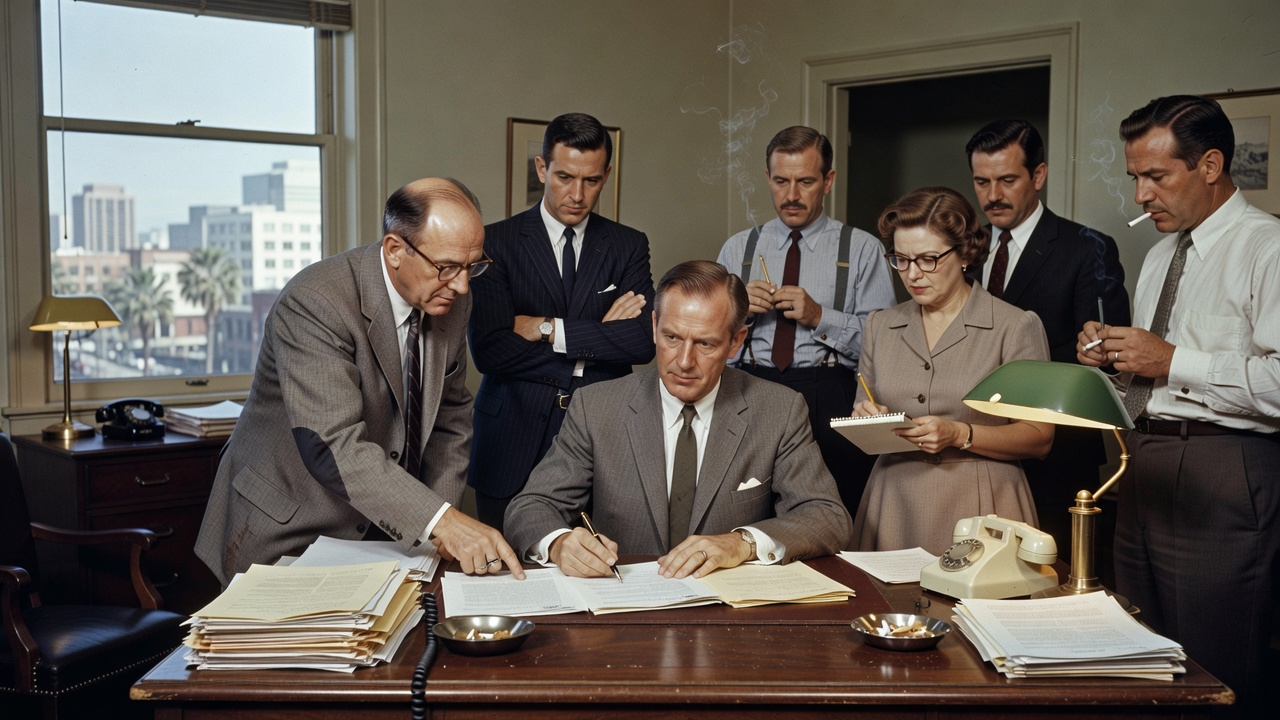
California governor signing legislation 1960s photograph
Generated by Grok Imagine (xAI), prompt: Generate a single 16:9 horizontal image for an educational lesson.
Lesson title: "Who Actually Runs Your State?" · Why some governments hand power down and others claw it back up
Domain: governance
Su…
John Marshall — 1809-10
National Portrait Gallery, Smithsonian Institution via Smithsonian Open Access (CC0)
Quiz yourself