Governance
·
System Comparisons
·
what Switzerland decides by referendum,…
Medium
6 min
Switzerland Lets Citizens Vote on Almost Everything
What happens when you hand the rulebook directly to the public
Share
In 2021, Swiss voters rejected a law banning full-face coverings in public — a law their own parliament had refused to pass. The people overruled their representatives. Switzerland does this roughly four times a year, on everything from fighter jets to pesticide bans.
Most governments concentrate decision-making in elected representatives — a parliament passes laws, an executive signs them, and citizens weigh in only at election time. Switzerland runs a different experiment. It's a federal democracy like many others, with a parliament and a cabinet. But layered on top is something unusual: a system of direct democracy that lets ordinary citizens force a vote on almost any law, and sometimes write new ones themselves. Other lessons in this series cover how presidential and parliamentary systems differ, how federalism distributes power, and how proportional voting shapes coalitions. This lesson is about one specific mechanism — Switzerland's referendum system — and what it actually produces.
There are three tools Swiss citizens have that most people in other democracies don't. First, the mandatory referendum: any change to the Swiss constitution automatically goes to a national vote — parliament can't touch the constitution without asking the public. Second, the optional referendum: if 50,000 citizens collect signatures within 100 days, any law parliament passes can be put to a popular vote and killed. Third, the popular initiative: if 100,000 citizens collect signatures within 18 months, they can propose an entirely new constitutional amendment and force a nationwide vote on it — bypassing parliament almost completely.
Make your call
Here's the question most people ask first: if citizens can veto any law and propose new ones, what does the parliament actually do all day? What do you think happens to the legislative process?
A
Parliament becomes mostly ceremonial — citizens run the show
B
Parliament pre-negotiates laws to survive a referendum, making compromise the default
C
Referendums are so rarely used that parliament operates normally
This is the mechanism's most counterintuitive output. Because any organized group can threaten a referendum, Swiss politicians negotiate with opponents before passing laws — not after. Business groups, unions, environmental lobbies, and regional governments all get brought into drafting rooms early. The result is a style of lawmaking called Vernehmlassung, a formal consultation process where the government circulates draft laws for comment before parliament even debates them. Legislation moves slowly. But it tends to stick, because the coalitions that might have killed it were already bought off or genuinely incorporated. Switzerland doesn't pass bold laws quickly. It passes durable laws slowly.
Key Insight
The referendum doesn't just decide questions. It disciplines the entire legislative process upstream. Every law gets written in the shadow of a vote that might never happen — but might.
Now for what breaks. The system has real failure modes, and they're worth naming. First: minorities lose. A majority can vote to restrict the rights of a minority group, and in Switzerland, it has. In 2009, voters banned the construction of new minarets — a vote that passed despite parliamentary opposition and international criticism. There's no upper house veto, no constitutional court with the same reach as the US Supreme Court, no mechanism that reliably shields minority rights from a motivated majority. Second: complexity collapses into vibes. Swiss referendum ballots regularly include technical questions about pension financing, nuclear waste storage, or agricultural subsidy formulas. Research consistently shows that voter understanding of these questions is uneven, and that framing, endorsements, and campaign spending shape outcomes on issues most voters haven't read carefully. Third: the system is slow by design, which means it's also slow when speed matters. During COVID-19, the Swiss government had to invoke emergency powers to act faster than the referendum cycle allowed — which itself triggered a later referendum on whether those emergency powers had been legitimate.
Related threads
Governance
·
One State, One Vote — Fair Deal or Broken Math?
·
equal state suffrage
One State, One Vote — Fair Deal or Broken Math?
Governance
·
The Vote That Can End a Government by Lunch
·
how a no-confidence vote removes a…
The Vote That Can End a Government by Lunch
Governance
·
Seven Men in a Room: How China Actually Decides
·
how China's standing committee actually…
Seven Men in a Room: How China Actually Decides
Sources
Images from Wikimedia Commons. Attribution required by license.
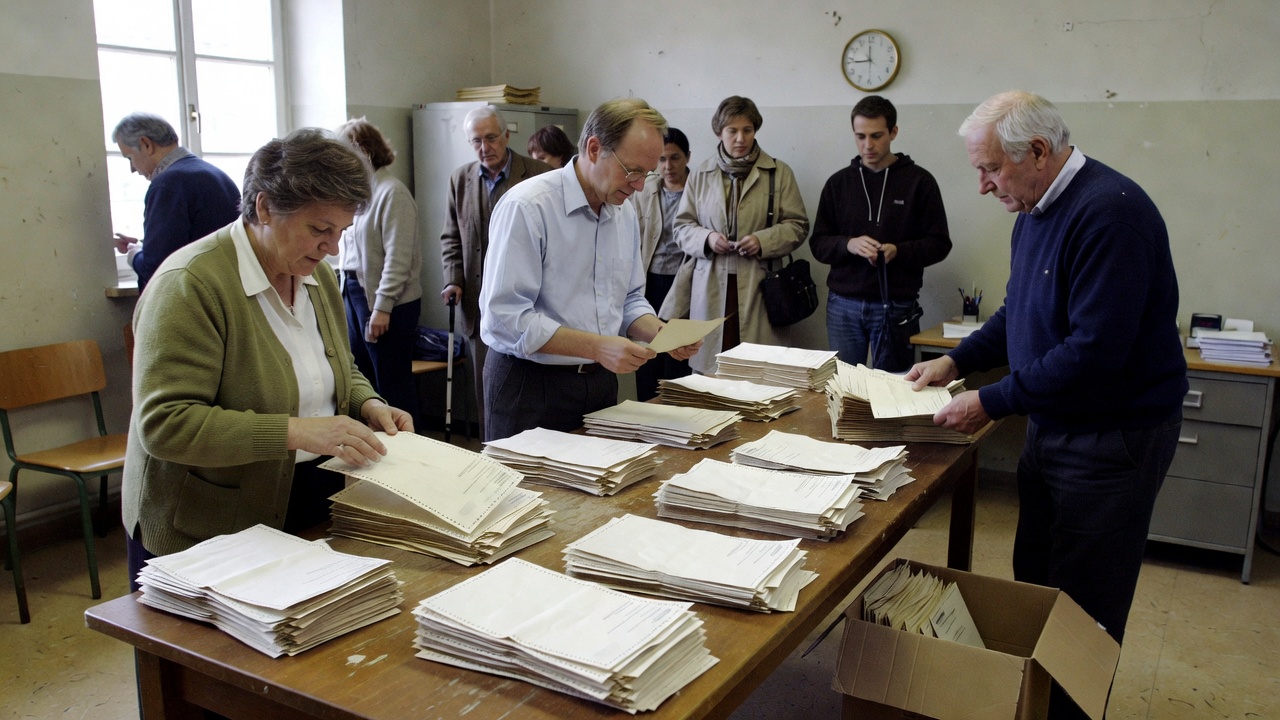
Swiss federal vote ballot
Generated by Grok Imagine (xAI), prompt: Generate a single 16:9 horizontal image for an educational lesson.
Lesson title: "Switzerland Lets Citizens Vote on Almost Everything" · What happens when you hand the rulebook directly to the public
…
Swiss referendum voting booth
Generated by Grok Imagine (xAI), prompt: Generate a single 4:3 horizontal image for an educational lesson.
Lesson title: "Switzerland Lets Citizens Vote on Almost Everything" · What happens when you hand the rulebook directly to the public
D…
Quiz yourself