Governance
·
System Comparisons
·
what a constitutional monarchy actually…
Medium
6 min
The King Who Can't Rule
Why some countries keep a monarch who has almost no power
Share
The King of Sweden is head of state. He can't veto laws. He can't appoint ministers. He doesn't chair cabinet meetings. He can't even formally open parliament anymore — they changed that rule in 2012. So what exactly is he doing there?
Governments around the world arrange power differently — who holds it, who checks it, and who can take it away. Most lessons on this topic compare presidential systems to parliamentary ones, or ask how federal states divide authority between levels. This lesson is about something stranger: countries that kept their ancient royal families and then, very deliberately, stripped them of almost everything. Not as punishment. As design.
A constitutional monarchy is a system where a hereditary monarch — a king, queen, emperor — sits at the top of the state in name, but a democratically elected government runs the actual country. The monarch reigns. The prime minister rules. That distinction sounds like a technicality until you look at what it means in practice.
In the United Kingdom, King Charles III formally appoints the Prime Minister. But he doesn't choose who that is — he invites the leader of the party that won the election. He reads the King's Speech at the opening of parliament, outlining the government's legislative agenda. Those are not his words. His staff didn't write them. The government did. He's reading someone else's policy announcements in a crown.
In Sweden, the monarch was stripped of even ceremonial political functions in 1974. King Carl XVI Gustaf opens new bridges. He hosts state dinners. When a new government is formed, the Speaker of Parliament — not the King — formally appoints the Prime Minister. The palace is essentially a state-funded diplomatic and cultural institution with a hereditary CEO.
Make your call
Japan's Emperor has no political power at all — not even the ceremonial kind the British monarch still holds. So when Japan needed to formally end World War II and sign the surrender documents in 1945, who actually had the authority to do it?
A
Emperor Hirohito, because only a head of state can sign a surrender
B
The Prime Minister and military commanders, acting under the Emperor's symbolic blessing
C
The Emperor signed nothing — American military authority superseded Japanese government entirely
Japan's case is worth sitting with. After 1945, the new constitution written under American occupation kept Emperor Hirohito (1901–1989, Japan) — and his successors — as 'the symbol of the State and of the unity of the people.' Article 4 is explicit: the Emperor shall not have powers related to government. He performs 'acts in matters of state' — promulgating laws, convening the Diet, awarding honors — but only 'with the advice and approval of the Cabinet.' Every act is the Cabinet's act. The Emperor is the stamp on the envelope; the Cabinet wrote the letter.
This isn't a loophole or a polite fiction that everyone ignores. It's enforced. When Emperor Akihito (b. 1933, Japan) wanted to abdicate in 2016, he couldn't just announce it. There was no legal mechanism for abdication. The government had to pass a special one-time law to allow it. The Emperor needed parliament's permission to retire.
Key Insight
Constitutional monarchies don't keep royal families around out of sentiment. They keep them because a head of state who is above politics — who can't be voted out, who doesn't belong to any party — turns out to be useful. When governments fall, when coalitions collapse, when elections produce no clear winner, someone has to formally invite a new prime minister to form a government. In a republic, that's usually a president with their own political loyalties. In a constitutional monarchy, it's someone whose only job is continuity.
That function — providing a politically neutral anchor during transitions — is probably the most underrated thing constitutional monarchies actually do. Sweden's 1974 reforms removed the King from even that role, which is why Sweden is sometimes called the most republican of the monarchies. The UK sits in the middle: the monarch still has reserve powers, almost never used, that could theoretically matter in a genuine constitutional crisis. Japan sits closer to Sweden: the Emperor is a symbol by law, not just by convention.
What all three share is the same basic architecture. Democratic legitimacy flows from elections and parliament. The monarch provides historical continuity, diplomatic pageantry, and a face for the nation that isn't a politician. The question the Swedish reformers asked in 1974 — do we actually need the King for anything political? — is the question every constitutional monarchy is quietly answering, year by year, by how much they leave him to do.
Remember the King of Sweden who can't veto laws or appoint ministers? He's not a vestige of an older system that hasn't been cleaned up yet. He's what the system was deliberately redesigned to produce.
Related threads
Governance
·
One State, One Vote — Fair Deal or Broken Math?
·
equal state suffrage
One State, One Vote — Fair Deal or Broken Math?
Governance
·
The Vote That Can End a Government by Lunch
·
how a no-confidence vote removes a…
The Vote That Can End a Government by Lunch
Governance
·
Seven Men in a Room: How China Actually Decides
·
how China's standing committee actually…
Seven Men in a Room: How China Actually Decides
Sources
Images from Wikimedia Commons. Attribution required by license.
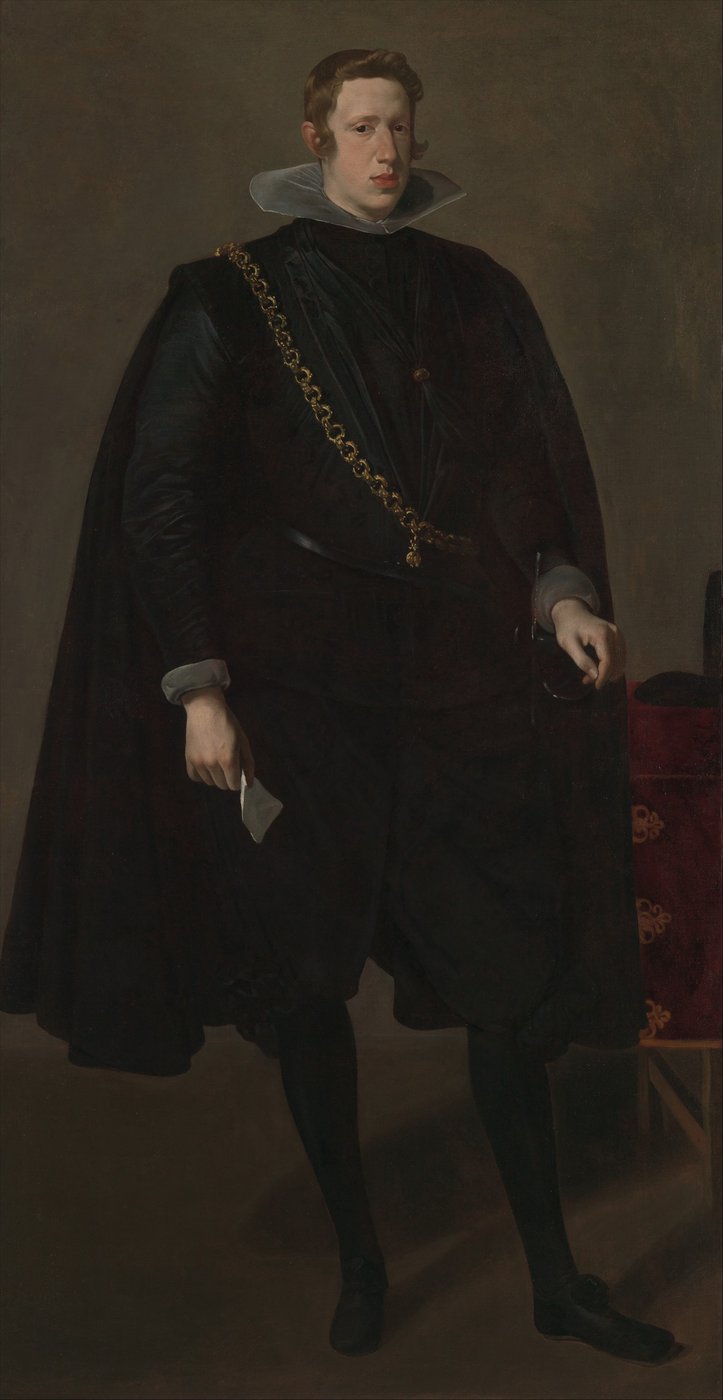
Philip IV (1605–1665), King of Spain — probably 1624
Velázquez (Diego Rodríguez de Silva y Velázquez) via The Metropolitan Museum of Art (Public Domain)
Quiz yourself