Governance
·
Mechanism Foundations
·
why it's almost impossible to shrink a…
Medium
5 min
Why Shrinking a Bureaucracy Is So Hard
The hidden reason every attempt to cut a program fails.
Share
Every few years, a politician promises to slash government waste and shrink the bureaucracy. They almost never do. Not because they're lying — but because of a force so reliable it might as well be physics. What stops them?
Before looking at any specific country, it helps to understand the forces that shape organized power in general — the mechanics that operate underneath the surface of any government, company, or institution. This lesson is about one of the most durable of those forces: the near-impossibility of shrinking a bureaucracy once it exists. Not because bureaucrats are lazy or politicians are cowards, but because of something structural. Every rule creates people who depend on it.
Here's how it works. A government creates an agency — say, to regulate a new industry. The agency hires staff, develops expertise, issues permits, and publishes rules. The businesses being regulated hire lawyers who specialize in those rules. Lobbyists learn the agency's internal culture. Local politicians take credit for the jobs the agency brings to their districts. Trade associations form to engage with the agency's rulemaking process. Within a decade, hundreds of people have built careers, businesses, and political identities around this one regulatory body. They didn't plan to. It just happened, because the agency was there.
Make your call
A newly elected governor promises to eliminate a state agricultural subsidy office that costs $40 million a year. The office has 200 employees and administers payments to 3,000 farms. What actually happens when she tries?
A
The office gets eliminated — $40 million saved, promise kept
B
The office survives, possibly with a new name and a slightly smaller budget
C
The office gets eliminated but a private contractor replaces it, costing more
This is the mechanism: every rule has constituents. Not just the people the rule was designed to help, but everyone who built a livelihood around administering, navigating, or influencing it. Cut the rule, and you don't just upset the intended beneficiaries — you threaten the lawyers, the consultants, the trade associations, the congressional staffers who've spent years becoming experts in this one corner of policy. That's a coalition. And coalitions vote, donate, and make phone calls to their representatives. The governor finds out fast that eliminating the office means picking a fight with 3,000 farms, their lobbyists, their lenders, and the state legislators who represent rural districts. She backs down. The office gets a new name and a 5% budget cut. Everyone calls it a win.
Key Insight
The bureaucracy doesn't survive because it's powerful. It survives because every piece of it has created someone who will fight to keep it. The rule is the smallest part. The constituency around the rule is what makes it permanent.
This dynamic was described precisely by the political scientist James Q. Wilson (1931–2012, United States) — who studied why government agencies persist long after their original purpose fades. His observation: agencies develop what he called 'client politics,' where a concentrated group benefits from the program and bears the cost of its elimination, while the general public bears the cost of keeping it but in amounts too small to motivate action. The math works against reform every time. The 3,000 farms each lose a real check if the office closes. The average taxpayer saves about $13. Nobody organizes around $13. So the office stays. This is why the promise to 'cut government waste' is one of the most reliably broken in democratic politics — not because the waste isn't real, but because the waste has owners.
Related threads
Governance
·
Why Democracies Keep Collapsing to Two Parties
·
Duverger's law
Why Democracies Keep Collapsing to Two Parties
Governance
·
Why Every Organization Eventually Fights Itself
·
principal-agent problems
Why Every Organization Eventually Fights Itself
Governance
·
Politicians Are Just Sellers With Different Products
·
public-choice theory
Politicians Are Just Sellers With Different Products
Sources
Images from Wikimedia Commons. Attribution required by license.
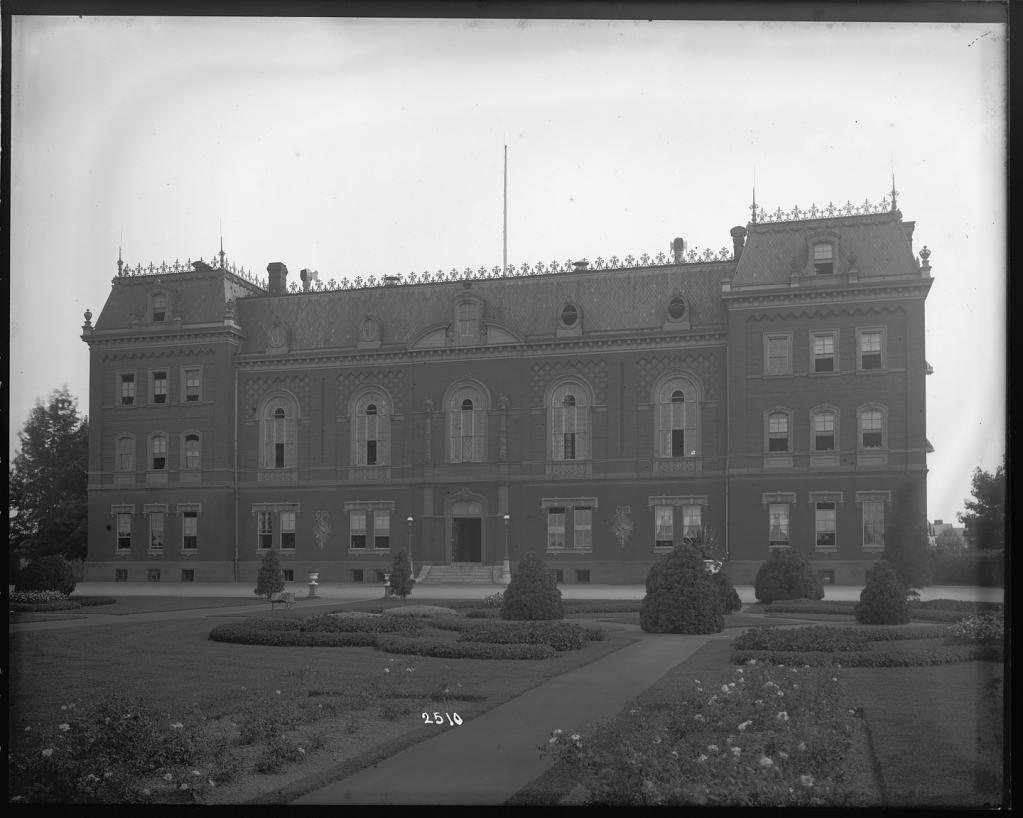
Exterior View of Original Department of Agriculture Building — 1880
SIA via Smithsonian Open Access (CC0)
washington dc federal agency building
Generated by Grok Imagine (xAI), prompt: Generate a single 4:3 horizontal image for an educational lesson.
Lesson title: "Why Shrinking a Bureaucracy Is So Hard" · The hidden reason every attempt to cut a program fails.
Domain: governance
Su…
Quiz yourself