Governance
·
Mechanism Foundations
·
selectorate theory
Medium
6 min
Why Some Leaders Build Roads and Others Buy Yachts
What every ruler actually optimizes for
Share
Two leaders. One builds hospitals and schools. The other builds a personal army and a Swiss bank account. Both stay in power for decades. Why does one invest in millions of strangers while the other invests only in himself?
Every government — democracy, dictatorship, monarchy, corporate board — has a power structure underneath it. Not the official one in the constitution. The real one: who actually decides whether the person at the top keeps their job? That question is the starting point for understanding how organized power works. Selectorate theory, developed by political scientist Bruce Bueno de Mesquita (b. 1946, United States) and his colleagues in the early 2000s, gives you a precise answer. And once you see it, you can't unsee it.
Every leader has two groups to think about. The first is the selectorate — everyone who has some formal say in keeping the leader in power. In a democracy, that's every eligible voter. In a monarchy, it might be the nobility and the military. In a corporation, it's the shareholders. The second group is smaller and more important: the winning coalition. These are the people whose support the leader actually needs to survive. Lose them, and you're out. Keep them happy, and you stay.
Make your call
A dictator has 10 million citizens but only needs the loyalty of 200 generals and officials to stay in power. A democratic president needs 60 million votes. Which leader spends more on public goods — roads, hospitals, schools — and why?
A
The dictator, because centralized power means faster spending decisions
B
The president, because a large winning coalition forces broad investment
C
Neither — both optimize for personal wealth once in power
The size of the winning coalition determines everything. When your coalition is tiny — say, 200 generals — you can keep each one loyal with direct, private payments. Cash, land, contracts, immunity from prosecution. It's cheaper to bribe 200 people than to build hospitals for 10 million. So you don't build the hospitals. You buy the generals. When your coalition is enormous — millions of voters — private payments become impossible. You can't write a check to 60 million people. The only way to buy that much loyalty is to deliver things that benefit large numbers of people at once: roads, clean water, functioning courts, schools. Public goods aren't generosity. They're the cost of a large coalition.
Key Insight
Leaders don't differ in how virtuous they are. They differ in the math they're solving. A small winning coalition makes corruption the rational strategy. A large one makes public investment the rational strategy. Same human being, different incentive structure, completely different country.
Example
Mobutu Sese Seko ruled what is now the Democratic Republic of Congo from 1965 to 1997. During that time, the country's road network — which Belgian colonizers had built to extract resources — rotted almost completely. Bridges collapsed. Highways became impassable. Mobutu's personal fortune at his death was estimated at $5 billion, roughly equal to the country's entire national debt. This wasn't incompetence. Mobutu kept a small, loyal coalition of military commanders and regional strongmen on a steady diet of money and favors. Roads would have helped 30 million Congolese citizens — none of whom were in his winning coalition. So roads got nothing. The generals got everything. He lasted 32 years. Compare that to a leader whose survival depends on winning a national election every four years. They still cut corners, still reward donors, still play politics — but they have to deliver something visible to millions of people or they lose. The mechanism, not the morality, drives the outcome.
Related threads
Governance
·
Why Democracies Keep Collapsing to Two Parties
·
Duverger's law
Why Democracies Keep Collapsing to Two Parties
Governance
·
Why Every Organization Eventually Fights Itself
·
principal-agent problems
Why Every Organization Eventually Fights Itself
Governance
·
Politicians Are Just Sellers With Different Products
·
public-choice theory
Politicians Are Just Sellers With Different Products
Sources
Images from Wikimedia Commons. Attribution required by license.
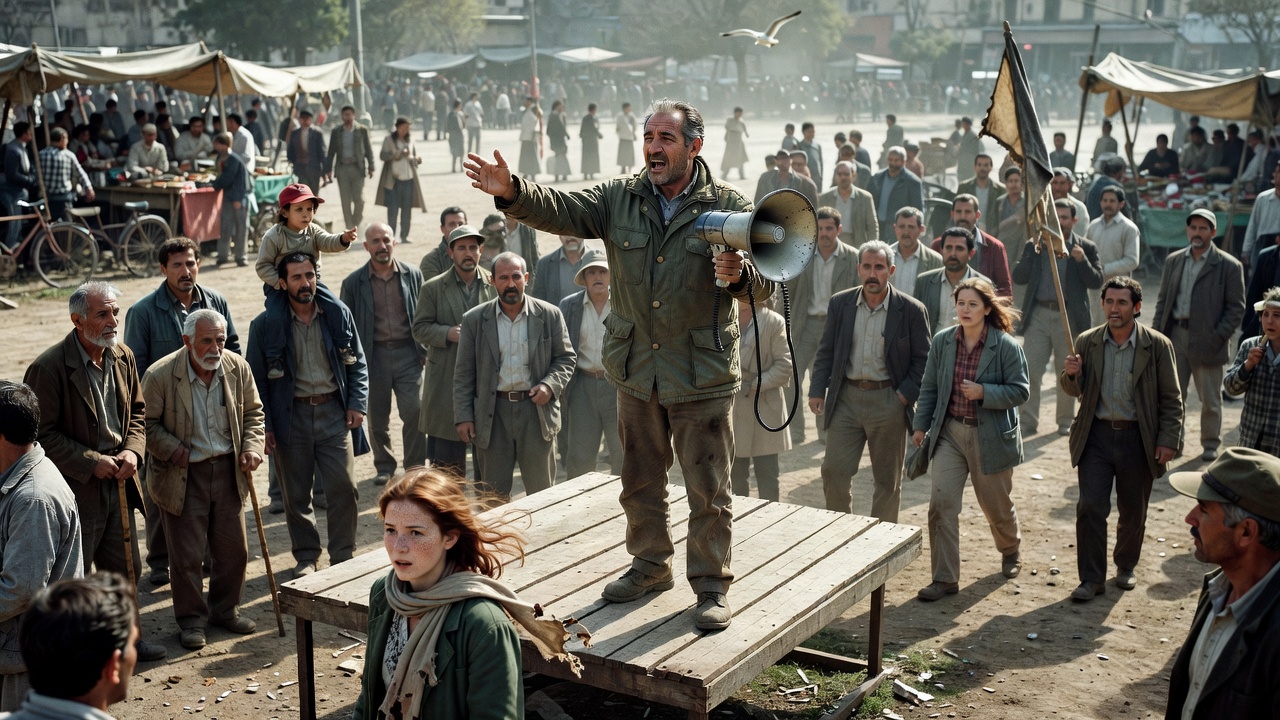
political rally crowd leader
Generated by Grok Imagine (xAI), prompt: Generate a single 16:9 horizontal image for an educational lesson.
Lesson title: "Why Some Leaders Build Roads and Others Buy Yachts" · What every ruler actually optimizes for
Domain: governance
Subje…
A simple Euler diagram of Selectorate Theory
Olfbir · CC BY-SA 4.0
Quiz yourself