Governance
·
Mechanism Foundations
·
regulatory capture
Medium
6 min
Autopsy
The Regulator Who Came From the Industry
How the agency built to keep Boeing safe ended up letting Boeing decide what was safe
Share
On March 10, 2019, Ethiopian Airlines Flight 302 climbed out of Addis Ababa and then, six minutes later, hit the ground at 575 miles per hour. 157 people died. It was the second crash of the same brand-new aircraft in five months. The plane was the Boeing 737 MAX. The software that drove both planes into the earth had already been reviewed and approved — by the agency whose entire job was to catch exactly this kind of problem.
Every organized system of power — a government, a corporation, a regulator — runs on mechanisms. Not intentions, not mission statements: mechanisms. Structural forces that shape what people actually do, regardless of what they're supposed to do. This lesson is about one of the most reliable mechanisms in the history of governance: regulatory capture. It's the process by which an agency created to oversee an industry gradually starts serving that industry instead. It doesn't require corruption. It doesn't require bad people. It just requires the normal logic of careers, expertise, and proximity to play out over time.
The Federal Aviation Administration was created to keep American skies safe. By 2017, it had a problem: the aviation industry had grown so technically complex that the FAA couldn't hire enough engineers with the expertise to evaluate new aircraft systems. Boeing and Airbus were building things the FAA's own staff couldn't fully assess. So the FAA did something that made bureaucratic sense at the time — it delegated. It authorized Boeing to certify its own aircraft, using Boeing employees designated as FAA representatives. The people checking Boeing's work were Boeing's people.
Make your call
When Boeing employees act as FAA representatives, who do you think they ultimately answer to — even when the two roles conflict?
A
The FAA, because their certification role is legally binding
B
Boeing, because that's who pays them and controls their careers
C
Neither — the dual role creates genuine independence
The 737 MAX needed a new automated system called MCAS — Maneuvering Characteristics Augmentation System — to compensate for heavier engines repositioned on the wing. MCAS could force the nose down if it detected a stall. Boeing's engineers classified MCAS as low-risk, in part because they assumed pilots would quickly override it. That classification meant it received less regulatory scrutiny. The Boeing employees acting as FAA representatives signed off on that risk assessment. The FAA accepted it. Nobody with real independence looked hard at what happened if MCAS activated when it shouldn't — which is exactly what happened on Lion Air Flight 610 in October 2018, and then again five months later over Ethiopia. In both crashes, a single faulty sensor triggered MCAS repeatedly. The pilots fought it. They lost.
Key Insight
Regulatory capture doesn't need a villain. It needs a structure where the regulator's career, expertise, and daily relationships are all tied to the industry it's supposed to police. Given that structure, the regulator starts seeing the world the way the industry sees it — not because they're corrupt, but because that's who they talk to, who trained them, and who they'll work for next.
The 737 MAX was grounded worldwide in March 2019, three days after the Ethiopian crash. It stayed grounded for 20 months. A subsequent Congressional investigation found that FAA management had pressured its own technical staff to defer to Boeing's timeline and Boeing's risk judgments. Senior FAA officials had come from Boeing. Some returned to Boeing afterward. The revolving door — industry to regulator and back — is not incidental to capture; it's the mechanism. People carry their professional loyalties, their mental models, and their career ambitions with them when they cross that threshold. The institution's stated mission stays the same. The institution's actual behavior drifts. That drift is regulatory capture. And the 737 MAX is what it looks like when the drift goes far enough.
Related threads
Governance
·
Why Democracies Keep Collapsing to Two Parties
·
Duverger's law
Why Democracies Keep Collapsing to Two Parties
Governance
·
Why Every Organization Eventually Fights Itself
·
principal-agent problems
Why Every Organization Eventually Fights Itself
Governance
·
Politicians Are Just Sellers With Different Products
·
public-choice theory
Politicians Are Just Sellers With Different Products
Sources
Images from Wikimedia Commons. Attribution required by license.
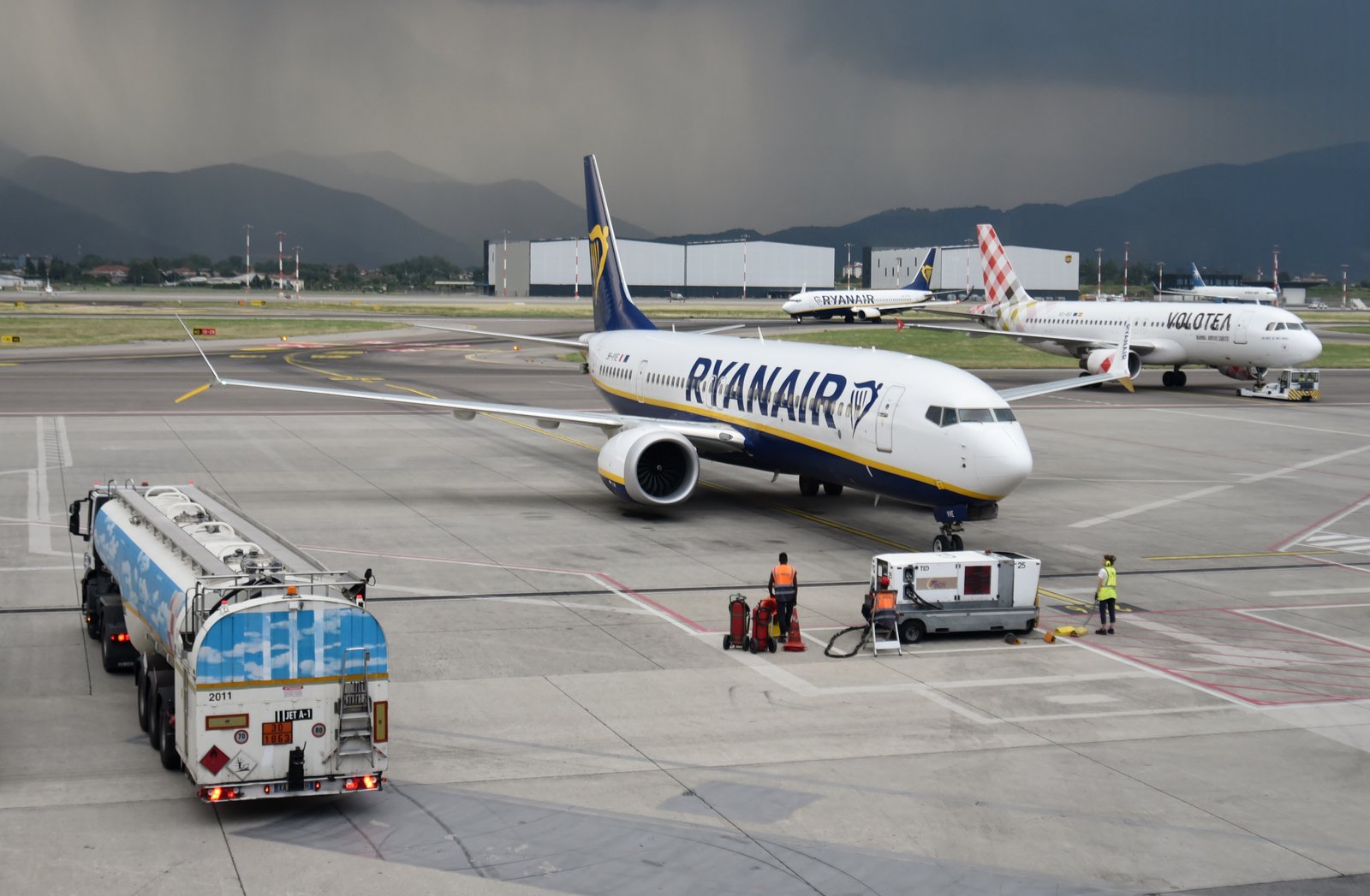
Malta Air Boeing 737-8 MAX 9H-VVE, in Ryanair livery, at Milan Bergamo Airport (BGY/LIME), Italy
Bahnfrend · CC BY-SA 4.0
FAA Boeing certification delegation
Generated by Grok Imagine (xAI), prompt: Generate a single 4:3 horizontal image for an educational lesson.
Lesson title: "The Regulator Who Came From the Industry" · How the agency built to keep Boeing safe ended up letting Boeing decide wha…
Quiz yourself