Geography
·
Why Did Everyone Move to Cities?
Medium
6 min
Why Did Everyone Move to Cities?
How invisible forces pulled billions of people off the land and rewired human civilization.
Share
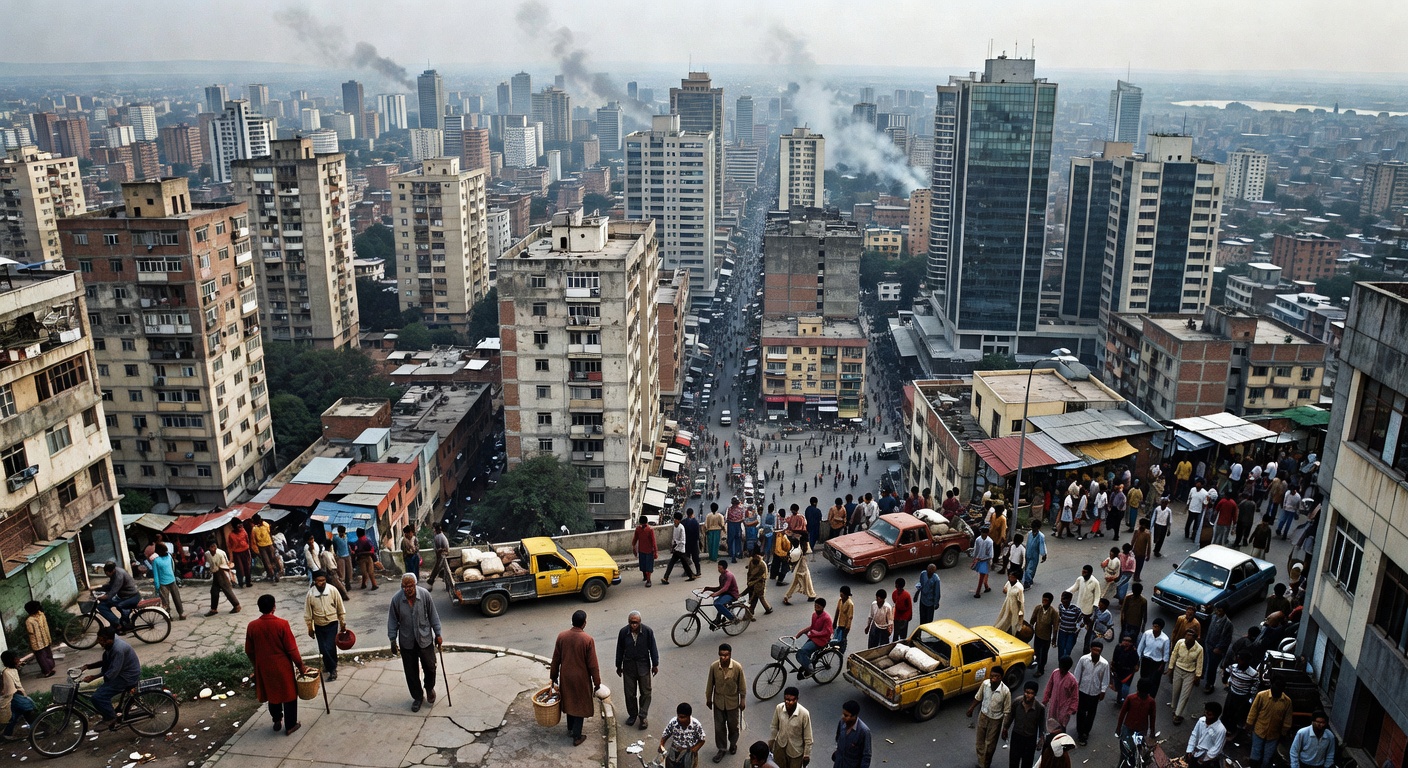
In 1800, only 3% of humans lived in cities. Today it's over 56% — and climbing. Something happened that made billions of people look at the land their families had farmed for generations and decide: I'm out. What was it?
For most of human history, staying put made sense. You grew food, you ate it, you survived. Moving to a city meant leaving behind the one thing that kept you alive: your land. So why did people do it anyway?
The answer isn't one big moment. It's a trap door that opened slowly, and then all at once.
Make your call
Here's the real question the hook is asking: what actually made billions of people abandon the land their families had worked for generations? What was the primary force that set the whole thing in motion?
A
Cities actively recruited rural workers with promises of better wages and conditions
B
Farms became so productive they no longer needed as many people — pushing workers off the land
C
Population growth made rural areas too crowded to sustain everyone
It started with farms getting too good at their job. The Agricultural Revolution — better tools, crop rotation, selective breeding — meant fewer people were needed to grow the same amount of food. A farm that once needed ten families could now run with two.
So eight families were suddenly... available. They had labor to sell and nowhere local to sell it. Cities, which were filling up with factories desperate for workers, were the obvious answer. The countryside pushed people out. Cities pulled them in. That's the answer to why billions abandoned the land — not a single dramatic moment, but a slow mechanical displacement. Geographers call this push-pull migration, and once it starts, it feeds itself.
Key Insight
Cities don't just concentrate people — they concentrate opportunity. And opportunity attracts more people. Which creates more opportunity. Once a city reaches critical mass, it becomes almost impossible to stop growing. This feedback loop is the engine behind every major urban explosion in history.
Example
London in 1800 had about 1 million people. By 1900 it had 6.7 million. That's not natural population growth — that's a city inhaling the countryside.
The same story played out in Chicago, which grew from a trading post of 350 people in 1830 to over a million by 1890. Sixty years. One million people. It happened because Chicago sat at the intersection of rail lines, rivers, and the cattle trade from the American West. Geography made it the natural hub. Once it was the hub, everyone who wanted to be near the action had to go there. And so they did.
Cities changed the people who moved into them, not just the other way around.
When you live spread across farmland, you're mostly self-sufficient. You make your own food, fix your own tools, raise your own kids. When you pack millions of people into a few square miles, self-sufficiency becomes impossible — and unnecessary. You specialize. You become a baker, a printer, a dockworker, a lawyer. You trade your specialized labor for everything else you need.
This is the birth of the modern economy. Not in a textbook sense — in a daily life sense. Cities forced people to depend on strangers. And depending on strangers at scale is basically what civilization is.
But it wasn't all upside. Early cities were brutal. No sewage systems, no clean water, no building codes. London's Thames was essentially an open sewer. Cholera outbreaks killed thousands. Life expectancy in industrial Manchester was lower than in rural areas, sometimes by a decade.
People moved anyway. Because even a shorter, harder life in a city often meant more money, more possibility, more of a chance that your kids would escape poverty. The calculus was grim, but it was real. Cities were dangerous, and still the best bet most people had. That tension hasn't fully disappeared.
Key Insight
Urbanization isn't just a geography story. It's an economics story, a public health story, a social psychology story. The city is the environment that made modern humans — with all the opportunity and all the dysfunction that comes with it.
Related threads
Geography
·
Rivers Didn't Just Help Civilization — They Built It
Rivers Didn't Just Help Civilization — They Built It
Sources
Images from Wikimedia Commons. Attribution required by license.
crowded city skyline aerial
Generated by Grok Imagine (xAI), prompt: Generate a single 16:9 horizontal image for an educational lesson.
Lesson title: "Why Did Everyone Move to Cities?" · How invisible forces pulled billions of people off the land and rewired human civi…
Fabrikako tailer mekanikoa, Brunet y Cía., Oria, Gipuzkoa, Euskal Herria
Iñaki LL · CC0
Boy at Loom, Cotton Mill, Indiana, 1908 — ca 1906-1918
NMAH via Smithsonian Open Access (CC0)
Quiz yourself