Geography
·
Every City Was Built Next to Water
Easy
5 min
Every City Was Built Next to Water
The invisible force that decided where 8 billion people live
Share
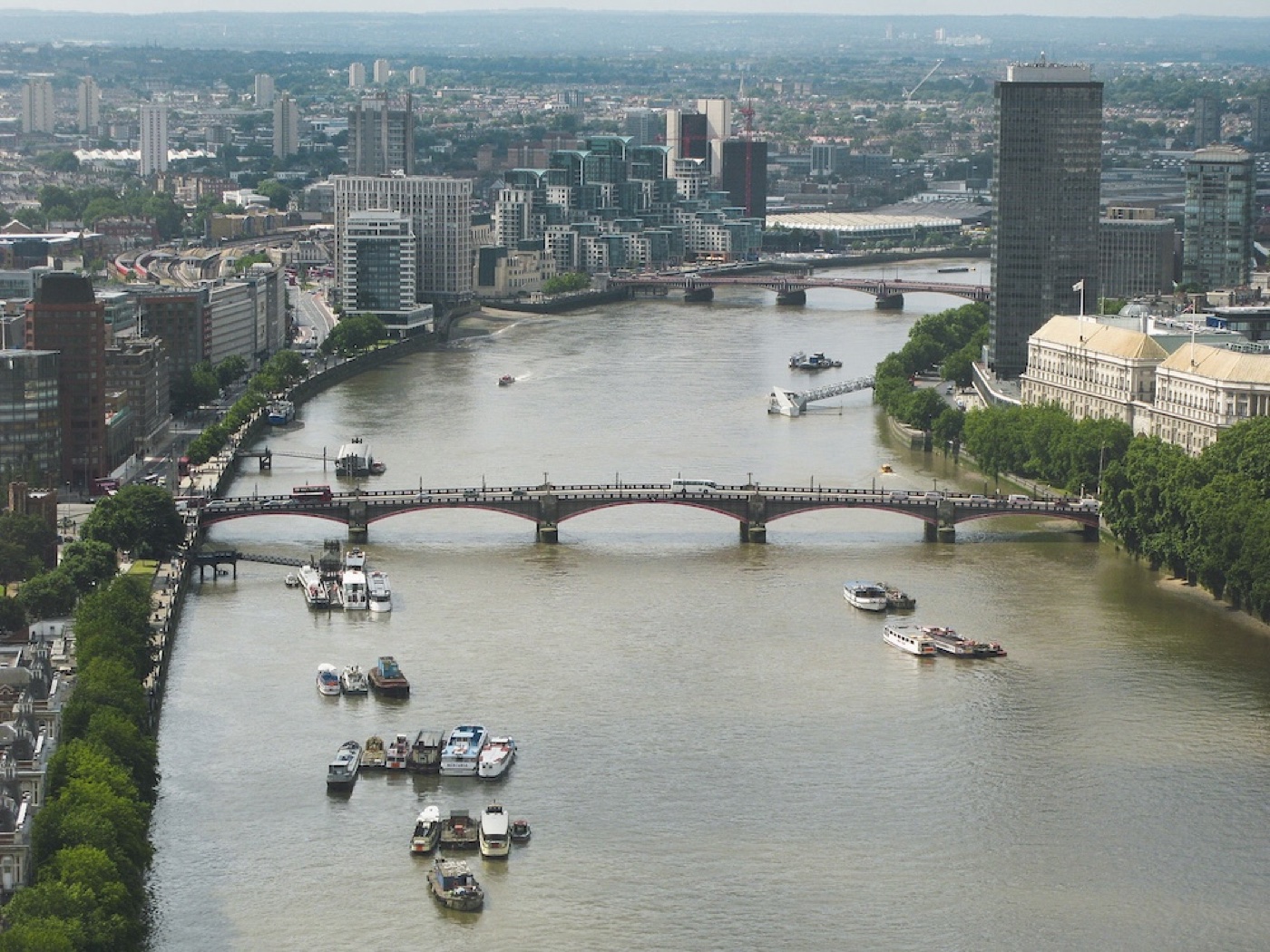
Almost every major city on Earth — New York, London, Cairo, Shanghai — sits next to a river, lake, or coast. That's not a coincidence. It's a law. And once you see it, you can't unsee it.
Water doesn't stay in one place. It evaporates from oceans, gets carried inland by wind, falls as rain, flows downhill into rivers, and eventually makes it back to the sea. Then it does the whole thing again. This loop — the water cycle — has been running for billions of years, and it's been quietly deciding where humans can and can't survive the entire time.
No water, no food. No food, no people. Every civilization that ever existed had to solve the water problem first. Everything else — trade, culture, war, art — came after.
The cycle works like this. The sun heats surface water — mostly oceans — and turns it into vapor. That vapor rises, cools, and condenses into clouds. Wind pushes those clouds over land. When conditions are right, the water falls as rain or snow.
The water doesn't fall evenly, though. Mountains force air upward, cooling it fast and squeezing out rain on the windward side. The other side — called the rain shadow — gets almost nothing. This is why you can have a lush rainforest and a desert separated by a single mountain range. The Andes do this to South America. The Cascades do it to the American West.
Make your call
Egypt sits in the middle of the Sahara — almost no rainfall, brutal heat, desert in every direction. So why has it been one of the most densely populated places on Earth for 5,000 years?
A
The Sahara was much wetter in ancient times, making Egypt far more habitable back then
B
Large populations can sustain themselves anywhere if trade networks bring in food and water
C
A single river carried water from wetter regions hundreds of miles away, making the desert irrelevant
Example
Look at Egypt. It's surrounded by some of the most brutal desert on Earth. Almost zero rainfall. By every logic, no one should live there — and yet it's been continuously inhabited for 5,000 years and now holds over 100 million people.
The Nile is why. Every year, snowmelt and rainfall from the Ethiopian Highlands flows north through the desert and deposits rich sediment across a narrow strip of land. Ancient Egyptians didn't conquer the desert. They followed the water and built everything — their farms, their cities, their entire civilization — along a single river in the middle of nowhere.
Key Insight
Every empire, every migration, every famine — trace it back and there's a water problem underneath. Always.
Now it gets interesting for the modern world: we've partially broken the cycle. We pump groundwater out of ancient underground reservoirs — called aquifers — that took thousands of years to fill. Cities like Las Vegas and Phoenix exist in places the water cycle never intended humans to live in large numbers. They survive by borrowing water from the past.
That works — until the aquifer runs dry or the river they depend on gets stretched too thin. The Colorado is already there. The old rule reasserts itself — the same one that put New York, London, Cairo, and Shanghai exactly where they are. Follow the water. Same as always.
Related threads
Geography
·
Why Two Cities at the Same Latitude Feel Worlds Apart
Why Two Cities at the Same Latitude Feel Worlds Apart
Sources
Images from Wikimedia Commons. Attribution required by license.
Diagram of the water cycle
NASA's Scientific Visualization Studio · Marit Jentoft-Nilsen, Global Science and Technology, Inc./Deborah McLean
Siege of Vicksburg — 1888
Harry T. Peters "America on Stone" Lithography Collection via Smithsonian Open Access (CC0)
Quiz yourself