Economics
·
Is America Going Broke Buying Stuff?
Medium
6 min
Is America Going Broke Buying Stuff?
Trade deficits are stranger than the catastrophe warnings suggest.
Share
The US has run a trade deficit every single year since 1975. By the logic you've probably heard, America should be bankrupt by now. It isn't. So either everyone's wrong about trade deficits — or we're all missing something huge.
A trade deficit just means a country buys more from the rest of the world than it sells to the rest of the world. The US imports iPhones, cars, clothes, and oil. It exports planes, software, soybeans, and movies. When the import number is bigger than the export number, the gap is called the trade deficit. Simple math. But the moment politicians get involved, it gets treated like a national emergency — or a total non-issue, depending on who's talking. The truth is somewhere weirder than either camp admits.
Analogy
Think about your own finances. Say you spend more money than you earn this month — maybe you put a new laptop on a credit card. By the 'trade deficit is bad' logic, you just made a terrible decision and you're heading toward ruin. But wait. If that laptop helps you freelance and earn more next year, the 'deficit' was an investment. If you bought it to impress someone on a date and can't pay it back, it was a problem. The deficit number alone tells you almost nothing. What matters is what you got for the money and whether you can handle the debt. Countries work the same way.
Make your call
The US sends $500 billion more abroad than it receives in exports. Where does that money end up? Before you read on — what actually happens to those dollars?
A
Other countries pocket them permanently, making those countries richer and the US poorer
B
They return to the US as foreign investment in bonds, factories, and startups
C
They circulate in foreign economies and gradually lose value, reducing the deficit naturally
Here's the part that breaks people's brains: when the US runs a trade deficit, dollars flow out to pay for imports. But those dollars don't just disappear. Foreign companies and governments end up holding a mountain of US dollars — and they have to do something with them. Most of the time, they reinvest those dollars back into the US economy. They buy US Treasury bonds. They build factories in Ohio. They invest in American startups. This flow of money back in is called the capital account surplus, and it perfectly mirrors the trade deficit. The money always comes back. The question is just what form it takes when it returns.
Key Insight
A trade deficit and a capital surplus are two sides of the same coin. When foreigners sell you more stuff than you sell them, they end up with your currency — and they use it to invest in your country. You can't have one without the other.
So why do trade deficits get such bad press? Because they do have real victims — just not the ones the headline suggests. When the US imports cheaper manufactured goods from countries with lower wages, some American factory workers genuinely lose their jobs. That's real. Those communities feel it. But the flip side is that every American consumer pays less for clothes, electronics, and cars — which is like a quiet raise for everyone's paycheck. The gains are spread thin across 330 million people. The losses are concentrated in specific towns and industries. Spread-thin gains are invisible. Concentrated losses make the news.
Example
China is the most talked-about piece of the US trade deficit. The US buys an enormous amount of manufactured goods from China. In return, China has historically taken those dollars and bought US government bonds — essentially lending money back to the US government. This let the US borrow cheaply for decades and fund everything from highways to wars. Was that a bad deal for America? Depends entirely on what you think of cheap debt and cheap goods versus the factory jobs that moved overseas. Economists still argue about it. Loudly.
Now it gets interesting — some of the world's most economically dominant countries run persistent trade surpluses (Germany, China, Japan), while the world's largest economy runs a persistent deficit. If deficits were purely destructive, the US should have collapsed decades ago. The reason it hasn't is partly because the US dollar is the world's reserve currency. Everyone needs dollars to trade oil, settle international debts, and hold as savings. That global demand for dollars means the US can run deficits that would sink any other country. It's an enormous structural advantage — and one that could shift if the dollar ever loses that special status. But that's a different lesson entirely.
Key Insight
The real question about a trade deficit isn't 'is it big?' It's 'what is the country getting for it, and can it sustain the debt?' A deficit funding productive investment is very different from a deficit funding consumption you can't afford.
Sources
Images from Wikimedia Commons. Attribution required by license.
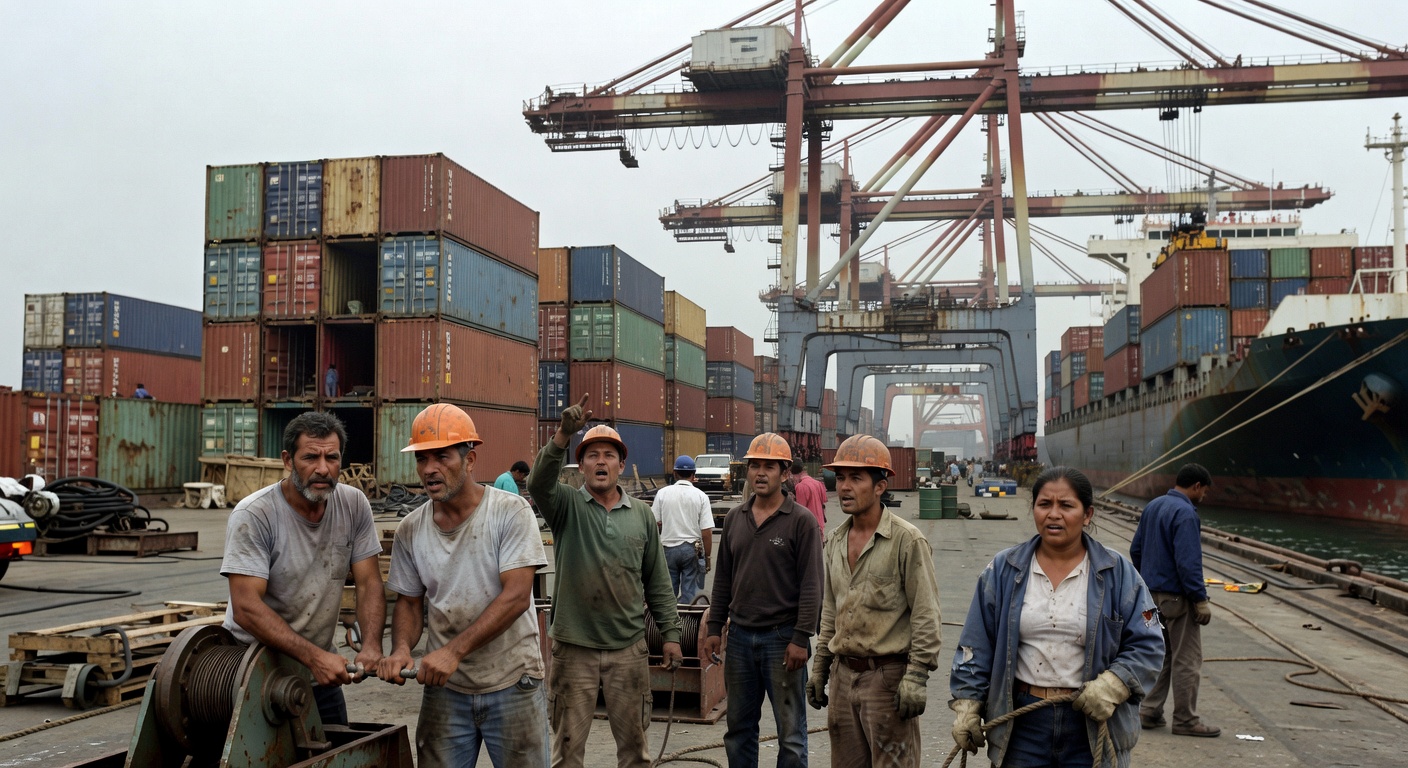
container ships port loading
Generated by Grok Imagine (xAI), prompt: Generate a single 16:9 horizontal image for an educational lesson.
Lesson title: "Is America Going Broke Buying Stuff?" · Trade deficits are stranger than the catastrophe warnings suggest.
Domain: eco…
global money flow diagram
Generated by Grok Imagine (xAI), prompt: Generate a single 4:3 horizontal image for an educational lesson.
Lesson title: "Is America Going Broke Buying Stuff?" · Trade deficits are stranger than the catastrophe warnings suggest.
Domain: econ…
Quiz yourself