
Economics
·
Why Your T-Shirt Has Five Birthplaces
Medium
7 min
Why Your T-Shirt Has Five Birthplaces
The invisible web connecting your daily life to every corner of the planet.
Share
Check the label on whatever you're wearing right now. Made in Bangladesh, maybe. But the cotton? Grown in Texas. The dye? Manufactured in Germany. The zipper? Assembled in China. The design? Sketched in Milan. One shirt. Five countries. Zero of them talking to each other directly. So how did it all end up on your back?
For most of human history, if you wanted something, you got it from someone nearby. Your food came from local farms. Your clothes came from local weavers. Your tools came from local blacksmiths. Trade happened, sure — the Silk Road moved spices and silk across continents — but it was slow, expensive, and risky. A merchant could spend months on a single journey and still lose everything to weather or bandits. The world was big, and most of it was effectively unreachable.
Then three things changed everything: steamships, telegraphs, and later, container shipping. Suddenly the cost of moving stuff — and information about stuff — collapsed. And when moving things gets cheap, the entire logic of who makes what gets rewritten from scratch.
Analogy
Think about how group chats changed friend groups. Before smartphones, your social world was mostly local — people you could physically reach. Then suddenly you could maintain deep friendships with people across the country, coordinate events in real time, share things instantly. Your social network exploded in size and complexity.
Globalization did the same thing to economies. The 'friction' of distance — cost, time, risk — dropped so dramatically that businesses could suddenly treat the entire planet as their operating environment. A factory in Vietnam is now, in a practical sense, closer to a designer in New York than a factory in New Jersey was in 1950. Not geographically. Economically.
Make your call
So back to your shirt. Cotton from Texas, dye from Germany, zipper from China, design from Milan — why does this happen? Why doesn't one country just make the whole thing?
A
Each country simply has the raw materials its step requires, so geography forces the split
B
Every country focuses on what it's relatively best at, so the whole shirt gets made more efficiently when it's split up
C
Global corporations deliberately spread production to avoid paying full taxes in any one country
Here's where your earlier lesson on comparative advantage pays off — and where the shirt question from the top finally gets its answer. Remember: countries don't just trade what they have in abundance — they specialize in what they're relatively best at producing, even if another country could technically do it better.
Globalization is comparative advantage operating at full speed, across the entire planet, in real time. Bangladesh has low labor costs and a massive textile workforce — comparative advantage in garments. South Korea has deep engineering expertise and capital — comparative advantage in semiconductors. Brazil has land, climate, and scale — comparative advantage in soybeans and beef. When trade barriers fall and shipping gets cheap, every country doubles down on its strengths and imports everything else. The result is a world where almost nothing is made in one place anymore.
Key Insight
Globalization isn't just countries trading finished products. It's countries trading pieces of products. Your iPhone isn't 'made in China' — it's assembled in China from components designed in California, manufactured in Japan, South Korea, Taiwan, and Germany. The global economy doesn't just move goods. It slices up the production process itself and scatters it across the planet wherever each step can be done most efficiently.
Example
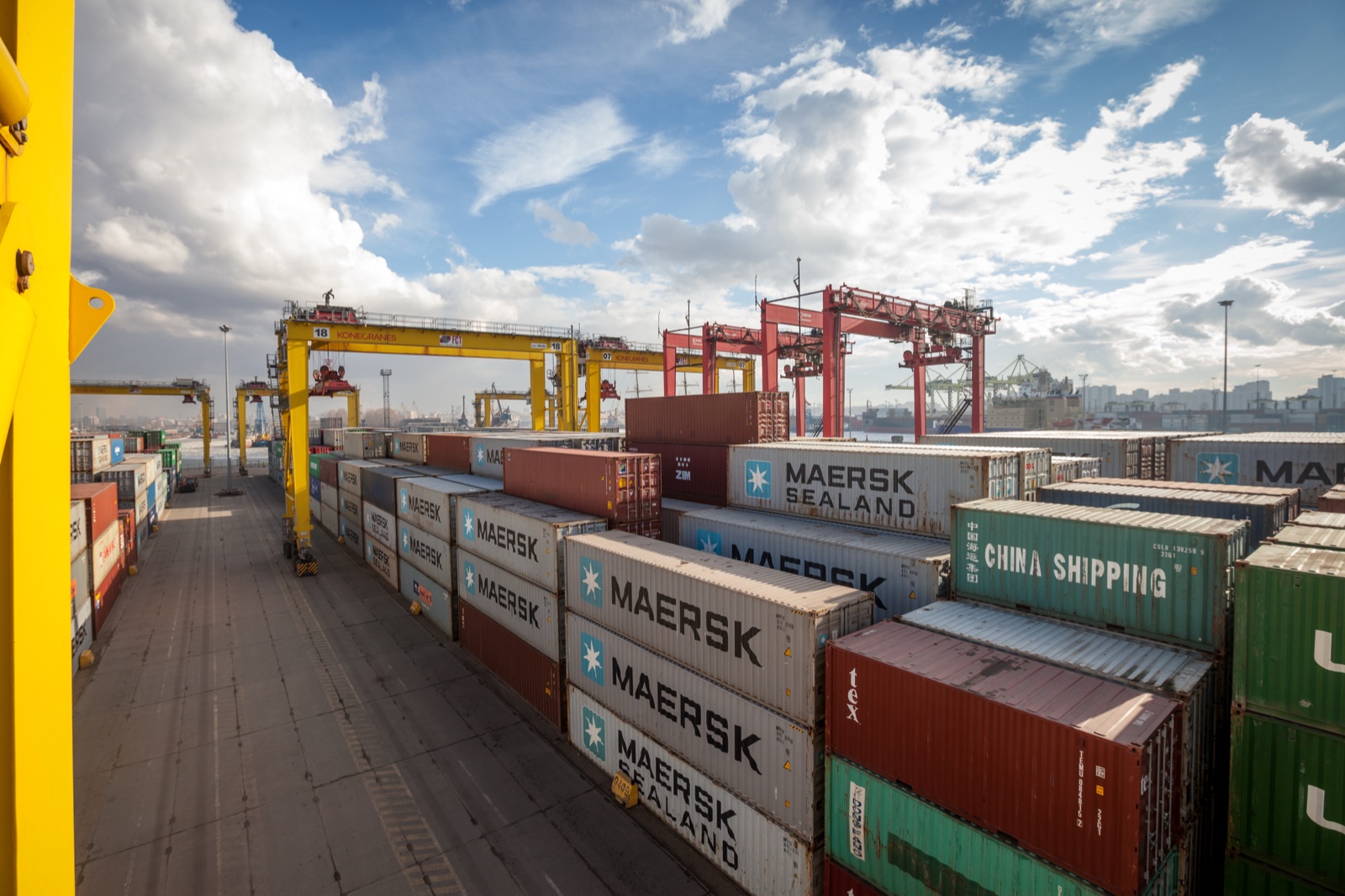
In 1956, a trucking entrepreneur named Malcolm McLean invented the standardized shipping container — a simple metal box in a fixed size that could move seamlessly between ships, trains, and trucks without unpacking. Before containers, unloading a ship took days and an army of dock workers. After containers, the same job took hours with a crane and a skeleton crew.
The cost of shipping a ton of cargo dropped by roughly 97%. That's not a rounding error. That's the entire economics of global trade changing overnight. Within two decades, factories that had been built near customers — because shipping was too expensive — started moving to wherever labor was cheapest. The container didn't just change shipping. It rewired where everything in the world gets made.
And here's where it gets complicated. Globalization creates enormous wealth — the data on this is overwhelming. Global extreme poverty fell from 36% of the world's population in 1990 to under 10% by 2015. Countries that plugged into global trade — South Korea, Taiwan, China, Vietnam — saw living standards explode in a single generation. The gains are real.
But those gains aren't distributed evenly, and this is where a lot of political fury comes from. When a factory moves from Ohio to Vietnam, Vietnamese workers get jobs and Ohio workers lose them. Total global welfare goes up. Ohio's welfare goes down. The people who benefit from globalization and the people who pay its costs are often completely different people in completely different places — and the winners rarely compensate the losers. That mismatch is behind a lot of the trade wars, tariff fights, and economic nationalism you've seen in the last decade.
Key Insight
The deepest truth about globalization: it's not a policy someone chose. It's the natural result of falling costs. When moving things gets cheap enough, specialization happens automatically — because any business that doesn't take advantage of it gets undercut by one that does. You can slow globalization with tariffs and restrictions, but you're essentially paying to make things more expensive in order to preserve a particular distribution of jobs. Sometimes that's worth it. But don't confuse it with making the economy more efficient — it isn't.
Sources
Images from Wikimedia Commons. Attribution required by license.
First Container Terminal in St.Peterburg
Pavel Iovik · CC BY-SA 4.0
The trading connections of Thomas Howell
Evan T Jones · CC BY 4.0
Quiz yourself