Economics
·
Why Cheap Money Changes Everything
Medium
6 min
Why Cheap Money Changes Everything
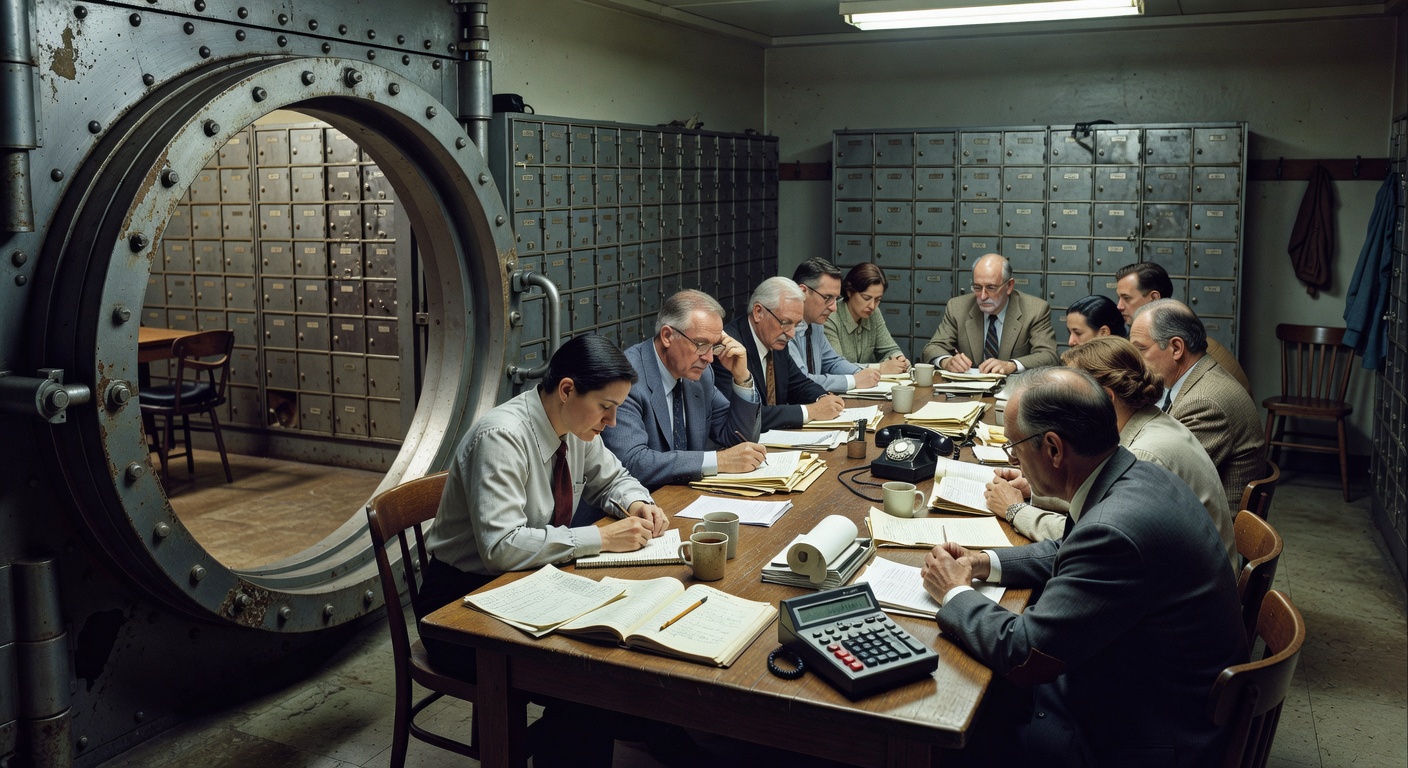
One number set by a room of economists quietly controls whether you buy a car, start a business, or keep your job.
Share
Imagine two identical coffee shops. Same location, same menu, same owner. One opens in 2021 when borrowing costs almost nothing. One tries to open in 2023 when rates have tripled. The first one thrives. The second one never opens. The only thing that changed was the price of borrowing money.
Money has a price. Not the money in your wallet — that's just money. But borrowed money? That costs something. And that cost is the interest rate.
When you take out a loan, you're renting money. The interest rate is the rent. And just like apartment rent, when it goes up, fewer people can afford it. When it drops, suddenly everyone's moving in.
This sounds simple. But here's what makes it powerful: almost every major financial decision you'll ever make — buying a home, starting a business, investing in stocks, even keeping your job — is quietly shaped by this one number.
Analogy
Think about how you use a buy-now-pay-later app. When there's zero interest, you split everything. New laptop? Four payments. Concert tickets? Four payments. It feels free, so you do it constantly.
Now imagine that same app charges 20% interest. Suddenly you're doing math before every purchase. Is this thing actually worth 20% more than the sticker price? Most of the time, the answer is no. You wait. You save. You buy less.
That's exactly how interest rates work on a national scale. Low rates = everyone's hitting buy now. High rates = everyone's doing the math and hesitating. Multiply that hesitation across millions of people and businesses, and you've just slowed down an entire economy.
Make your call
Think back to those two coffee shops — same everything, different year. What's your gut read on why the second one never opened?
A
The owner couldn't get approved for a loan because banks tightened their standards
B
Higher borrowing costs made the monthly repayments too steep to turn a profit
C
Inflation pushed up ingredient costs so much that the business model broke
Interest rates don't just affect borrowers — they flip the entire logic of what you do with money you already have.
When rates are near zero, keeping cash in a savings account is basically a punishment. Your money sits there earning nothing while inflation quietly eats it. So what do people do? They invest. They buy stocks, real estate, crypto, anything that might actually grow. Risk starts to feel worth it because the safe option pays nothing.
Crank rates up to 5%? Now a government bond — one of the safest investments on earth — actually pays you something real. Suddenly that risky bet on a startup doesn't look so attractive compared to guaranteed returns. Money flows out of risky assets and into safe ones. Stock prices fall. Real estate cools. The whole financial ecosystem shifts.
Key Insight
Interest rates are a volume knob for the entire economy. Turn them down: spending up, investing up, risk up. Turn them up: spending slows, saving pays, risk gets punished. Central banks use this knob to fight inflation and recessions — but they can't turn it without side effects.
Example
2020-2021: The Fed drops rates to basically zero to keep the economy alive during COVID. Mortgages get cheap. People flood the housing market. Home prices shoot up 30-40% in two years. Startups raise billions at absurd valuations because cheap money is chasing anything with a growth story.
2022-2023: Inflation explodes, so the Fed hikes rates faster than it has in 40 years. Mortgages go from 3% to 7%. Monthly payments on a $400,000 home jump by nearly $1,000. The housing market freezes. Tech companies that raised money at sky-high valuations start laying off thousands. The same businesses that looked like geniuses in 2021 look like disasters in 2023.
Nothing about the underlying businesses changed that dramatically. The price of money changed. That's exactly why the second coffee shop never opened — and why that gap keeps widening across millions of decisions every time the rate moves.
There's a lag built into all of this that trips people up. When a central bank raises rates, the economy doesn't slam on the brakes immediately. It takes 12-18 months for higher rates to fully work their way through — mortgages renew, business loans mature, credit card rates adjust.
This means central bankers are essentially steering a ship with a delayed rudder. They turn the wheel today based on where they think the ship will be in a year and a half. Get it wrong in either direction and you've either let inflation run wild or you've crashed the economy into a recession.
And here's the uncomfortable truth: they get it wrong a lot. Not because they're bad at their jobs, but because the economy is genuinely that hard to predict.
Key Insight
The real reason interest rates matter to you personally: they set the cost of your future. A 1% difference in your mortgage rate over 30 years can mean paying $50,000+ more or less in total. The same principle applies to student loans, car loans, and business debt. Rates aren't abstract macro policy — they're the price of your ambitions.
Sources
Images from Wikimedia Commons. Attribution required by license.
bank vault interest
Generated by Grok Imagine (xAI), prompt: Generate a single 16:9 horizontal image for an educational lesson.
Lesson title: "Why Cheap Money Changes Everything" · One number set by a room of economists quietly controls whether you buy a car, s…
savings account interest rate
Generated by Grok Imagine (xAI), prompt: Generate a single 4:3 horizontal image for an educational lesson.
Lesson title: "Why Cheap Money Changes Everything" · One number set by a room of economists quietly controls whether you buy a car, st…
The definition of the PIGS, PIIGS, RUPIIGS nations, etc and their economic fate in late November 2010.
The original author was Commons user Amibreton (talk) and the PIGS map derived from it was done by Commons user Rannpháirtí anaithnid (talk). · CC BY-SA 3.0
Quiz yourself