Economics
·
Who Actually Controls Your Money?
Medium
7 min
Who Actually Controls Your Money?
There's a room where twelve people decide whether your rent goes up or your boss starts laying people off.
Share
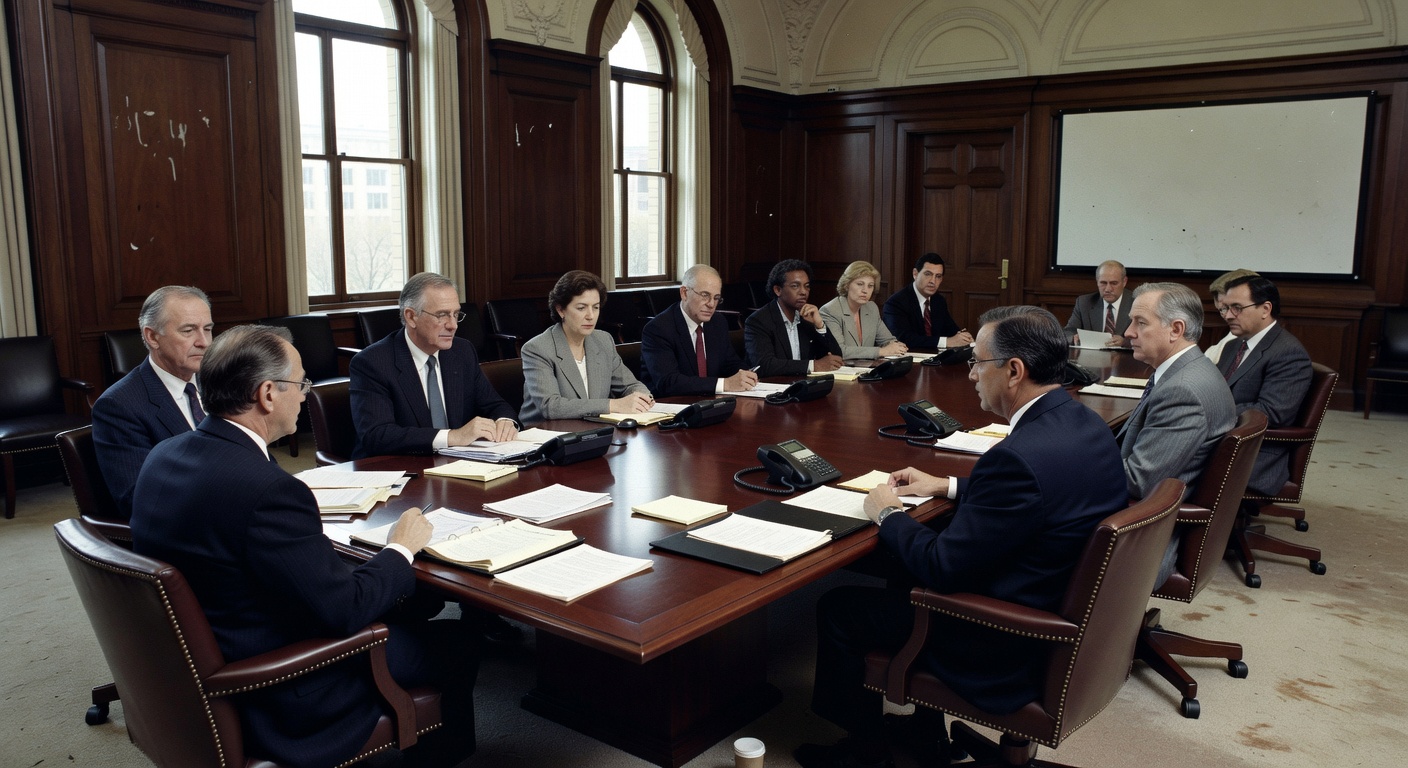
Eight times a year, a group of twelve people sits in a conference room in Washington D.C. and makes a decision. Within hours, mortgage rates shift, stock markets swing, and millions of hiring and firing decisions get quietly reconsidered. You never voted for any of them. Most people couldn't name a single one. And yet, they might be the most powerful economic force in your daily life.
The Federal Reserve — the Fed — is America's central bank. But calling it a bank is like calling a nuclear reactor a really good campfire. Regular banks take your deposits and lend money. The Fed does something far stranger: it creates money, sets the price of borrowing it, and acts as the backstop for the entire financial system. When things go badly wrong — 2008, 2020 — the Fed is the entity that decides whether the economy gets a lifeline or hits the floor.
Analogy
Think of the economy like a group chat that's either dead silent or completely unhinged — no in-between. The Fed's job is to be the person who keeps the energy just right. Too quiet (recession, unemployment rising)? They pump it up — make borrowing cheap so businesses hire and people spend. Too chaotic (inflation ripping, prices spiking)? They cool it down — make borrowing expensive so everyone slows their roll. They're not in the chat. But they control the wifi.
Make your call
The Fed's single most powerful lever is one number. What is it, and why does it touch your rent, your car loan, and your boss's hiring decisions?
A
They control how much physical cash gets printed each year
B
They set the federal funds rate — what banks charge each other overnight — and it ripples into every interest rate you'll ever face
C
They set a national price ceiling on what banks can charge consumers for loans
Their main tool is the federal funds rate — the interest rate banks charge each other for overnight loans. This sounds incredibly boring and completely irrelevant to your life. It isn't. That one number ripples outward into every interest rate you'll ever encounter: your credit card APR, your car loan, your student loan refinance, your future mortgage. When the Fed raises that rate, borrowing gets more expensive everywhere. When they cut it, money gets cheaper to access. They pulled this lever 11 times in 2022-2023 to fight inflation — and you felt every single one.
Key Insight
The Fed doesn't print money in the literal sense — it creates it digitally, by crediting bank accounts. When they want to inject money into the economy, they buy government bonds from banks and just... add numbers to those banks' accounts. Money that didn't exist before now does. This is called quantitative easing, and it's as wild as it sounds.
Example
Here's what this looked like in real time. March 2020: COVID hits, the economy seizes up, nobody knows what's happening. The Fed cut interest rates to essentially zero within two weeks. Then they started buying $120 billion worth of bonds every single month — flooding banks with cash so they'd keep lending. It worked. Markets stabilized. But all that new money sloshing around? Combined with supply chain chaos, it helped fuel the worst inflation in 40 years by 2022. So the Fed slammed the brakes — the fastest rate hikes since the 1980s. One decision to save the economy. Another set of decisions to deal with the consequences. That's the job.
Those twelve people in the Washington conference room — the ones you never voted for? Here's the part most people miss: the Fed is technically independent from the government. The President can't call them up and order a rate cut before an election (though presidents have definitely tried to pressure them publicly). This independence is intentional — politicians have short-term incentives that are terrible for long-term monetary policy. Cutting rates feels great right before a vote. It can be a disaster two years later. The Fed is supposed to be the adult in the room, making unpopular calls when necessary. Whether they actually succeed at staying independent is... a more complicated conversation.
Key Insight
The Fed has a dual mandate: keep inflation around 2% AND keep unemployment low. The cruel irony is that these goals often fight each other. Fighting inflation means raising rates, which slows hiring and can spike unemployment. Cutting rates to save jobs can let inflation run hot. Every Fed decision is a bet on which problem is worse right now.
Sources
Images from Wikimedia Commons. Attribution required by license.
Federal Reserve building Washington
Generated by Grok Imagine (xAI), prompt: Generate a single 16:9 horizontal image for an educational lesson.
Lesson title: "Who Actually Controls Your Money?" · There's a room where twelve people decide whether your rent goes up or your boss …
money printing press currency
Generated by Grok Imagine (xAI), prompt: Generate a single 4:3 horizontal image for an educational lesson.
Lesson title: "Who Actually Controls Your Money?" · There's a room where twelve people decide whether your rent goes up or your boss s…
stock market crash recovery 2020
Generated by Grok Imagine (xAI), prompt: Generate a single 4:3 horizontal image for an educational lesson.
Lesson title: "Who Actually Controls Your Money?" · There's a room where twelve people decide whether your rent goes up or your boss s…
Quiz yourself