Economics
·
Who Actually Pays the Tax?
Medium
6 min
Who Actually Pays the Tax?
Hint: it's not always who the government says it is.
Share
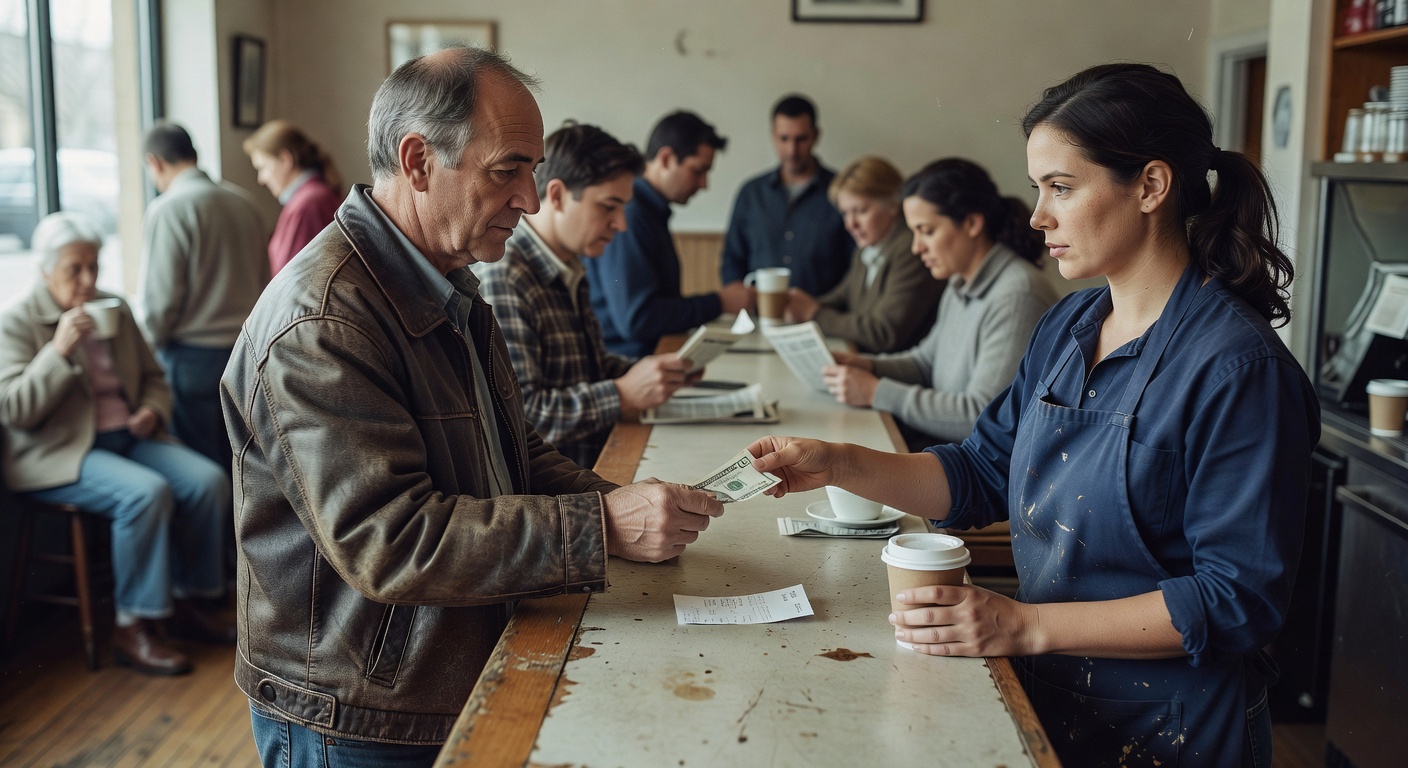
The government slaps a $2 tax on every coffee sold. The coffee shop pays it. So you're off the hook, right? Check your receipt next time. That $2 is sitting right there in your total. The shop passed it straight to you — and there's nothing you can do about it.
Politicians rarely advertise this, but it almost never matters who legally pays a tax. The government can put the tax on sellers, buyers, employers, or corporations — but the actual economic burden lands wherever the market forces it. That landing spot is called tax incidence. And it's almost never where the law says it is.
To understand where the burden lands, you need one idea: elasticity. Elasticity is just a measure of how much people change their behavior when prices change. If a price goes up and you shrug and buy anyway, your demand is inelastic. If you immediately switch to something else, your demand is elastic. Same logic applies to sellers — some can shift production easily, some can't. Whoever has less flexibility ends up eating the tax.
Make your call
The coffee shop legally pays the $2 tax on every cup sold. Who actually ends up bearing that cost? Tap your best guess.
A
The coffee shop absorbs it — they don't want to lose customers
B
You do — the buyer pays regardless of who writes the check to the government
C
It depends on who the government legally designates as responsible
Key Insight
The tax burden falls on whoever can least afford to walk away. If buyers can't easily quit the product, they pay. If sellers can't easily quit the market, they pay. Flexibility wins. Rigidity loses.
Analogy
Think about Uber surge pricing during a concert. The concert just ended, 10,000 people want rides, and there are only 200 drivers nearby. Uber could technically charge the drivers a 'market access fee' — but those drivers would just pass it right to you in the fare. You're not walking home at 1am. Your demand is inelastic. You're paying. Now flip it: imagine Uber tried to charge the same fee on a random Tuesday afternoon. Drivers would just log off. Uber can't extract money from people who have the option to leave. That's the whole game.
Example
Remember the $2 coffee tax from the hook? Cigarette taxes show exactly why that receipt tells the real story, not the law. Cigarette taxes are the cleanest real-world proof. Governments tax cigarettes heavily — sometimes $4 or $5 per pack — and they put the tax on the sellers. But smokers are famously price-insensitive. Addiction makes demand inelastic. So what happens? Sellers raise prices by almost exactly the tax amount, and smokers pay it. Studies consistently show that nearly 100% of cigarette tax incidence falls on smokers, not the tobacco companies. The companies are just the collection agents.
Now flip the scenario. Imagine the government taxes a product that buyers can easily replace — say, a specific brand of bottled water. Buyers have a hundred alternatives. Their demand is elastic. If the seller tries to pass the tax to buyers by raising prices, buyers just grab a different brand. So the seller is stuck absorbing the cost themselves. Same tax, totally different outcome — because the power dynamic flipped.
This is why payroll taxes are so controversial. In the US, employers and employees each pay half of Social Security taxes. Sounds fair — 50/50 split, right? But most economists think workers end up bearing nearly all of it. Here's why: employers decide wages based on the total cost of hiring someone. If their tax burden goes up, they just offer lower wages to compensate. The legal split is 50/50. The economic split is closer to 100/0. Workers just don't see it because it's baked into the wage they were never offered.
Key Insight
Next time someone says 'we're taxing corporations, not people' — ask who has more flexibility to walk away from the transaction. Corporations can raise prices, cut wages, or move operations. They have options. That's how the burden gets passed down, even when the law says it shouldn't.
Sources
Images from Wikimedia Commons. Attribution required by license.
tax receipt coffee shop
Generated by Grok Imagine (xAI), prompt: Generate a single 16:9 horizontal image for an educational lesson.
Lesson title: "Who Actually Pays the Tax?" · Hint: it's not always who the government says it is.
Domain: economics
Subject: tax rece…
Cigar and Cigarette revenue stamp proofs — 1872
NPM via Smithsonian Open Access (CC0)
File:Mr. Blaine Sergent's pay slip. P V & K Coal Company, Clover Gap Mine, Lejunior, Harlan County, Kentucky - DPLA - 10832b7a19ec86ae13f4640d78c9a6cb.tiff
Department of the Interior. Solid Fuels Administration For War. 4/19/1943-6/30/1947 · Public domain
Quiz yourself