Economics
·
Price Signals
·
What breaks when prices are suppressed
Easy
5 min
What Happens When Prices Lie?
Why suppressed prices wreak havoc in economies
Share
Imagine walking into a store with money to spend, but the shelves are empty. How did we get here?
When prices can't tell the truth, chaos follows. Think of prices as the economy's language. They communicate where resources are needed and where they're plenty. But what happens when this language is garbled, suppressed, or outright ignored? That's when shortages, misallocation, and black markets emerge like uninvited guests at a party.
Make your call
You walk into a gas station in 1979. The price cap is keeping fuel cheap — well below what the market would charge. What do you actually find?
A
Affordable gas, readily available — the cap is working as intended
B
Long lines and empty pumps — cheap prices, nothing to buy
C
A slightly higher price than usual, but plenty of supply
Example
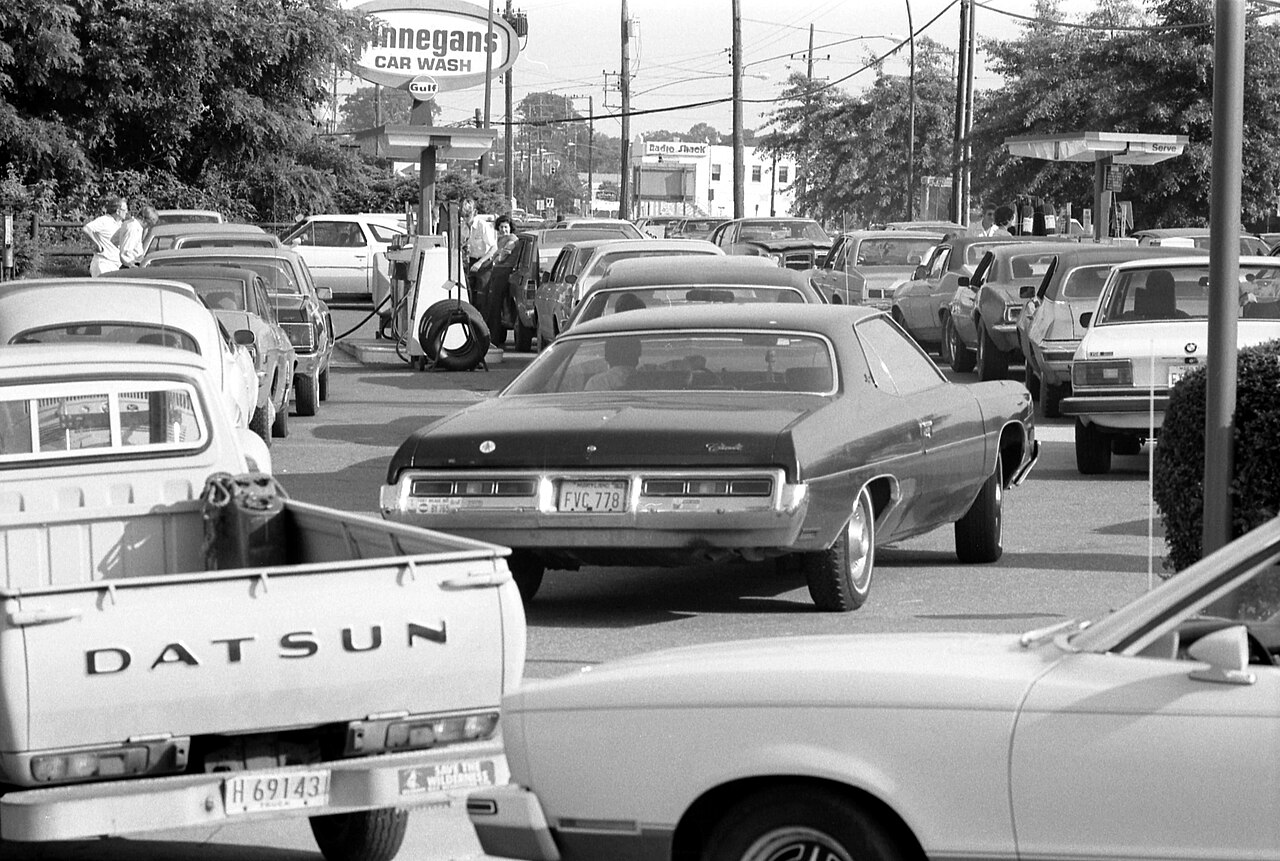
Remember the 1970s gas crisis in the U.S.? Price caps meant cheap gas—if you could find any. Drivers queued for hours, sometimes to find a 'sold out' sign waiting. The capped prices said 'all is well,' but the lines screamed 'panic!' The result? A classic shortage. The capped prices couldn't signal the true scarcity, and consumers paid with their time instead of money.
Analogy
Picture a group chat with all your friends trying to decide on dinner. Now, imagine one friend can't send messages because their phone's muted. Suddenly, you're all heading to their least favorite spot, with no idea why they didn't speak up. Suppressed prices are like that muted friend—important signals are missing, leading to decisions that don't fit reality.
Misallocation is the sneaky cousin of shortages. When prices don't move, producers have no clue what to make more of, and consumers can't signal what they actually need. Ever wonder why Soviet stores had plenty of one thing and none of another? Their planners couldn't hear the market's whispers.
Key Insight
And that's how you walk into a store with money to spend and find empty shelves — where official prices fail, black markets thrive. When you can't find essentials through regular channels, you meet 'a guy who knows a guy.' These markets fill the gap, but at a cost — often higher prices and riskier transactions.
Related threads
Economics
·
Price Signals
The Secret Language of Prices
Economics
·
Price Signals
·
Prices aggregate distributed…
How Do Prices Know Everything?
Economics
·
Price Signals
·
Prices are both signal (scarcity) and…
How Prices Whisper Secrets
Sources
Images from Wikimedia Commons. Attribution required by license.
Line at a gas station, June 15, 1979 — drivers queued under the marquee price during the second oil crisis
Warren K. Leffler, U.S. News & World Report Magazine via Library of Congress / Wikimedia Commons (Public Domain)
price tag confusion
Generated by Grok Imagine (xAI), prompt: Generate a single 4:3 horizontal image for an educational lesson.
Lesson title: "What Happens When Prices Lie?" · Why suppressed prices wreak havoc in economies
Domain: economics
Subject: price tag co…
Great Soviet Encyclopedia, 1-st edition, vol.07. 1927 year.
Scanning Dmitry Makeev, scan date · 2019 year.
Quiz yourself