Economics
·
Price Signals
·
Spontaneous coordination
Easy
5 min
How Do 10 Million Strangers Eat?
Discover the hidden dance that feeds a city
Share
How does New York City, with over 10 million mouths to feed, manage to have fresh bagels every morning without a city-wide plan?
Imagine waking up in New York City. You head out, grab a bagel and coffee, and go about your day. But have you ever wondered how all this food magically appears on your block every day? There's no master plan, no single person coordinating the city's meals. Yet, somehow it all works seamlessly.
Analogy
Think of it like a group chat with thousands of people you've never met, all coordinating to throw a massive party. No one is in charge, yet the DJ shows up, the snacks are on point, and the drinks are cold. Prices act like messages in this chat, signaling what’s needed and where. If avocados are suddenly more popular, prices nudge suppliers to send more.
Example
Take the case of a sudden snowstorm. Bread prices might spike as demand surges. This price signal—higher prices—tells bakers to bake more and suppliers to prioritize delivery to the city. It’s like an emergency alert that makes sure shelves are restocked quickly even without a central command.
Make your call
Back to those 10 million morning bagels: how does New York City actually pull it off without anyone in charge? Take your best guess.
A
The city government coordinates food deliveries through logistics agencies
B
Prices automatically signal producers and suppliers to send exactly what's needed
C
Large grocery chains plan ahead and stockpile enough to cover demand
Here's the answer to those 10 million morning bagels — and the genius part is that this coordination doesn't just happen at the local bakery. It spans across farms, factories, trucking companies, and shops. Each player responds to these price signals, adjusting their actions in real-time, creating a dance of supply and demand that keeps the city fed.
Key Insight
This spontaneous coordination through prices is why markets can handle complexity that would overwhelm any single planner. It's a decentralized miracle happening every day, right under your nose.
The next time you enjoy a fresh meal in a bustling city, remember: you’re witnessing the power of spontaneous coordination. Prices guide countless decisions, ensuring that millions of people can eat without a hitch, no plan required.
Related threads
Economics
·
Price Signals
The Secret Language of Prices
Economics
·
Price Signals
·
Prices aggregate distributed…
How Do Prices Know Everything?
Economics
·
Price Signals
·
Prices are both signal (scarcity) and…
How Prices Whisper Secrets
Sources
Images from Wikimedia Commons. Attribution required by license.
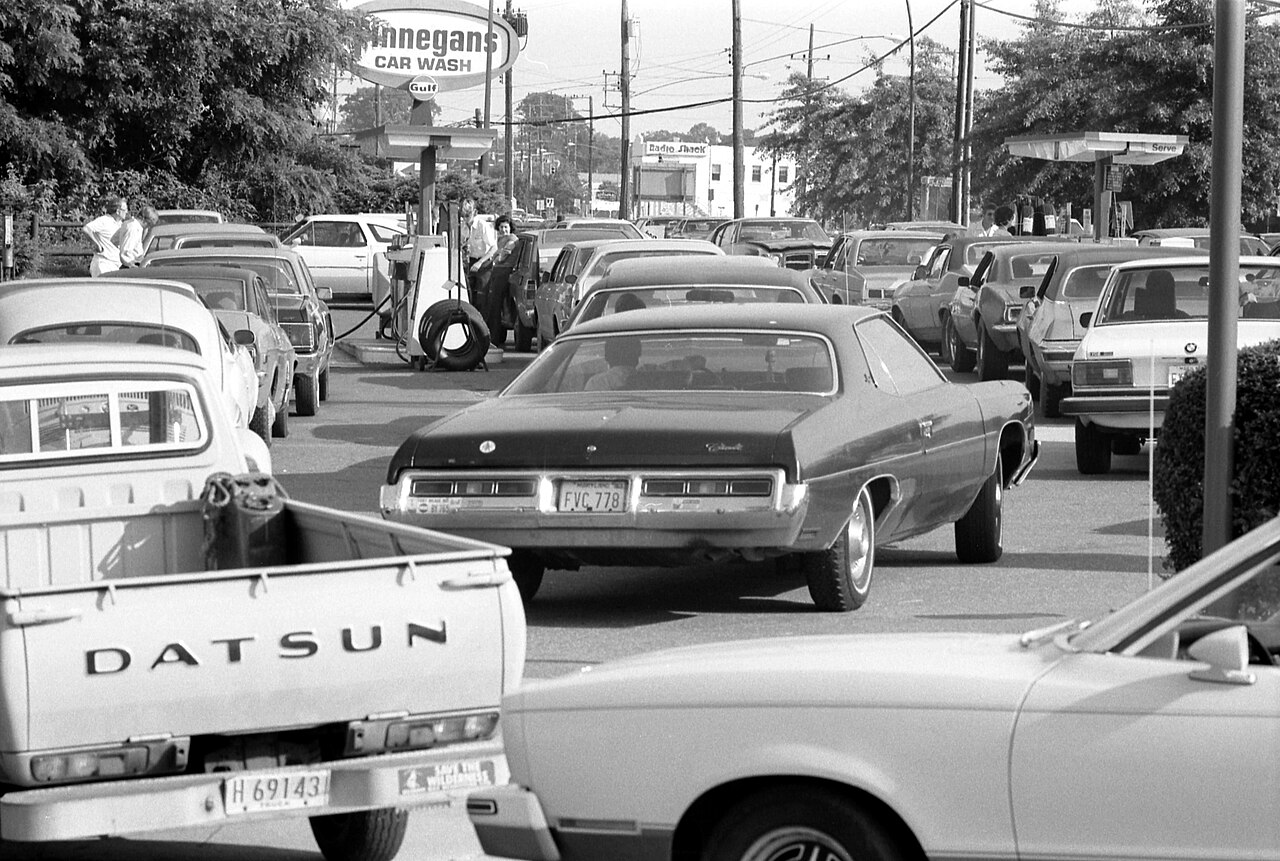
Line at a gas station, June 15, 1979 — drivers queued under the marquee price during the second oil crisis
Warren K. Leffler, U.S. News & World Report Magazine via Library of Congress / Wikimedia Commons (Public Domain)
N.Y.C. accumulating food (Washington St.)
Library of Congress · Public Domain via Library of Congress
Loaves of bread are displayed in the bakery section of a Publix store in Orlando, Florida.
Nielsoncaetanosalmeron · CC BY 4.0
Quiz yourself