Economics
·
Price Signals
·
The socialist calculation problem
Easy
5 min
Why Can't Central Planning Beat Markets?
Discover the hidden power of price signals in a market economy.
Share
Why did Soviet planners struggle where markets thrive effortlessly?
Imagine trying to plan a party for 100 guests without knowing their preferences. Now scale that up to an entire country's needs. Central planners, like those in the former Soviet Union, faced this daunting task. They had to decide what to produce, how much, and for whom — all with limited information.
Analogy
Think of it like managing a massive group chat where everyone has different interests. Some want to talk movies, others sports, and a few are there for memes. Without knowing who wants what, chaos ensues. Markets handle this by letting prices do the talking — each 'message' is a price change responding to demand and supply.
Make your call
Why did Soviet planners struggle where markets thrive effortlessly? What's the core thing central planning couldn't replicate?
A
Planners lacked enough workers and factories to meet demand
B
Prices carry decentralized information no planner can fully gather
C
Citizens didn't trust government-produced goods
Hayek and Mises argued that prices hold a treasure trove of information that central planners simply can't replicate. Prices reflect countless individual preferences and resource constraints, guiding producers and consumers without anyone needing to have the full picture.
Example
Look at the bread lines in Soviet Russia. Planners couldn't predict the exact needs of millions, leading to shortages and surpluses. In contrast, bread in a market economy adjusts its price based on grain supply, bakery capacity, and consumer demand, keeping shelves stocked.
Key Insight
Prices function as a universal language across markets. It doesn't matter if you're selling apples or smartphones — prices translate complex data into simple decisions.
Central planning falters because it lacks this decentralized information. That's why Soviet planners struggled where markets thrive effortlessly — even with supercomputers, no one can simulate the spontaneous order created by millions of individuals making decisions based on price signals.
Related threads
Economics
·
Price Signals
The Secret Language of Prices
Economics
·
Price Signals
·
Prices aggregate distributed…
How Do Prices Know Everything?
Economics
·
Price Signals
·
Prices are both signal (scarcity) and…
How Prices Whisper Secrets
Sources
Images from Wikimedia Commons. Attribution required by license.
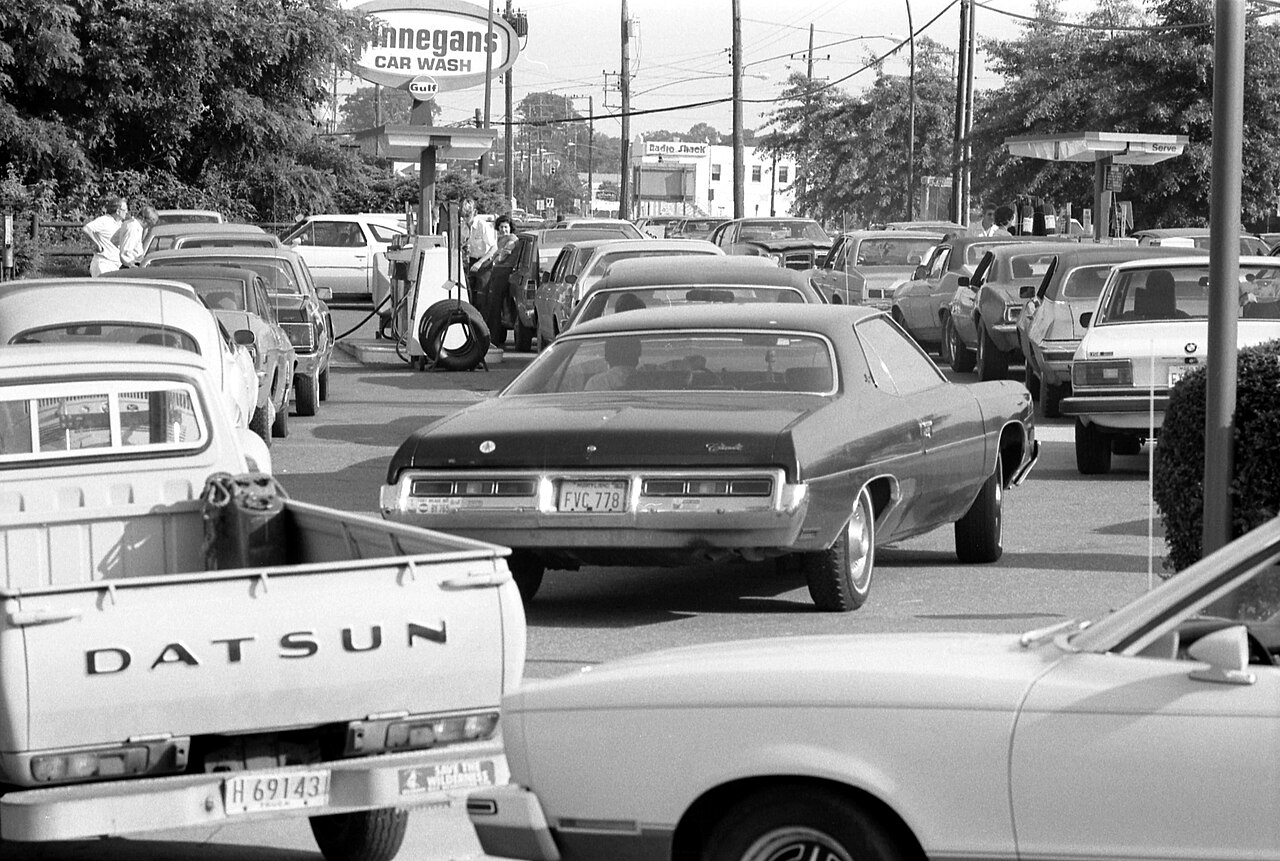
Line at a gas station, June 15, 1979 — drivers queued under the marquee price during the second oil crisis
Warren K. Leffler, U.S. News & World Report Magazine via Library of Congress / Wikimedia Commons (Public Domain)
File:Economic Regions, Union of Soviet Socialist Republics (USSR) - DPLA - f05befee5f1255e61972940f094ae9c2 (page 2).jpg
Central Intelligence Agency · Public domain
soviet bread line
Generated by Grok Imagine (xAI), prompt: Generate a single 4:3 horizontal image for an educational lesson.
Lesson title: "Why Can't Central Planning Beat Markets?" · Discover the hidden power of price signals in a market economy.
Domain: eco…
Quiz yourself