Economics
·
Supply and Demand
·
Market equilibrium
Easy
8 min
Why Do Prices Stop Changing?
How markets find a price — and why they stop there.
Share
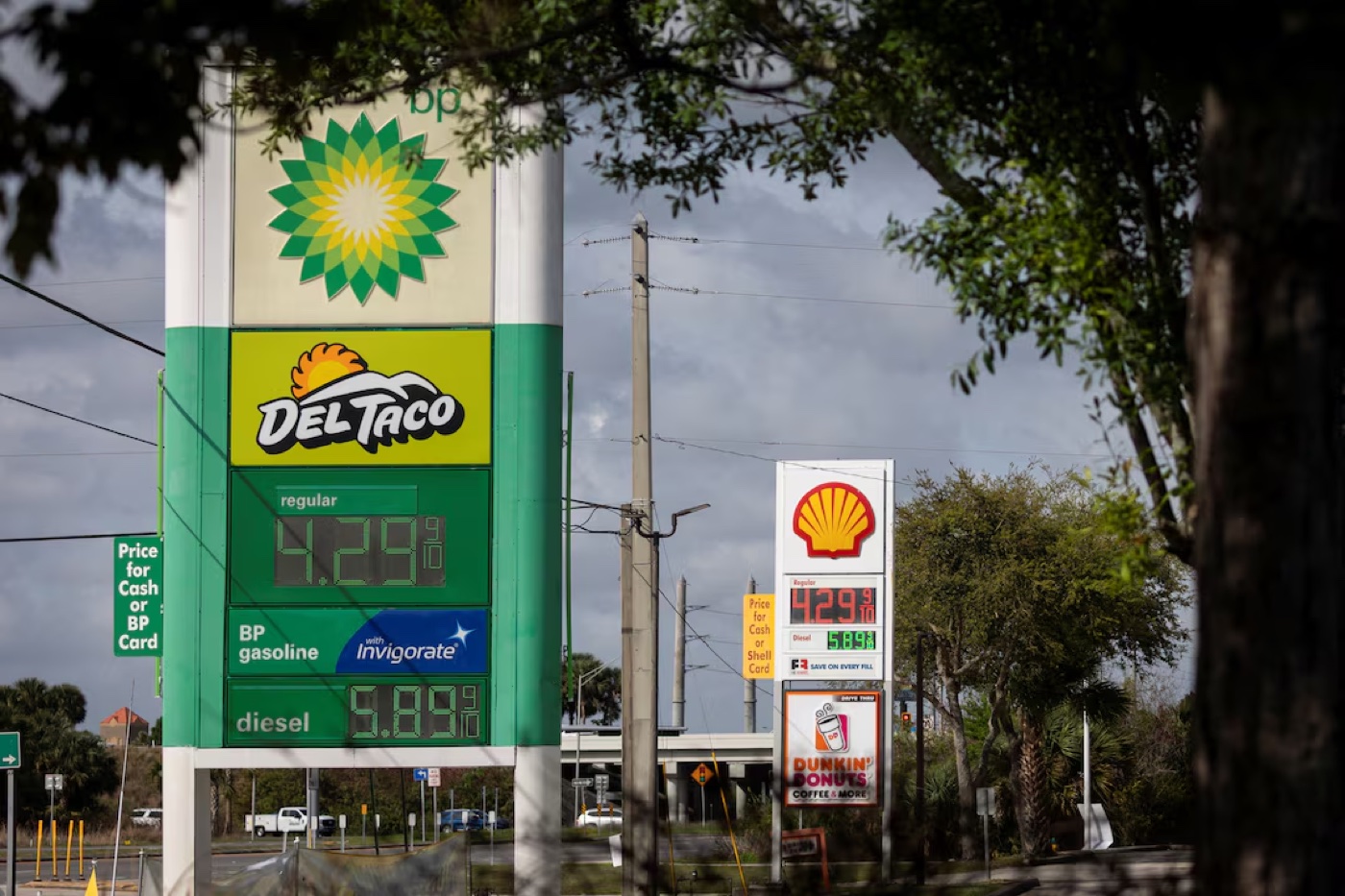
Two gas stations sit directly across the street from each other. Same grade, same gallon price, same number on the sign. They didn't call each other to agree on it. They didn't need to. The market set the price for both of them — and neither one can do much about it.
Every price you've ever paid was a truce. Sellers wanted more. Buyers wanted less. Equilibrium is the exact price where they both gave up pushing.
Here's how the truce gets made. Say a new phone case is on sale. At $40, sellers are happy to stock thousands of them. But at $40, most buyers shrug and walk away — too expensive. Sellers drop to $30. More buyers show up, but now sellers are only willing to offer half as many. Eventually, at $22, the number of cases sellers will stock matches the number buyers will actually purchase. Nobody's thrilled, but nobody has any reason to change. That's equilibrium.
Make your call
Those two gas stations across the street charge the same price — but nobody told them to. How does a market actually land on one number and stay there?
A
Sellers coordinate, formally or informally, to agree on a price
B
Prices keep drifting until neither buyers nor sellers have any reason to push further
C
A price is set high enough to maximize seller profit, then held there
The reason markets drift toward equilibrium isn't some mysterious force. It's just self-interest on both sides.
If the price is too high, goods pile up unsold. Sellers notice, start cutting prices to move inventory, and prices fall. If the price is too low, shelves empty out fast. Sellers realize they could charge more and still sell everything, so prices rise. The only stable resting point is the one where neither side has an incentive to change anything. That's the equilibrium price — not chosen by anyone, but arrived at by everyone.
Example
When the PS5 launched in November 2020, the retail price was $500. Within days, resellers were listing them for $1,000 or more. Sony couldn't manufacture consoles fast enough to meet demand — supply was far below the equilibrium point, so prices shot above it.
Over the following year, as Sony ramped up production and the initial frenzy cooled, prices drifted back toward $500. Not because anyone decreed it, but because the gap between supply and demand kept shrinking until they met. That slow drift back is equilibrium reasserting itself.
Key Insight
At equilibrium, the quantity buyers want equals the quantity sellers offer. No surplus, no shortage — the market has nothing left to argue about.
Of course, equilibrium doesn't last forever. Anything that shifts supply or demand knocks the market out of balance and forces it to find a new resting point.
In October 1973, OPEC cut oil exports to the United States almost overnight. The old equilibrium price was gone — supply had collapsed while demand stayed the same. Gas stations ran dry. Lines stretched around city blocks. Prices spiked, then kept rising as the market groped for a new equilibrium. It took months before prices settled somewhere that buyers and sellers could both tolerate. That's what a broken equilibrium actually looks like: not an abstract shift on a graph, but empty pumps and rationing stickers on windshields.
Most of the time, though, equilibrium does its work quietly. The price on the shelf, the fare on your rideshare app, the rate your landlord quotes — all of them are the current resting point of forces you never see. Millions of individual decisions, each person acting in their own interest, and somehow the market lands on a number that clears the shelves without leaving anyone with too much or too little. No coordinator required — which is exactly why those two gas stations can post the same number without ever picking up the phone.
Related threads
Economics
·
Supply and Demand
·
Law of demand
Why Do Prices Scare Us Away?
Sources
Images from Wikimedia Commons. Attribution required by license.
Stock brokers on the New York Stock Exchange trading floor, 1960s
Thomas J. O'Halloran, photographer · Public domain
The principles of economics : a fragment of a treatise on the industrial mechanism of society and other papers / by the late W. Stanley Jevons ; with a preface by Henry Higgs. - London : Macmillan, 1905. - XXVIII, 273 p. ; 23 cm .
Jevons, William Stanley · Public domain
Cromemco Z-2 Systems at Chicago Mercantile Exchange (CME) in 1984. CME used 60 Cromemco systems to support all floor trading.
Cromemco · CC BY-SA 3.0
Quiz yourself