Economics
·
Supply and Demand
Easy
5 min
Why Everything Costs What It Does
How every price gets decided by a fight nobody sees
Share
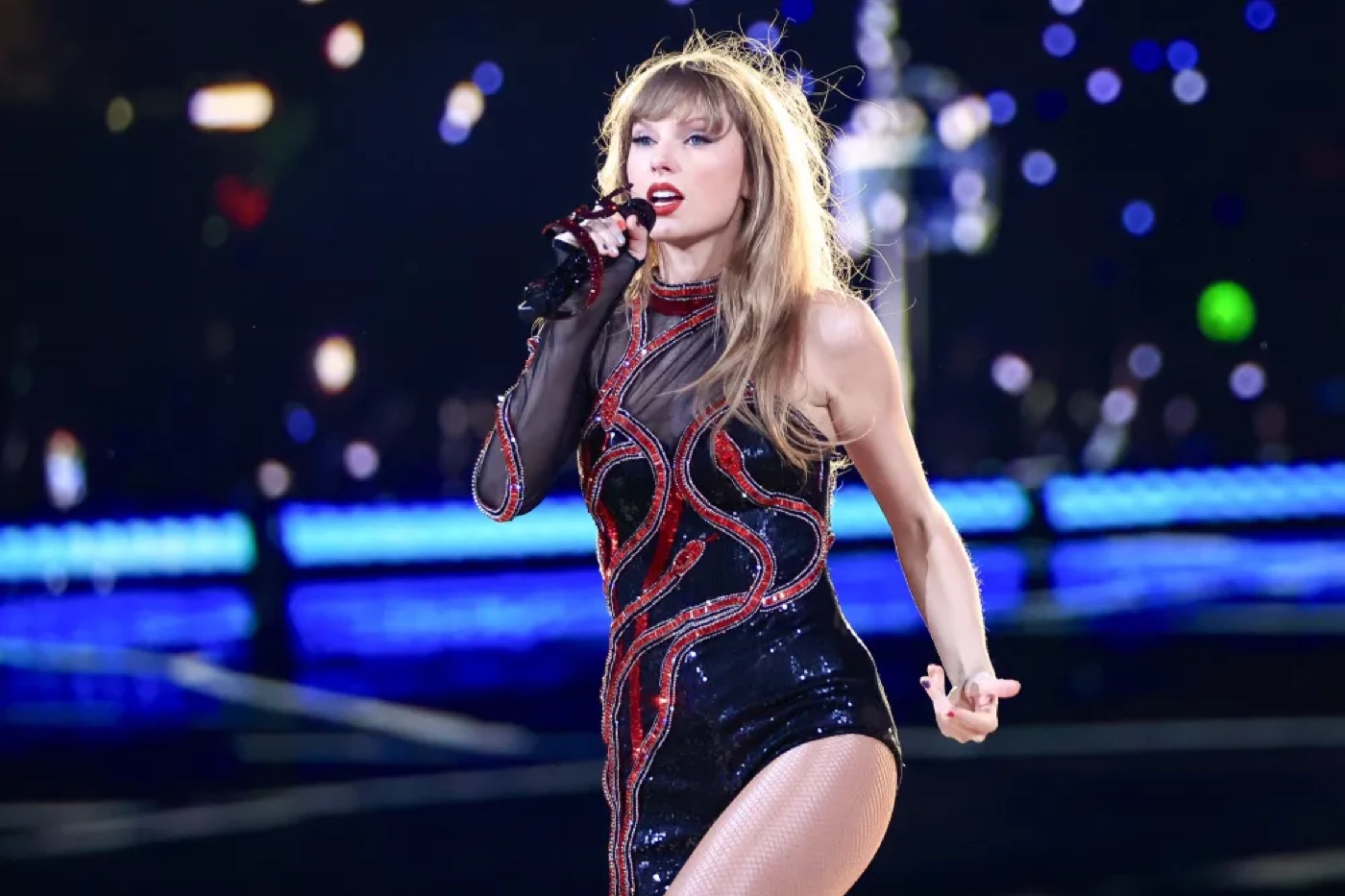
A Taylor Swift floor seat with a $449 face value resold for an average of $2,183 during the 2023 Eras Tour. Same seat. Same view. Why does the second number exist?
Every price you've ever paid is the result of a silent tug-of-war you never see. On one end, people who have something to sell and want as much money for it as possible. On the other end, people who want that thing and would rather pay as little as possible. The price you see on the tag is wherever the rope stopped moving.
That's the entire mechanism. Supply is one side of the rope. Demand is the other. Everything else — surge pricing, sold-out shows, $7 eggs, $400 sneakers that cost $12 to make — is a story about which side pulled harder, and when.
The weird part is how rarely anyone in the fight knows they're in it. The barista didn't set the latte price. Neither did you. Some manager looked at how many lattes sold last month, what the place across the street charges, and what beans cost this week. Multiply that by every coffee shop in the city and you get a 'market price' that nobody chose but everyone helped decide.
Supply is just the answer to a question: at this price, how much of the thing will people make or sell? Raise the price and more sellers show up. A barbershop charging $80 a cut attracts more barbers to open shops nearby. Drop the price to $8 and most of them go do something else.
This is why you can't think of supply as a fixed number. There aren't '500 haircuts available in your city today.' There are however many haircuts are worth giving at the price people are willing to pay. The supply expands and contracts based on what sellers think they can get.
Some things have stubborn supply. Manhattan has a fixed amount of land — no matter how high apartment prices go, nobody can manufacture another block of it. Other things have stretchy supply. A factory making phone cases can triple output in a month if demand justifies it. The stretchiness matters enormously, and it's why the next lesson spends real time on it.
Demand answers the mirror question: at this price, how much will people actually buy? At $2 a coffee, you have one every morning. At $14, you start making it at home. Somewhere between those numbers, your behavior changes — and you're not even doing the math consciously. You just feel it.
Multiply that quiet calculation by a few million people and you get a demand curve. It almost always slopes the same direction. Higher price, fewer buyers. Lower price, more buyers. The shape of that slope — how fast people drop out as the price rises — tells you almost everything about how a market behaves.
Insulin demand barely moves with price; diabetics need it regardless. Movie ticket demand collapses fast; you'll just stream something instead. Same downward slope, wildly different steepness. The steepness has a name (elasticity), but the name matters less than the intuition: some things you'll pay almost anything for, and some things you'll walk away from over a dollar.
Make your call
Same seat. Same show. The resale price is nearly five times the face value. What actually determines which number is the "real" price?
A
Whoever prints the ticket sets the real price — resale is just exploitation
B
The price where the number of seats people want to buy matches the number available
C
The average of what buyers want to pay and what sellers want to charge
Example
Ticketmaster's 2023 Verified Fan presale for Taylor Swift's Eras Tour got 3.5 million people in the queue for roughly 2 million tickets. Face values ran from about $49 to $449. The site melted. Within hours, the same tickets showed up on StubHub averaging $2,183, with floor seats hitting five figures.
Nothing about the show changed between the face price and the resale price. Same artist, same venue, same seat. What changed was that the official price was set before anyone knew how many people wanted in. Once 3.5 million people revealed themselves, the resale market did the math the original price didn't.
This is the answer to why that second number exists. Supply was fixed — a stadium has the seats it has. Demand was enormous and undercounted. The gap between the price set in advance and the price the market actually wanted got filled by resellers, who pocketed roughly $1,700 per ticket for doing nothing except clicking faster than you.
So here's the question the rest of the unit is built around: if sellers always want a higher price and buyers always want a lower one, how does any price ever get set?
The answer is that both sides keep adjusting until they run out of room. Sellers lower prices when nobody's buying. Buyers raise their bids when they're getting outcompeted. Eventually you land at exactly one price where the number of things people want to sell equals the number of things people want to buy. Economists call it equilibrium. You can call it the price where everyone shuts up.
It's not a permanent state. A new factory opens, a hurricane hits, a celebrity wears a sweater on Instagram, and the whole thing reshuffles. The market lurches toward a new equilibrium, overshoots, corrects, overshoots again. Most of what looks like price 'volatility' is just the rope being yanked by new information.
Key Insight
A price isn't a fact about an object. It's a temporary truce between everyone who wants to sell it and everyone who wants to buy it.
Once you see supply and demand as a tug-of-war, the rest of the unit becomes a series of specific questions about how the rope behaves.
Why do some prices barely flinch when conditions change, while others swing 40% in a week? That's elasticity, and it explains both insulin and lumber. What happens when the government ties the rope to a post — rent control, minimum wage, price caps on gasoline? The market doesn't disappear; it just reroutes in ways the law didn't predict. Why did 2021's used car prices rise 45% in twelve months when nobody was building new cars to sell? That's a supply shock, and the mechanism is older than capitalism.
Each of these is the same two forces — what people will sell and what people will pay — running into a new wrinkle. By the end, you should be able to look at any price that surprises you and ask the right question: which side of the rope just got pulled, and what pulled it?
Related threads
Economics
·
Supply and Demand
·
Law of supply
Why Do Sellers Love High Prices?
Economics
·
Supply and Demand
·
Shifts vs. movements along the curve —…
Why Do Demand Curves Really Move?
Economics
·
Supply and Demand
·
Shortages and surpluses
Why Some Prices Refuse to Budge
Sources
Images from Wikimedia Commons. Attribution required by license.
1913 photograph Ford company, USA
Ford company · Public domain
American singer-songwriter Taylor Swift performing on the Eras Tour concert at SoFi Stadium in Inglewood, August 2023
Paolo V · CC BY 2.0
Quiz yourself