Economics
·
Why Prices Rise
Medium
8 min
So You Think You Understand Inflation
Ten days of mechanisms, tested.
Share
A government prints money to pay workers. Workers expect prices to rise, so they demand higher wages. Higher wages push up production costs. Prices rise. Repeat. Which mechanism caused this inflation? The answer is: all of them, simultaneously. That's the real test.
Here's the honest summary of everything you learned: inflation is never just one thing.
Demand-pull happens when too much money chases too few goods — stimulus checks hit, everyone wants a used car, prices spike. Cost-push happens on the supply side — a war cuts off wheat exports, shipping lanes clog, input costs rise and get passed to you at the checkout. Monetary expansion is the deeper engine underneath both: when central banks grow the money supply faster than the economy grows, each dollar buys less. Friedman put it bluntly in 1963 — inflation is "always and everywhere a monetary phenomenon." He wasn't saying money supply is the only trigger. He was saying it's always the mechanism that lets inflation persist.
Then there's the part that makes it self-sustaining: expectations. Once you believe prices will rise, you demand higher wages. Your employer raises prices to cover payroll. The person who buys their product demands higher wages. A spiral isn't a metaphor — it's a feedback loop that took the U.S. most of the 1970s to break, and breaking it required the Fed deliberately engineering a recession.
And underneath all of it, the distributional reality nobody talks about enough: inflation is a wealth transfer. If you hold cash or receive a fixed income, you lose. If you hold debt or real assets, you quietly win. Inflation doesn't just change prices — it changes who owns what.
Key Insight
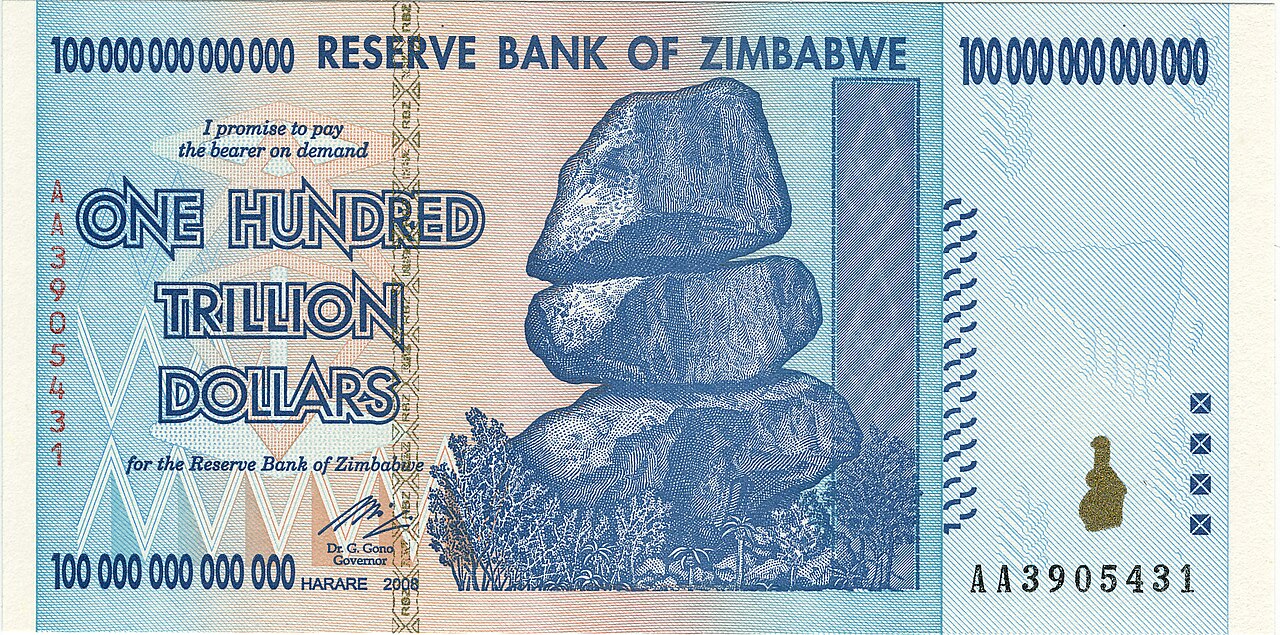
The central bank's job is to stop the spiral before it starts. Interest rate hikes work by making borrowing expensive — less credit means less spending means less demand-pull pressure. QE works in reverse: buying bonds injects money and lowers long-term rates. Both tools work on expectations as much as mechanics. If people believe the Fed will act, they stop demanding pre-emptive wage increases. That belief IS the policy working. Which is also why, when credibility breaks down — Weimar, Zimbabwe, Venezuela — no interest rate can save you. Once people stop believing the currency holds value, they're right.
Where to go from here: inflation connects to almost everything in macroeconomics. The most direct next steps are monetary policy (how central banks actually set rates and what the limits are), fiscal policy (how government spending interacts with inflation — sometimes causing it, sometimes fighting it), and exchange rates (inflation in one country shifts its currency's value relative to others, which feeds back into import prices). If you want the historical depth, the stagflation of the 1970s and the Volcker shock of 1979-82 are the most instructive case studies in how hard inflation is to stop once it's embedded — and what it costs to kill it.
Related threads
Economics
·
Why Prices Rise
·
Distributional effects
Inflation's Secret Winners and Losers
Economics
·
Why Prices Rise
When All the Forces Hit at Once
Economics
·
Supply and Demand
Why Everything Costs What It Does
Sources
Images from Wikimedia Commons. Attribution required by license.
Zimbabwean $100 trillion banknote, 2009 — the largest-denomination bill ever printed by a recognized government
Reserve Bank of Zimbabwe via Wikimedia Commons (Public Domain)
German Papiermark of the Weimar Republic, post World War I hyperinflation era (1921–24).
Reichsbankdirektorium Berlin · Public domain
Quiz yourself