Economics
·
Why Prices Rise
Medium
8 min
When All the Forces Hit at Once
The 2020–22 inflation surge put every mechanism you've learned into motion simultaneously.
Share
Imagine you've studied every way a fire can start — arson, lightning, faulty wiring, unattended candles. Now imagine all four happen in the same building, on the same night. That's not just a bigger fire. It's a different kind of problem entirely. That's what happened to inflation between 2020 and 2022.
Here's what you learned this week, one mechanism at a time: demand-pull, cost-push, monetary expansion, expectations spirals, central bank tools, distributional effects, hyperinflation. Clean. Separate. Understandable.
Real inflation doesn't work like that.
The reason the 2020–22 episode blindsided so many economists — including the Federal Reserve, which famously called early inflation 'transitory' — is that it wasn't one mechanism. It was a pile-up. And when mechanisms stack, they don't just add together. They amplify each other in ways that are genuinely hard to predict.
So forget the individual levers for a moment. Here's what actually happened — and why it only makes sense when you see all of it at once.
Example
March 2020: COVID hits. Governments worldwide shut down economies and then, almost immediately, flood households with cash — stimulus checks, enhanced unemployment, forgivable business loans. In the US alone, the federal government injected roughly $5 trillion in fiscal spending over two years. The Fed simultaneously cut rates to near-zero and expanded its balance sheet by $4.5 trillion through QE.
That's demand-pull and monetary expansion hitting at the same time. More money in people's pockets, more money in the financial system, both at once.
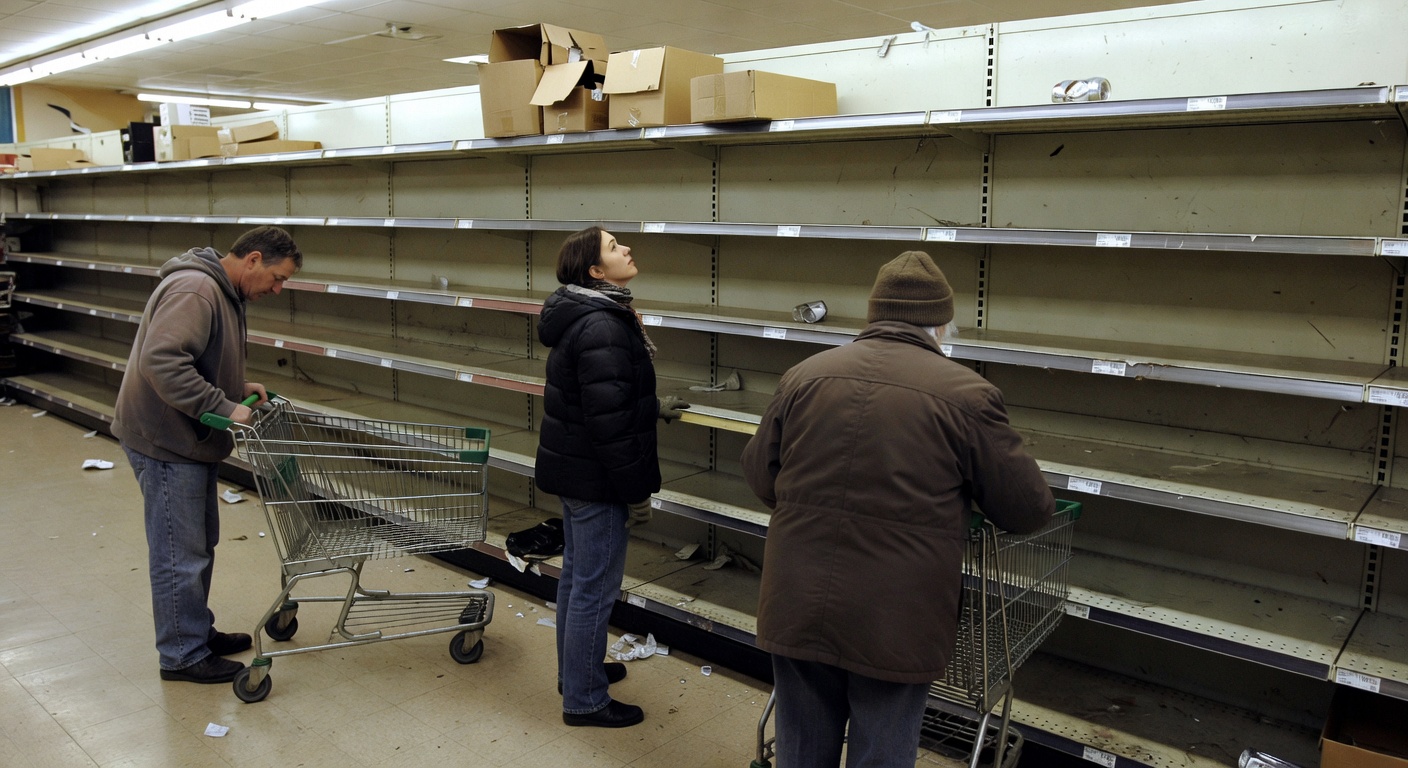
Now add cost-push. Supply chains — already stressed — collapsed. Semiconductor factories shut down. Shipping container costs went up 10x. Meat processing plants closed. The supply of goods shrank exactly as demand for goods surged. People stuck at home stopped spending on services (restaurants, travel, concerts) and redirected that spending toward stuff — furniture, appliances, cars, home gym equipment.
So you had: more money chasing fewer goods, produced at higher cost, with supply unable to respond quickly. Each mechanism was feeding the others.
Make your call
All four ignition sources hit at once — stimulus cash, supply chain collapse, money printing, and rising expectations. Which mechanism do you think was hardest for policymakers to fight?
A
Demand-pull — too much money chasing goods, easily fixed by cutting spending
B
Cost-push — supply shortages that interest rate hikes simply cannot repair
C
Monetary expansion — the Fed just needed to reverse QE quickly enough
Here's the part that made it really hard to stop: expectations kicked in.
Workers saw prices rising and demanded higher wages to keep up. Companies, already paying more for inputs, passed higher labor costs on to customers. Customers, expecting prices to keep rising, bought sooner rather than later — which pushed prices up faster. Landlords, watching their own costs rise, raised rents. Rents are about a third of the CPI basket, so that alone kept measured inflation elevated long after supply chains started recovering.
This is the wage-price spiral dynamic — and it doesn't need any of the original triggers to still be running. Once expectations get embedded, inflation becomes self-sustaining. The fire keeps burning even after you remove the original spark.
And here's the tension: the Fed's tools are blunt. Raising interest rates cools demand. But they can't fix a semiconductor shortage. They can't unclog a port. They can't make wheat appear when harvests fail. Cost-push inflation is genuinely resistant to monetary policy — you can crush demand enough to offset supply shortages, but that means deliberately engineering a slowdown. Which is exactly what the Fed did in 2022–23, raising rates at the fastest pace since the 1980s and accepting that some economic pain was the price of breaking expectations.
Key Insight
The mechanisms don't just stack — they interact. Monetary expansion makes demand-pull worse. Demand-pull makes cost-push more painful. Cost-push feeds expectations. Expectations make the central bank's job harder. And the distributional effects run quietly underneath all of it: savers getting crushed, debtors getting relief, fixed-income retirees watching their purchasing power evaporate while homeowners with 30-year fixed mortgages at 3% are, weirdly, fine. Same inflation. Completely different experience depending on your balance sheet.
This is why economists disagree so much about inflation — not because they don't understand the mechanisms, but because diagnosing which one is dominant at any given moment is genuinely hard. In 2021, serious people argued about whether the inflation was primarily demand-side (stimulus was too large) or supply-side (supply chains would normalize soon). That debate wasn't just academic. If it's demand-pull, you tighten monetary policy hard and fast. If it's cost-push and temporary, you risk causing a recession for nothing — because the supply problem was going to resolve itself anyway.
The Fed bet on 'transitory.' They were wrong. By the time they pivoted, expectations had already started embedding. This is the 'different kind of problem entirely' the building-on-fire analogy pointed to: when multiple mechanisms fire simultaneously, the system behaves in ways that no single-mechanism model predicts well.
And this is exactly why hyperinflation is so catastrophic and so hard to stop. By the time a country reaches Weimar or Zimbabwe territory, every single mechanism is running at maximum: the government is printing money (monetary expansion), supply has collapsed (cost-push), people are spending the moment they get paid because tomorrow it'll be worth less (expectations fully unanchored), and the distributional devastation is so severe that the social contract starts breaking down. You can't fix any one piece without fixing all of them. And fixing all of them simultaneously requires a level of institutional trust and political will that hyperinflation has usually already destroyed.
So what do you do with all of this?
Next time you see a headline about inflation, your instinct should be to ask: which mechanisms are running right now, and are they reinforcing each other or working against each other? Because sometimes they actually conflict. A supply shock (cost-push) can slow an economy enough to reduce demand-pull. A central bank that raises rates aggressively can cool expectations before a spiral starts — but at the cost of a recession. Oil prices falling can reduce cost-push pressure even while loose monetary policy keeps demand elevated.
Inflation is never just one thing. It's a system. And you now have the map.
Related threads
Economics
·
Why Prices Rise
·
Distributional effects
Inflation's Secret Winners and Losers
Economics
·
Why Prices Rise
So You Think You Understand Inflation
Economics
·
Supply and Demand
Why Everything Costs What It Does
Sources
Images from Wikimedia Commons. Attribution required by license.
empty supermarket shelves 2021
Generated by Grok Imagine (xAI), prompt: Generate a single 16:9 horizontal image for an educational lesson.
Lesson title: "When All the Forces Hit at Once" · The 2020–22 inflation surge put every mechanism you've learned into motion simultan…
shipping containers port congestion 2021
Generated by Grok Imagine (xAI), prompt: Generate a single 4:3 horizontal image for an educational lesson.
Lesson title: "When All the Forces Hit at Once" · The 2020–22 inflation surge put every mechanism you've learned into motion simultane…
Quiz yourself