Civics
·
Who Controls What You Believe?
Medium
7 min
Who Controls What You Believe?
Why the free press leaves so many voters feeling more confused than informed
Share
You and your dad watch the same news event. You both come away believing completely opposite things happened. Neither of you is lying. Neither of you made it up. So what's going on?
Democracy has a basic problem: it only works if voters are making informed decisions. But voters can only be informed if they have access to accurate, independent information. That's the whole job of a free press — not to be neutral wallpaper, but to be the mechanism by which citizens actually know what their government is doing. The Founders understood this so well they put it in the First Amendment. Not as an afterthought. First.
Analogy
Think about how your group chat works when something dramatic happens. One person shares a screenshot. Someone else shares a different clip. Someone else says 'actually here's what really happened' with a link. Within ten minutes, half the chat has formed a strong opinion and the other half is confused. Now scale that to 330 million people, add profit incentives, foreign actors, and algorithmic amplification — and you have the modern media environment. The group chat was always chaotic. We just used to have fewer chats.
Make your call
You and your dad watched the same event and walked away believing opposite things. What's the most likely explanation? Pick the one that feels truest to you.
A
One of you was exposed to outright false information that the other didn't see
B
You watched through different platforms, each built to serve you content that confirms what you already believe — and amplify it
C
You both have different critical thinking skills, so one of you analyzed it better
The concept behind a free press is called the 'marketplace of ideas' — the theory that if you let all ideas compete openly, the true and useful ones will win out over time. It sounds great. Here's the part most people miss: it mostly worked when information was expensive to produce. Printing a newspaper required capital, editors, and reputation. Bad information had friction. Now information costs nothing to produce and travels at the speed of a share button. The marketplace didn't disappear — it just got flooded with vendors selling stuff that looks like food but isn't.
Key Insight
Misinformation isn't just 'wrong facts.' It's wrong facts that spread faster than corrections, get shared more than retractions, and stick in memory longer than the truth. The problem isn't that people are gullible. It's that our brains are wired to believe things that are emotionally resonant, confirm what we already suspect, and come from sources that feel familiar. Misinformation is engineered to hit all three buttons simultaneously.
Example
In 2016, a completely fabricated story claimed a Washington D.C. pizza restaurant was the front for a child trafficking ring run by political figures. There was zero evidence. It spread across social platforms, got millions of shares, and ended with a man firing a rifle inside the restaurant to 'self-investigate.' No victims were found because there was no crime. But the story had already done its damage — not just to the restaurant, but to millions of people's ability to trust what they read. This is what researchers call an 'information hazard': a piece of content so sticky and so emotionally charged that even debunking it spreads it further.
So who's responsible for fixing this? This is where it gets genuinely complicated, and anyone who gives you a clean answer is probably selling something. Governments can regulate media — but governments also have an interest in controlling what citizens believe, which is exactly the problem the free press exists to prevent. Platforms can moderate content — but then they become arbiters of truth, which is a terrifying amount of power for private companies. Individuals can 'just think critically' — but that places the entire burden on people who are also working full-time jobs and trying to live their lives. There's no clean solution. That's not a cop-out — it's the actual situation.
Key Insight
Here's the tension at the core of this entire topic: the same freedom that protects journalists from government censorship also protects people who spread deliberate lies. You cannot fully have both. Every democracy is constantly negotiating where that line sits — and the answer changes with technology, politics, and what's at stake.
Back to you and your dad watching the same event and reaching opposite conclusions — now you know why. What you can actually do with this knowledge: notice when a story makes you feel immediate, intense outrage or vindication. That feeling is a signal, not a conclusion. It means the content was designed to produce that reaction — which means it's worth slowing down before you share it. The most dangerous misinformation doesn't feel like a lie. It feels like finally hearing the truth everyone else was hiding from you. That feeling is the tell.
Sources
Images from Wikimedia Commons. Attribution required by license.
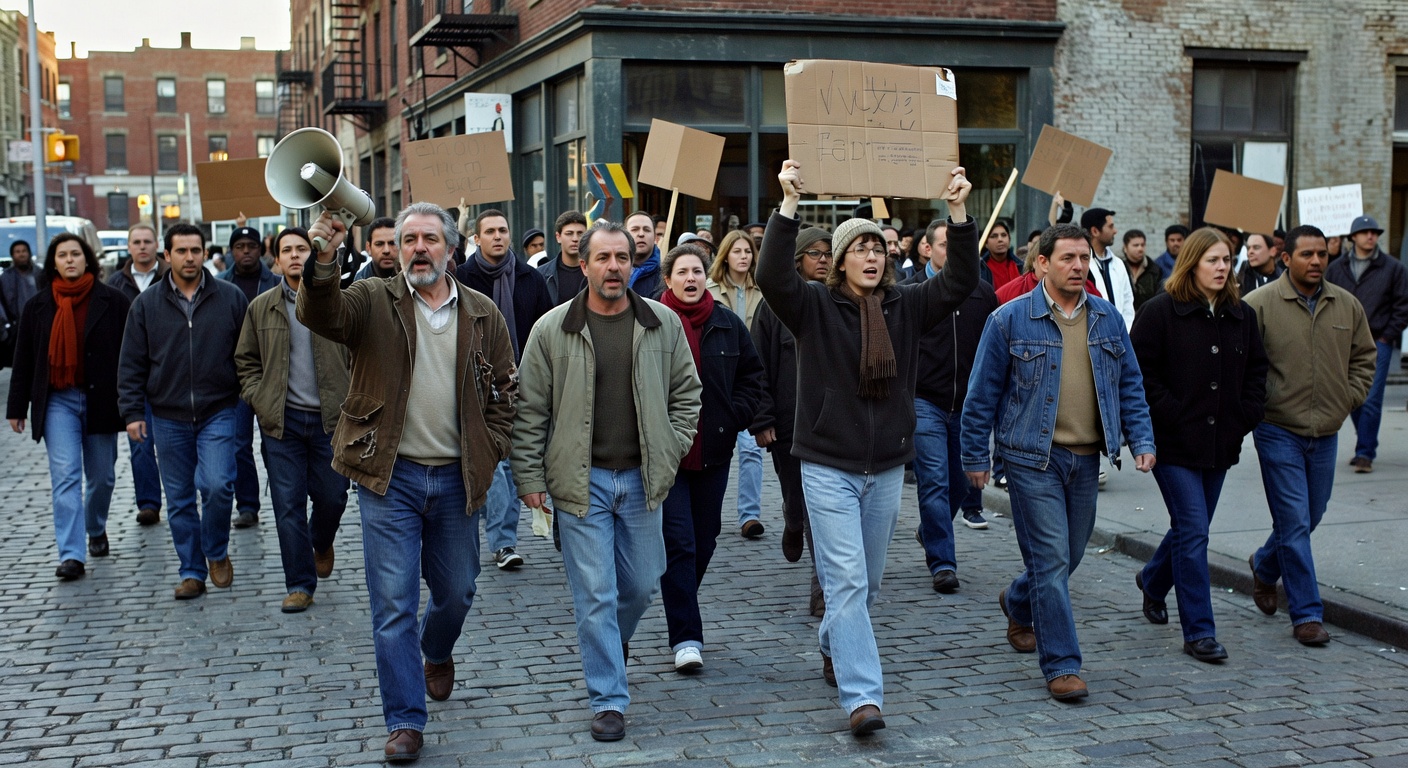
journalist press freedom protest
Generated by Grok Imagine (xAI), prompt: Generate a single 16:9 horizontal image for an educational lesson.
Lesson title: "Who Controls What You Believe?" · Why the free press leaves so many voters feeling more confused than informed
Domain:…
Frank Leslie's Illustrated Newspaper (New York, N.Y.) 1855-1891
Library of Congress · Public Domain via Library of Congress
Quiz yourself