Civics
·
Who Decides What You're Allowed to Do?
Medium
7 min
Who Decides What You're Allowed to Do?
Rights exist before governments do, and that changes what governments can legally take from you.
Share
The government can tell you where to build a fence, what age you can drink, and how loud your music can be at 2am. So where does its power stop? And who decided that?
Most people have this backwards: rights don't come from laws. Laws come from rights. The whole point of a constitution, a bill of rights, a court system — all of it — is to protect something that was supposed to exist before any of those documents were written. The American founders called them 'natural rights.' The idea: there are things you're entitled to simply because you're a person. Life. Liberty. The ability to own stuff and not have it taken from you. Government doesn't create those. It's just supposed to not destroy them.
Picture your city government telling you that your social media account — which you use to organize community meetings — violates a new local ordinance against 'coordinated public gatherings.' You'd appeal that decision. You'd point to the First Amendment. And the fact that you can do that, that there's a layer above the city's rules that even the city can't override, is exactly how constitutional rights work. The government writes the rules of daily life, but it doesn't get to write all the rules. Some things are off the table before the city council even sits down.
Make your call
The government can fence in your yard, cap your drink, and silence your 2am speakers. So when the Constitution says you have rights, what exactly stops the government from just... writing around them? Where does its power actually hit a wall?
A
The government can limit any right as long as a majority of elected officials vote for it
B
Rights stop government power only when they're explicitly listed in the Constitution
C
Some rights exist before the government does — so the government can't be the one to define or erase them
In the U.S., rights fall into a few categories. Civil liberties are protections from government overreach — freedom of speech, freedom of religion, protection from unreasonable searches. These are mostly in the Bill of Rights, the first ten amendments to the Constitution. Civil rights are about equal treatment — the government can't discriminate against you based on race, sex, religion. These came later, largely through the 14th Amendment and laws like the Civil Rights Act of 1964. The distinction matters: liberties block the government from touching you; rights demand it treat you the same as everyone else.
Key Insight
Rights aren't unlimited. Your right to free speech doesn't let you threaten someone. Your right to bear arms doesn't mean you can bring a gun anywhere. Every right exists in tension with other rights and with public safety. The real question is never 'do I have this right?' It's always 'how far does this right go?' — and courts spend centuries arguing about exactly that.
Example
In 1965, a married couple in Connecticut was arrested for using contraception — which was illegal under state law. The Supreme Court case Griswold v. Connecticut asked: does the government have the right to regulate what happens in your bedroom? The Court said no, and in doing so invented something that wasn't explicitly in the Constitution: a right to privacy. They found it hiding in the 'penumbras' — the shadows — of other amendments. This is where rights get genuinely strange. The Constitution doesn't list every right you have. Courts interpret what's implied. That's why the same document can lead to wildly different conclusions depending on who's reading it.
So who actually protects your rights when they're violated? Three layers. First, the courts — if the government does something unconstitutional, you can sue, and judges can strike down laws. Second, the legislature — elected officials can pass laws that expand protections beyond the constitutional minimum. Third, you. Voting, protesting, organizing, pressuring institutions — rights that aren't exercised tend to erode. A right on paper that nobody enforces is closer to a suggestion than a guarantee.
Key Insight
The most important thing to understand about rights: they matter most when they're inconvenient. It's easy to protect the speech of people you agree with. The actual test of a rights-protecting system is whether it protects speech, assembly, and due process for people whose views you find repugnant. If it doesn't, the protection was never real — it was just majority preference wearing a costume.
Sources
Images from Wikimedia Commons. Attribution required by license.
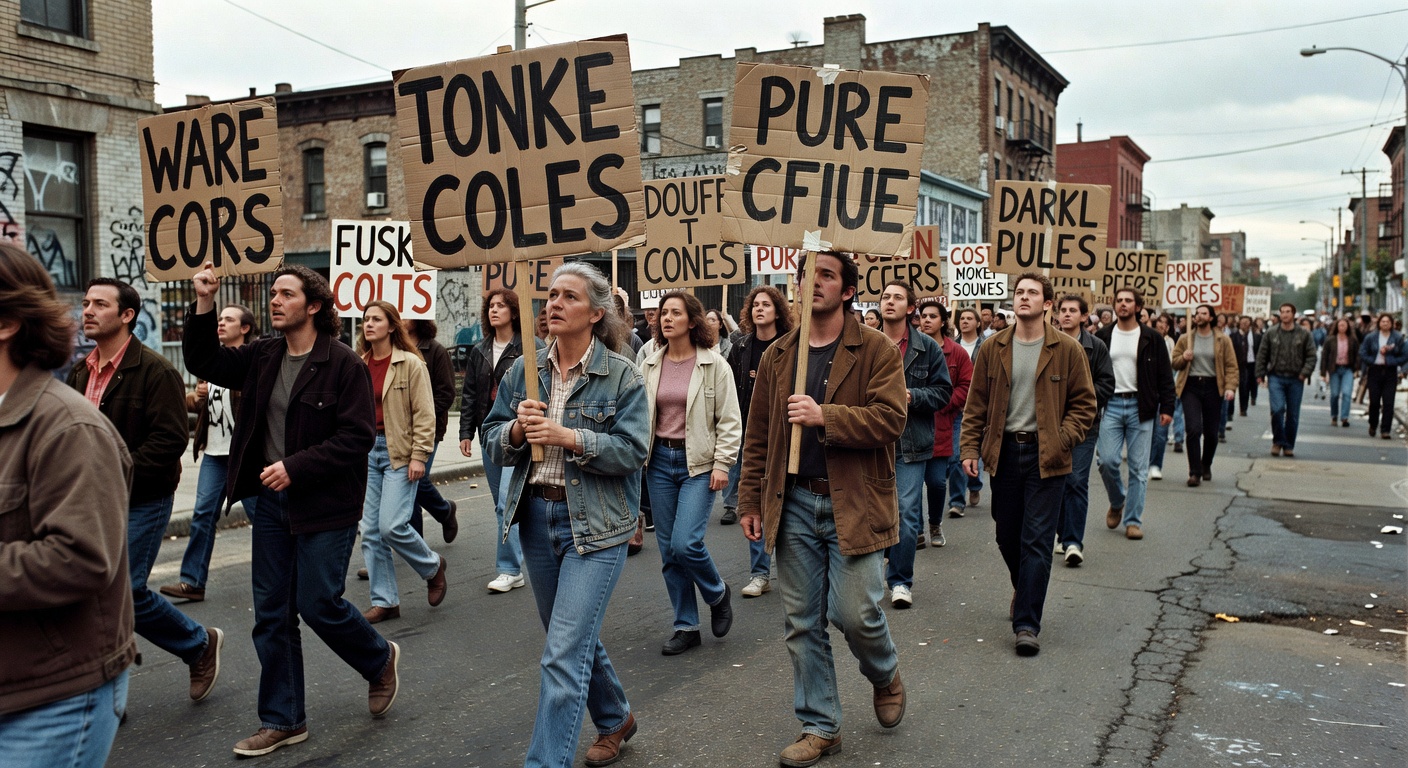
protest signs freedom march
Generated by Grok Imagine (xAI), prompt: Generate a single 16:9 horizontal image for an educational lesson.
Lesson title: "Who Decides What You're Allowed to Do?" · Rights exist before governments do, and that changes what governments can le…
Quiz yourself