Civics
·
The Document That Tells Power 'No'
Easy
5 min
The Document That Tells Power 'No'
How a piece of paper keeps governments from doing whatever they want
Share
What's the only thing stopping the most powerful person in your country from just... doing whatever they want? Turns out it's not an army. It's not public opinion. It's a document. And the wild part is — it actually works.
Every government in history has faced the same problem: power corrupts. Give someone enough authority and eventually they'll use it in ways that benefit themselves, not the people they're supposed to serve. Kings knew this. Emperors knew this. The founders of modern democracies definitely knew this — most of them had just lived through it.
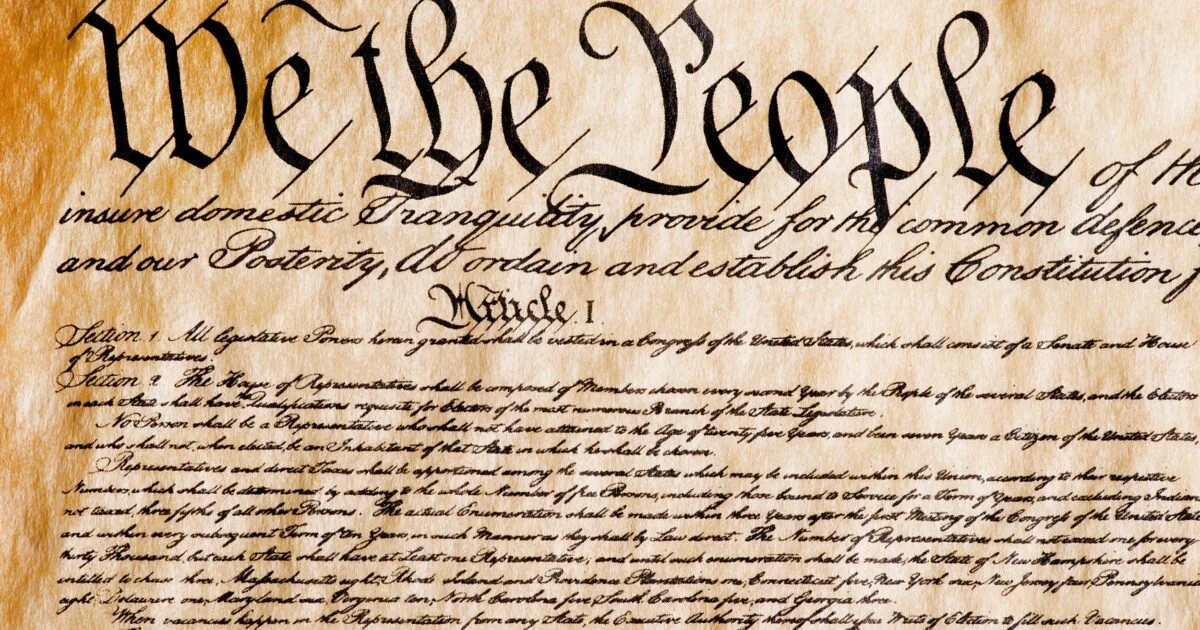
So they did something clever. Instead of hoping the next leader would be a good person, they wrote down rules that applied to everyone, including the government itself. That's a constitution. It's not a list of what citizens have to do. It's a list of what the government is NOT allowed to do — and exactly how much power each part of it gets.
The key move constitutions make is called separation of powers. Instead of letting one person or group control everything, they split government into distinct branches — typically one that makes laws, one that enforces them, and one that interprets them.
In the US, that's Congress (makes laws), the President (executes laws), and the Supreme Court (decides what laws mean and whether they're legal). Each branch has a defined job — and no authority to do the others' jobs. In fact, they're specifically designed to block each other. That friction between branches is the whole design.
Key Insight
A constitution doesn't just divide power. It creates friction on purpose. The founders weren't trying to make government efficient. They were trying to make dangerous concentrations of power nearly impossible. Slow, frustrating, gridlocked government was the goal — because fast, unchecked government is how you get tyranny.
Make your call
Think back to the hook: what actually stops the most powerful person in a country from just doing whatever they want? Take your best guess before the answer shows up.
A
Public opinion and the threat of protest — leaders back down when enough people push back
B
A deliberate split of power with each branch given tools to block the others
C
The personal character of whoever is in charge — good leaders simply choose to restrain themselves
That built-in friction has a name: checks and balances. Each branch gets specific tools to push back against the others.
Congress passes a law — but the President can veto it. The President vetoes it — but Congress can override that veto with a supermajority. The President appoints judges — but the Senate has to confirm them. The Supreme Court can strike down laws passed by Congress. Congress can impeach the President. The President can't declare war alone. No single branch can steamroll the others without getting blocked. Annoying by design? Absolutely. Dangerous to freedom? Much less so.
Example
This isn't just theory. In 1952, President Harry Truman tried to seize control of American steel mills during the Korean War — he argued it was a national security emergency. He had the military. He had the executive office. He had public support for the war.
The Supreme Court told him no. Nine unelected judges, with no army, no police force, and no way to physically stop him — just the authority of the Constitution — ruled his action unconstitutional. And Truman backed down. That's the answer to the opening question — what stops the most powerful person from doing whatever they want isn't an army or public opinion. It's written rules, treated as legitimate, holding even when no one can physically enforce them.
Key Insight
A constitution only works if everyone agrees to treat it as legitimate — including the people in power. The moment leaders start ignoring it, it becomes just paper. That's why constitutional crises are so serious: they're not legal problems, they're trust problems.
Quiz yourself